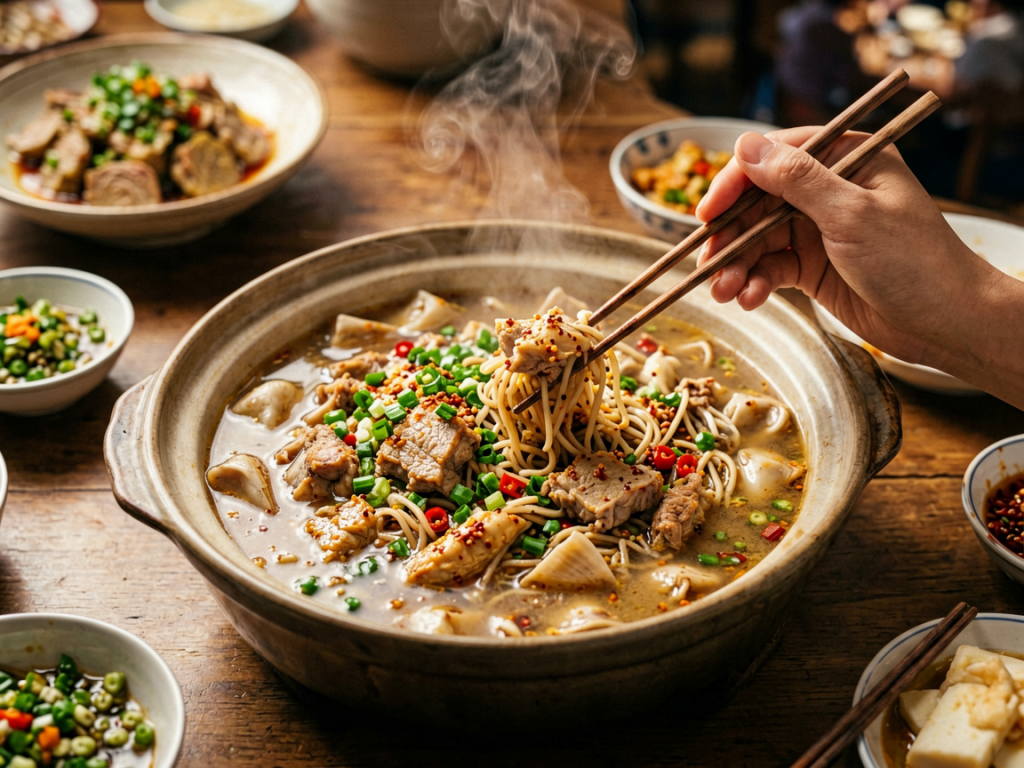
I still remember the first time I dropped a pair of red lacquer chopsticks into my hot pot in Chengdu. The broth splashed onto my jeans, staining the denim with a faint orange ring of chili oil. Everyone at the table laughed. Not the mean kind of laugh, but the warm, welcoming kind that says, “Welcome to the chaos, newbie.”
It was my third month in China. I thought I had mastered the basics. I could hold the sticks. I could pick up a pea. But picking up a slippery piece of tripe from boiling broth is a different beast entirely. That moment taught me more about Chinese dining culture than any etiquette guide ever could.
If you’re planning a trip to China or just want to eat with locals without feeling like a tourist, you need to adjust your mindset. The rules here aren’t about being fancy. They’re about respect, hygiene, and surviving the meal. Let’s talk about what foreigners usually get wrong.
## The “Proper Grip” Myth
Here’s the thing: nobody in China cares if your grip looks like a classical music conductor’s. I see so many foreigners practicing their chopstick skills in hotel rooms, trying to achieve that perfect, rigid index-finger position. It’s cute. It’s also completely unnecessary.
In my eight years here, I’ve seen masters eat with one hand while scrolling on their phones with the other. I’ve seen grandmas use two pairs of chopsticks at once to separate ingredients. The goal isn’t perfect form. The goal is getting the food into your mouth efficiently.
My Chinese friend, Wei, once told me that holding the chopsticks too tightly makes you look nervous. “Relax,” he said, tossing a piece of braised pork into his mouth. “The food isn’t going to run away.” He was right. When I stopped obsessing over my finger placement and just focused on the food, my accuracy improved instantly. It’s easier than you’d expect.
Don’t worry about the aesthetic. Worry about not poking your friend in the eye. That’s the real crime.
## The Sticky Rice Trap
Let’s address the elephant in the room: sticky rice. For Americans and Europeans, rice is usually a side dish. It’s fluffy, separate grains. In China, especially in the south, rice can be sticky enough to cling to your chopsticks like glue.
I remember trying to eat a bowl of plain white rice with my chopsticks in Guangzhou. I managed to spear a few grains, but every time I lifted my hand, a clump of rice stuck to the stick. I ended up eating half the bowl with a spoon, which drew some amused side-eyes from my host family.
Here’s the secret: most Chinese people use a spoon for rice. Not just for soup. For the actual grains. It’s not considered lazy. It’s considered practical. If you’re struggling to pick up individual grains, grab a spoon. No one will judge you. In fact, they might offer you one.
But if you insist on using chopsticks for rice, here’s a trick. Don’t try to pick up a single grain. Scoop a small bite, press it gently between the sticks, and lift. It takes practice, but it’s worth it if you want to feel like a local. And honestly, the texture of rice eaten this way is better. You get a denser bite.
## The Dirty Chopstick Etiquette
This is where things get serious. In Western dining, you might rest your utensils on the table or tap them on the rim of the bowl. In China, these are major faux pas. I’ve seen tourists get scolded by elderly relatives for doing this. It’s not a joke.
First, never stick your chopsticks vertically into a bowl of rice. This resembles incense sticks burned at funerals. It’s associated with death and bad luck. Never do it. Ever. If you need to rest your chopsticks, place them on the provided rest, or lay them horizontally across the top of your bowl.
Second, don’t tap your bowl. In ancient China, beggars tapped their bowls to get attention. Tapping your bowl at a nice restaurant makes you look like you’re begging. It’s rude to the chef and the host. I learned this the hard way in a high-end Sichuan restaurant in Chongqing. I was nervous, so I tapped my bowl while waiting for the spicy beef to arrive. The waiter looked at me with pure confusion, then gently pointed to the chopstick rest. I turned bright red.
Third, don’t use your own chopsticks to serve food directly from a shared plate to your mouth. This is a hygiene issue. In China, we have “serving chopsticks” for communal dishes. If you’re eating at a hot pot or a family-style meal, use the public chopsticks to move food to your personal bowl. Then, switch back to your own chopsticks to eat.
I know it feels clunky. You’re switching utensils. It’s slower. But trust me, it’s better than alternatives. It shows you care about the group’s hygiene. And in China, the group comes first. Individual convenience takes a backseat to collective comfort.
## Poking and Probing
I’ve noticed a trend among Western travelers: the “food search.” You arrive at a restaurant, the dish arrives, and you start poking around. You lift a piece of fish to check for bones. You move vegetables aside to find the meat. You stab at the food to see if it’s tender.
Stop it. It’s considered aggressive and messy. In Chinese culture, the food is presented as a whole. You’re expected to eat what’s on top. If you need to find something specific, use your spoon or ask the server for help. Poking around makes it look like you don’t trust the chef’s preparation.
I remember a dinner in Xi’an with a group of local students. They served me a large plate of braised beef. I started digging through the meat to find the best piece. My friend gently stopped my hand. “Just eat what’s there,” he said. “The flavor is the same everywhere.” He was right. The sauce had soaked into everything. My selective eating was pointless.
Also, don’t point at people with your chopsticks. It’s considered rude, like pointing with your finger. And definitely don’t wave them around while talking. You might accidentally hit someone. Or worse, you might drip sauce on their shirt. We’ve all been there. It’s awkward.
## The “Leftover” Signal
In the West, if you finish everything on your plate, it’s a compliment. The chef is happy. In China, it’s more complicated. If you finish every single grain of rice and every piece of vegetable, the host might feel bad. They think they didn’t provide enough food. So, they’ll keep bringing you more.
To signal that you’re full, leave a small bite of rice or a piece of vegetable on your plate. It’s a subtle cue that says, “I’m satisfied, thank you.” It’s a polite way to stop the endless cycle of refills. I used to feel guilty leaving food behind. But now I know it’s part of the ritual.
Conversely, if you’re a guest, don’t finish everything. Leave a little bit. It shows humility. It shows that you’re not just eating to survive, but enjoying the company. It’s a social signal, not a dietary one.
## Spoons Are Your Friends
I can’t stress this enough: use the spoon. Chinese dining is not just about chopsticks. It’s about the combination of chopsticks for solid food and spoons for liquid, semi-liquid, or sticky foods.
Soup is the biggest giveaway. Never try to drink soup with chopsticks. It’s impossible and messy. Use the spoon. And don’t be shy about using the spoon for your main dish if it’s saucy. In many regions, eating noodles with chopsticks is standard, but eating noodles with a spoon is also common, especially for older people or in casual settings.
I love the flexibility. You can use chopsticks for the crunchy bits and the spoon for the savory broth. It’s a balanced approach. It’s better than most alternatives because it respects the nature of the food. Chopsticks are for precision. Spoons are for volume. Use both.
## The Social Dance
Ultimately, eating in China is a social activity. The food is secondary to the conversation, the laughter, and the connection. The rules of chopsticks are just tools to facilitate that. If you’re clumsy, it’s funny. If you’re rude, it’s bad.
So, relax. If you drop your chopsticks, pick them up and laugh. If you spill some sauce, apologize and move on. The Chinese people are incredibly forgiving of foreigners who are trying their best. They’ll appreciate the effort more than the perfection.
I’ve eaten in Michelin-starred restaurants and on street corners. I’ve eaten with CEOs and with grandmas. The chopsticks didn’t change. The attitude did. When I stopped trying to be perfect and started trying to be present, the food tasted better. The conversations flowed easier. I made real friends.
Next time you pick up a pair of chopsticks, don’t think about the technique. Think about the person sitting across from you. Think about the story behind the dish. Think about the joy of sharing a meal. The rest will follow.
And if you still can’t get the hang of it? Just use a fork. But maybe keep it hidden. We’ve got to maintain some mystery, right?