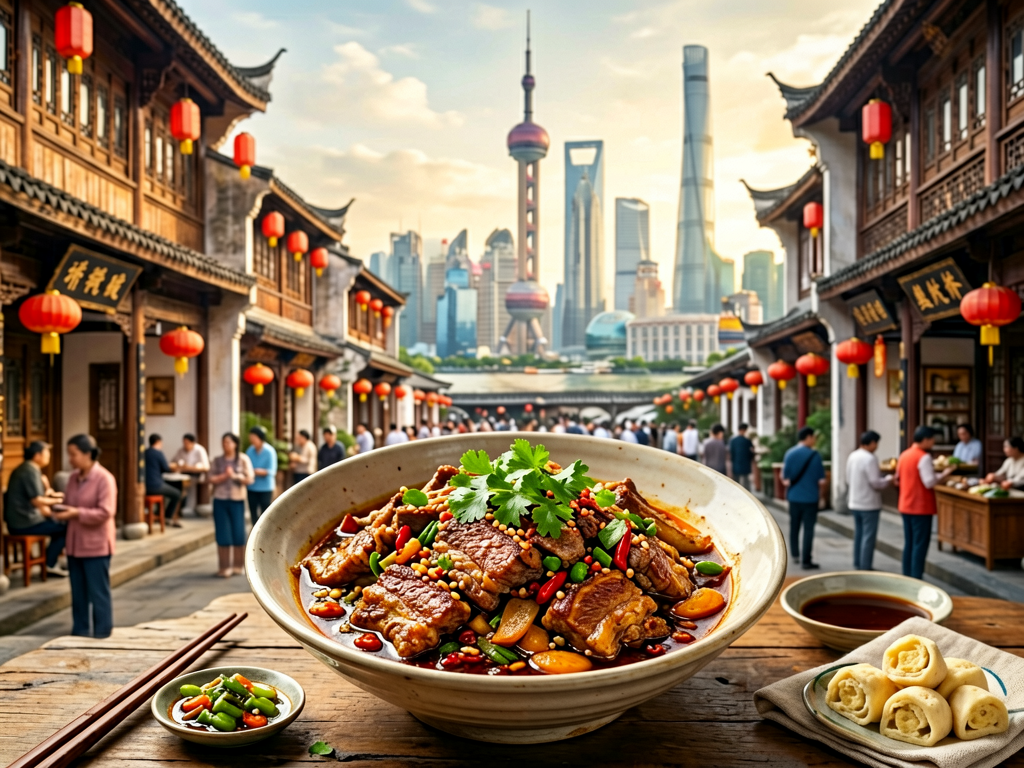
I remember the first time I ordered “Western Food” in Shanghai back in 2016. I was hungry, tired of another bowl of dan dan noodles, and wanted something familiar. The menu had pictures of steaks and pasta. But when the waiter brought out my dish, it looked… different. The sauce was sweeter than anything I’d tasted in Italy. The pasta was softer, almost mushy in a way that shouldn’t work but somehow did.
I asked him where the recipe came from. He smiled and said, “Shanghai style.” That was the moment I realized that Shanghai’s take on Western cuisine isn’t just a copy-paste job from Europe. It’s something entirely its own. And if you dig into the history, you’ll find a surprising Italian influence that changed everything.
Most people think of Shanghai as a French colony because of the baguettes and coffee shops. And yeah, the French were huge here. But before the French cafes took over the Bund, there were Italians running the kitchens. They didn’t just bring recipes. They brought a specific kind of culinary logic that merged perfectly with local Chinese tastes.
The Early Italian Pioneers
Let’s go back to the late 19th and early 20th centuries. Shanghai was opening its doors to the world, and immigrants flooded in. While the British built banks and the French built embassies, Italians built restaurants. They weren’t the biggest group, but they were the most persistent.
I spoke with an old chef named Marco Rossi, who runs a small trattoria in the French Concession. He’s been in Shanghai for thirty years. He told me that his grandfather arrived in the 1920s with nothing but a knife and a dream. Most of those early Italian immigrants settled in the Zhabei district or near the port areas. They opened small eateries catering to sailors and expats.
But here’s the twist. They couldn’t survive on just serving authentic Neapolitan pizza to a handful of foreigners. The prices were too high, and the customer base was too small. So, they adapted. They started using local ingredients. They replaced expensive olive oil with soybean oil. They swapped imported tomatoes for locally grown ones, which are often sweeter and less acidic.
This wasn’t just cost-cutting. It was flavor innovation. By adjusting the seasoning to suit the Chinese palate, which leans heavily on sweet, salty, and umami, they created a hybrid dish. It wasn’t quite Italian anymore. It wasn’t quite Chinese. It was Shanghainese-Western.
Pasta Meets Wonton Noodles
You’ve heard of wonton noodles, right? Thin wheat noodles served in a clear broth with shrimp dumplings. Now, imagine taking that concept and applying it to spaghetti. That’s essentially what happened in Shanghai during the mid-20th century.
I tried a dish called “Shanghai Spaghetti” at a local diner last week. It was cheap, maybe $3 USD. The noodles were soft, boiled longer than any Italian grandmother would allow. The sauce wasn’t a rich ragù. It was a thick, glossy brown sauce made with ketchup, sugar, and tomato paste. It tasted like a child’s idea of Italian food, but in a really comforting, nostalgic way.
The key ingredient here is the sweetness. Shanghai cuisine, or Benbang cai, loves sweetness. It balances the salty soy sauce and the sour vinegar. When Italians moved their pasta dishes to Shanghai, they noticed that locals loved the carb-heavy, sauce-drenched meals. So, they doubled down on the sweetness.
I asked the owner of that diner how he learned to cook this way. He laughed and said, “My parents ate in Italian restaurants when they were young. I just kept making it the way I liked it.” It’s a generational transfer of flavor. The Italian technique provided the structure, but the Chinese taste buds provided the soul.
This fusion is still alive today. You’ll find it in older neighborhoods and budget eateries. It’s not fancy. It doesn’t look pretty on Instagram. But it tastes like home for many Shanghainese people who grew up eating it. It’s a reminder that food evolves through contact, not isolation.
Coffee Culture with a Twist
Everyone knows Shanghai has a massive coffee culture now. There’s a cafe on every corner. But the history of coffee in Shanghai is deeply tied to Italian immigrants too. Before Starbucks and local chains like Manner Coffee existed, Italians were brewing strong, dark roasts in simple percolators.
I visited a historic café in Hongkou District called the “Russian Café,” but the name is misleading. It was originally run by an Italian family in the 1930s. The walls are peeling, and the floorboards creak. But the coffee is still served in small, thick ceramic cups, just like it was ninety years ago.
The coffee itself is different. It’s often mixed with condensed milk and sugar. This is similar to how Vietnamese coffee is made, but in Shanghai, it’s a direct result of Italian adaptability. Condensed milk was cheaper and more shelf-stable than fresh milk. Sugar was abundant. So, they combined them to create a sweet, creamy drink that appealed to local tastes.
I drank a cup there yesterday. It was incredibly sweet. Too sweet for my modern, black-coffee preferences. But I understood why it worked historically. It provided calories and comfort. It was a luxury item for the working class. Today, that same style of coffee is seen as “vintage” or “retro.”
Young Shanghainese people go to these old spots not just for the caffeine, but for the vibe. They want to feel connected to the city’s cosmopolitan past. The Italian influence here isn’t just about the bean. It’s about the ritual of sitting down, sipping slowly, and watching the world go by.
Modern Renaissance
In recent years, there’s been a revival of authentic Italian food in Shanghai. High-end restaurants serve truffle risotto and handmade gnocchi. Chefs trained in Rome and Milan are commanding high prices. This is great for foodies. But it’s also hiding the earlier, rougher history of Italian-Chinese fusion.
I met a young chef named Lin Wei. She’s half-Chinese, half-Italian. She opened a restaurant in Jing’an District that blends both traditions. Her signature dish is a carbonara made with scallions and fermented bean curd. Yes, you read that right. Fermented bean curd.
When I tried it, I was skeptical. Fermented bean curd smells strong. But when cooked into the egg yolk sauce, it adds a deep umami richness that mimics the saltiness of Pecorino Romano. It’s bold. It’s risky. But it works.
Lin told me she grew up hearing stories about her grandfather’s pasta shop. She wanted to honor that legacy while pushing boundaries. Her restaurant is always full. People come from all over the city to try her interpretations.
This new wave shows that the Italian influence isn’t dead. It’s mutating. It’s finding new ways to express itself. It’s no longer about survival. It’s about artistry. The fusion is becoming more sophisticated, but the core principle remains the same. Adaptation is key.
Why It Matters
You might be wondering why this history matters. Why should I care about some old pasta shop in Zhabei?
Because food is memory. Every dish tells a story of migration, trade, and cultural exchange. Shanghai’s Western-style cuisine is a testament to the resilience of immigrants. They didn’t just survive in a foreign land. They thrived by changing.
They took their traditions and made them local. They listened to their customers. They respected the available ingredients. And in doing so, they created something new. Something uniquely Shanghai.
Next time you eat a plate of sweet-and-sour spaghetti or sip a sugary coffee in an old café, think about the Italians who started it all. They weren’t trying to conquer the world with their food. They were trying to feed their families and make a living.
But in the process, they left a mark on Shanghai’s culinary landscape that lasts to this day. That’s pretty cool, right?
I’ve eaten my share of fancy Michelin-starred Italian meals in Shanghai. But honestly, my favorite meal last month was a bowl of generic, sweet pasta from a street stall. It reminded me of the city’s chaotic, beautiful history. It reminded me that sometimes, the best food isn’t the most authentic. It’s the most adaptive.
If you’re visiting Shanghai, don’t just stick to the trendy spots. Wander into the older neighborhoods. Look for the signs with peeling paint. Order the “Western Food” specials. Ask the waiter about the history. You might just discover your new favorite flavor.
It’s a little sweet, a little savory, and totally unexpected. Just like the city itself.