I’ll be honest, I walked into that gym in Chengdu expecting to see something sterile. You know the type. White mats, mirrored walls, and people punching air with perfect, robotic form. I’d spent years watching MMA fights in Vegas and London. I thought I knew what combat looked like. I thought I knew what “Chinese martial arts” meant.
I was wrong. Dead wrong.
The gym smelled like stale sweat and old rubber. There were no mirrors. Just a heavy bag that looked like it had survived a war, and a ring that was slightly too small for the two fighters circling each other. One guy was throwing knees. The other was sweeping legs with a fluidity that made my head spin. This wasn’t kickboxing. This wasn’t boxing. This was something else entirely.
It was Sanda. Or Sanshou. Depending on who you ask. But calling it just “kickboxing” is like calling sushi “raw fish.” It’s technically true, but it misses the entire point.
After eight years in China, I’ve learned that you can’t understand the culture by just reading the history books. You have to feel it. And nothing feels more real than watching two people try to knock each other out in a ring.
It’s Not Just Kung Fu, It’s Not Just Kickboxing
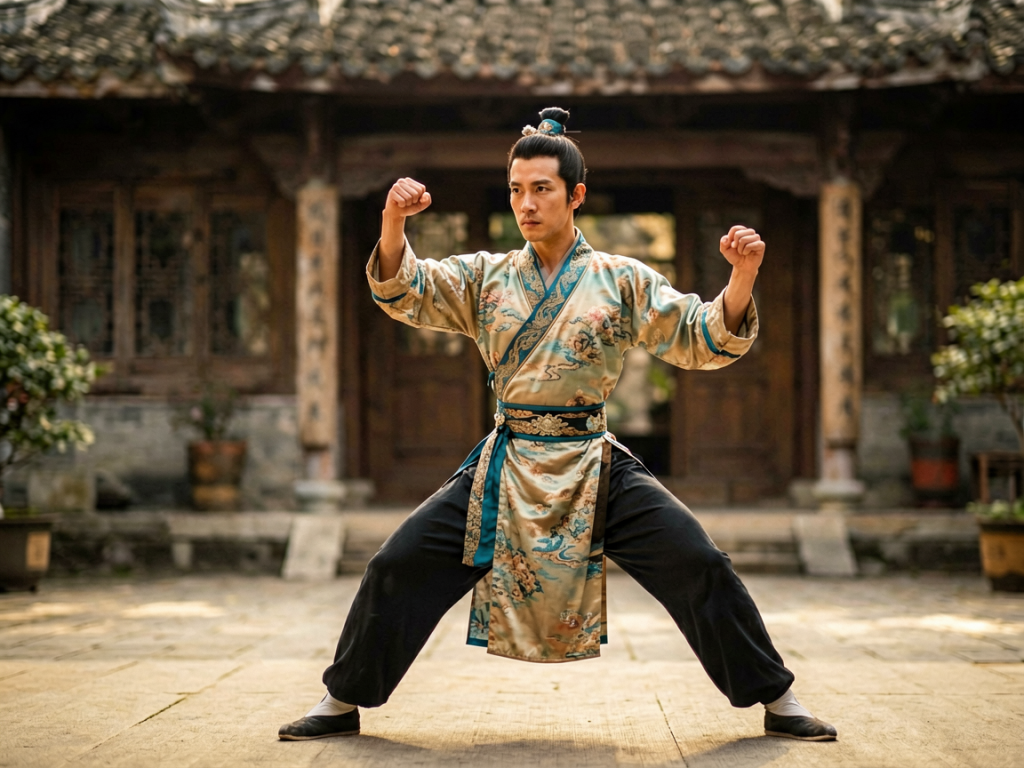
Most foreigners have a very specific image of Chinese fighting. They imagine monks in orange robes jumping on clouds. They imagine slow, graceful movements that look like dancing until a sudden punch stops your heart. That’s Wushu. That’s performance. That’s beautiful, but it’s not what happens when you step into a Sanda ring.
Sanda, which translates to “free hand,” is the sportification of traditional Chinese martial arts. It’s what happens when you take the kicks, punches, and throws of Shaolin or Wudang and tell them to fight at full speed. It’s fast. It’s brutal. And it’s incredibly efficient.
I remember asking a trainer in Beijing, a guy named Lao Li who had more scars than skin, why they didn’t just stick to pure Muay Thai. Muay Thai is incredible, right? Elbows, knees, clinches. It works.
He laughed. He pointed to his legs. “Muay Thai kicks with the shin,” he said. “We kick with the instep. We kick with the heel. We kick with the foot. But the difference isn’t the foot. It’s the throw.”
That’s the key. That’s the thing that blows your mind. In Sanda, the striking is just the setup. The real game is the takedown. You throw a punch to distract them. You feint a kick to make them shift their weight. And then, in a split second, you’re behind them, lifting them off the ground, and slamming them onto the mat.
I watched a match last month where the guy didn’t land a single punch for the first two rounds. He just moved. He danced around his opponent, waiting for a mistake. When the other guy finally threw a wild jab, our hero slipped under it, caught his arm, and flipped him. It was over in three seconds. The crowd went wild. I was just sitting there, jaw on the floor.
The Philosophy of the Throw
You might think that throwing someone is just a tactical choice. It’s not. It’s philosophical. It’s deeply rooted in how Chinese culture views conflict.
In the West, combat is often about dominance. You overpower. You crush. You hit harder. You out-muscle. It’s linear. It’s A hits B. B falls.
In Sanda, it’s about redirection. It’s about using the opponent’s energy against them. I’ve seen guys who are half the size of their opponents throw them across the ring. It looks like magic. It’s not magic. It’s leverage. It’s timing. It’s knowing that if you push, you should pull.
I tried training with a group in Shanghai once. I’m not a fighter. I’m a writer. I have the knees of a librarian. But I tried. I went in with my ego, thinking I could just punch my way through it.
My partner, a quiet guy named Wei, didn’t even punch back. He just waited. Every time I threw a jab, he stepped in close. He didn’t block. He didn’t dodge. He just entered my space. And suddenly, I was off balance. Then I was on the ground. Then I was trying to stand up again. And he did it all over.
After the third time, I was frustrated. I asked him why he didn’t just hit me. He smiled. “Why hit,” he said, “when you can move?”
That’s the Chinese way. It’s not about force. It’s about flow. It’s about being like water. You can’t beat water by hitting it. You can only try to stop it. And you can’t stop water.
This mindset spills out of the gym and into the streets. I’ve seen it in business negotiations. I’ve seen it in traffic. I’ve seen it in arguments. The Chinese don’t always meet force with force. They meet it with adaptation. They wait for you to overcommit. And then they take what you have.
Sports vs. Performance: The Sanshou Confusion
You’ll hear people use the words Sanda and Sanshou interchangeably. They’re not the same. And if you care about this stuff, you need to know the difference.
Sanda is the sport. It’s competitive. It’s regulated. You wear gloves. You wear headgear. You score points for clean strikes and successful throws. It’s what you see on Chinese television. It’s what the athletes train for in state-sponsored gyms.
Sanshou is the broader term. It can mean the sport, but it can also mean “free fighting” in a more general sense. It’s the root. It’s the practice. It’s the application. When you see a movie where the hero fights ten guys in an alley, that’s Sanshou. It’s not regulated. It’s survival.
I went to a seminar in Guangzhou where an old master taught both. The Sanda fighters were young, athletic, and precise. They moved like machines. The Sanshou practitioners were older, rougher, and more unpredictable. They moved like predators.
The old master said something that stuck with me. “Sanda is for the stage,” he said. “Sanshou is for the street. But you cannot have one without the other. The stage teaches you control. The street teaches you intent.”
I thought about that for a long time. We live in a world that’s obsessed with presentation. We curate our lives for Instagram. We polish our resumes. We present a version of ourselves that’s clean and controlled. That’s Sanda.
But underneath that, there’s the Sanshou. The raw, unfiltered reality. The things we don’t talk about. The struggles. The fears. The chaos. And if you ignore that, if you only focus on the performance, you’re not really fighting. You’re just posing.
Why It Matters Now
I’ve been in China long enough to see how the country is changing. It’s modernizing. It’s globalizing. It’s becoming more Western in some ways. But in the ring, you can still see the old soul.
Sanda is a bridge. It connects the ancient past with the modern present. It takes the traditional forms, which can seem archaic and disconnected from daily life, and makes them relevant again. It proves that these old techniques still work. They still have power. They still have value.
I’ve talked to young Chinese fighters who are also into hip-hop. They wear designer sneakers and listen to trap music. But when they step into the ring, they’re channeling thousands of years of history. They’re using techniques that were developed by monks and soldiers and farmers.
It’s cool. It’s incredibly cool. It shows that tradition isn’t dead. It’s just evolving. It’s adapting. It’s finding new ways to express itself.
And it’s not just about fighting. It’s about identity. For a long time, Chinese martial arts were seen as exotic. They were seen as something for tourists to watch. Something to put in a museum. Sanda changed that. It put Chinese fighting back on the global stage. It showed that it’s not just a performance. It’s a combat sport. It’s legitimate. It’s respected.
I remember watching a Sanda match on TV with some friends. They were from different parts of the country. One guy was from the north, strong and direct. The other was from the south, quick and technical. They were fighting for a championship. And as they fought, I realized they weren’t just fighting for themselves. They were fighting for their region. For their style. For their heritage.
It was intense. It was emotional. It was beautiful.
The Human Element
But here’s the thing. It’s not just about the techniques. It’s not just about the throws. It’s about the people.
I’ve met fighters who are teachers. I’ve met fighters who are soldiers. I’ve met fighters who are just guys trying to escape a hard life. They all share one thing. They respect the craft. They respect their opponents. They respect the process.
In a world that’s often quick to judge and slow to understand, there’s something refreshing about that. There’s a honesty in the ring. You can’t fake it. You can’t pretend. You either can fight, or you can’t.
I tried to learn a simple knee strike once. It took me weeks to get it right. My trainer didn’t yell at me. He didn’t get angry. He just corrected me. Again and again. Until it was right.
That’s the lesson. Patience. Persistence. Respect. It’s not just about hitting hard. It’s about being precise. It’s about being consistent. It’s about being present.
I’m no expert. I’ll never be a fighter. I’m just a guy who likes to watch. But I’ve learned a lot from watching. I’ve learned that strength isn’t just about muscles. It’s about mind. It’s about spirit. It’s about knowing who you are and being willing to stand your ground.
So next time you see a fight, don’t just look at the punches. Look at the throws. Look at the movement. Look at the intent. That’s where the real story is.
That’s where the soul of modern China is.
It’s not in the skyscrapers. It’s not in the high-speed trains. It’s in the ring. It’s in the sweat. It’s in the struggle. It’s in the fight.
And if you want to understand China, you need to watch it closely.
Trust me. It’s worth it.