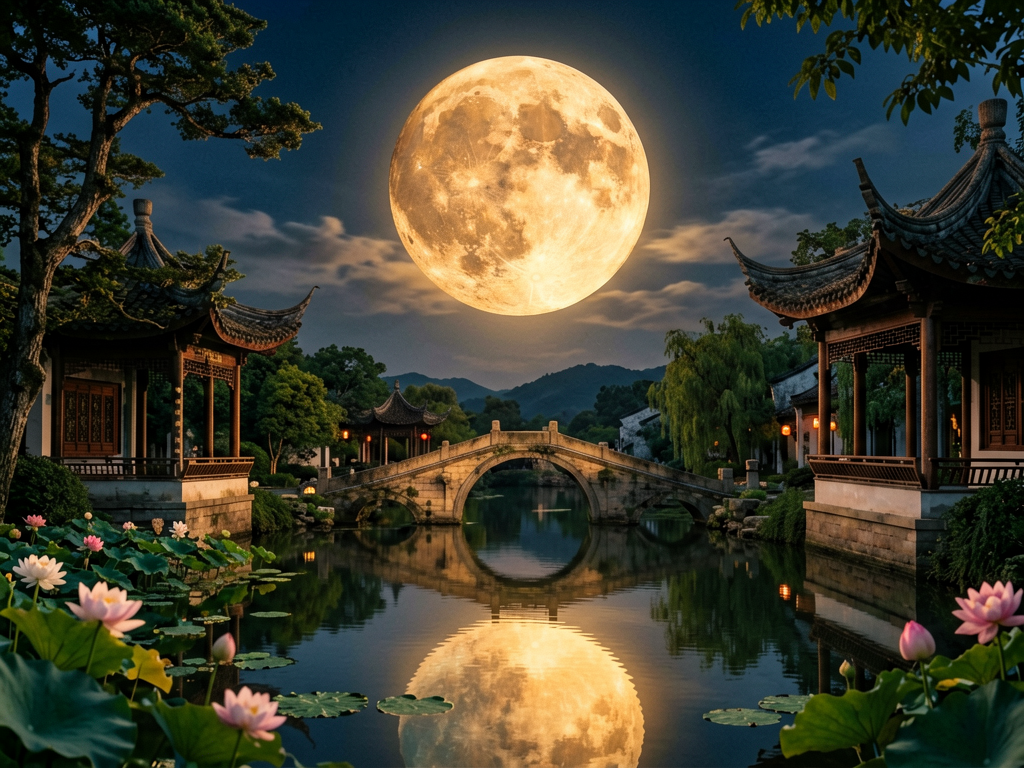
Here’s the thing about the Mid-Autumn Festival. Most outsiders look at the glowing full moon hanging over Beijing or Shanghai and think it’s all about astronomy. They picture Chang’e flying to the moon. They think about jade rabbits pounding medicine in celestial pharmacies. But honestly? That’s not why my stomach was growling.
I spent the last eight years in China. I’ve watched this festival evolve from a quiet family dinner to a massive commercial spectacle. Yet, the core truth hasn’t changed. The moon is just the calendar. The reunion is the point.
If you think this holiday is a celebration of celestial bodies, you’re missing the entire emotional weight of it. It’s about the traffic jams on the highway. It’s about the exhaustion of travel. It’s about the specific, heavy feeling of finally sitting down with people you love.
The Moon Is Just a Clock
Let’s be clear. The moon doesn’t care if you’re happy. It doesn’t care if you’re lonely. It’s just a rock reflecting sunlight. But in Chinese culture, that rock serves a very practical purpose.
The Mid-Autumn Festival falls on the 15th day of the eighth lunar month. That’s when the moon is fullest and brightest. Historically, this marked the end of the autumn harvest. Farmers had gathered their crops. The hard work was done. It was time to rest and celebrate.
But here’s the kicker. In an agrarian society, the full moon was a signal. It meant the season was turning. It meant winter was coming. So, families gathered to preserve food, share the bounty, and ensure everyone was safe before the cold set in.
Today, we don’t farm rice in the city. We order takeout. But the rhythm remains. The full moon signals a pause. It’s the universe telling us to stop working and look at each other.
I remember my first Mid-Autumn Festival in Hangzhou. I was expecting a party. I thought there would be lanterns everywhere and fireworks. And sure, there were some lanterns. But the real magic happened inside a small apartment in Xihu District.
My host family didn’t care about the moon’s mythological significance. They cared that my cousin had finally returned from Shenzhen. He was a software engineer. He only came home three times a year. The moon was just the excuse to make him come back.
The Pain of the Long Drive
You can’t talk about reunion without talking about the journey. In China, this holiday triggers the largest human migration on Earth. It’s called Chunyun, or the Spring Festival travel rush, but Mid-Autumn is its quieter, smaller cousin.
I’ve sat in traffic for six hours on the G60 highway. The air conditioning died. The heat was oppressive. Everyone was stuck in their cars, eating instant noodles and checking their phones. Were they angry? Yes. Were they excited? Also yes.
Why go through that hell? Why endure the train station chaos? Why pay three times the price for a bullet train ticket?
Because you’re going home. Or you’re going to the place that feels like home.
I watched a young couple argue over GPS directions. They were tired. They were hungry. But when they finally pulled into the driveway of their parents’ house, the tension vanished. The mother was already on the porch, holding a tray of freshly made mooncakes.
It’s not about the moon. It’s about that moment of arrival. It’s about proving that you made it. That you’re still part of the circle.
I’m no sociologist. But I’ve noticed that Chinese people are incredibly resilient when it comes to family obligations. They’ll move mountains. They’ll drive across provinces. They’ll fly thousands of miles. All for a few hours of sitting in a room, eating sweet paste, and talking about nothing important.
More Than Just Sweet Paste
Let’s talk food. You can’t have a reunion without mooncakes. They’re ubiquitous. You see them everywhere in August. The shops are stuffed with gold and red boxes. The prices are insane.
I tried a traditional snow skin mooncake once. It was cold, chewy, and filled with lotus seed paste. It was okay. But it wasn’t love. It was just sugar and fat.
Real mooncake love is complicated. My boss in Guangzhou spent half his salary on a box of preserved egg and salted duck yolk mooncakes. Why? Because that’s what his mother likes. He doesn’t even like the taste. He hates the yolk. It’s too salty for his palate.
But he buys them anyway. Because giving them is a ritual. It’s a way of saying, “I remember you. I respect you. I’m here.”
The variety of fillings tells a story about regional identity. In the north, you get dense, sweet bean paste. In the south, you get flaky crusts with savory meats. I’ve eaten duck meat mooncakes in Sichuan. I’ve eaten durian mooncakes in Hainan. They’re weird. They’re delicious. But they’re all tied to the same idea.
Food is the medium. Reunion is the message.
I recall eating a mooncake with my grandfather in Tianjin. He was old then. His hands shook. He couldn’t eat much. But he watched me eat. He smiled when I took a bite. That smile was worth more than the cake. It was a transfer of memory. A connection across generations.
The moon looks down on that scene. But it doesn’t matter. The real light is coming from the kitchen window.
The Modern Ache of Distance
China is changing. Young people are moving to megacities. They’re leaving their hometowns for jobs in tech, finance, and media. The physical distance between family members is growing.
This makes the Mid-Autumn Festival more poignant, not less. It’s no longer just a harvest celebration. It’s an antidote to loneliness.
I’ve seen WeChat groups light up with red packets during the holiday. Young professionals send money to their parents. It’s not about the cash. It’s about the gesture. It’s a digital hug. It says, “I’m busy, but I’m still with you.”
Sometimes, I join video calls with my own family back in the States. We’re on the screen, but we’re not in the room. It’s not the same. I miss the noise. I miss the clatter of chopsticks. I miss the actual presence of people.
That’s why the physical reunion matters so much. You can’t replicate the warmth of a shared table with pixels.
I’ve noticed that younger Chinese people are redefining what “home” means. For some, it’s their childhood house. For others, it’s the friends they’ve made in the city. The Mid-Autumn Festival is flexible. It bends to fit the modern life.
My friend Lin and her partner hosted a dinner for six people. None of them were related. They were all expats and locals who had become family. They ate mooncakes together. They looked at the moon. It was a reunion of choice, not blood. And it was just as powerful.
Does it have to be blood? Not necessarily. But it has to be connection. The moon doesn’t care who you’re with. It just shines.
The Illusion of Perfection
We often talk about the moon being “perfectly round.” In Chinese, the word for round, *yuan*, sounds like the word for reunion, *tuanyuan*. It’s a linguistic trick. A poetic coincidence.
But is the moon ever perfect? No. It has craters. It has shadows. It waxes and wanes.
And neither are families. We argue. We have secrets. We have misunderstandings. The reunion isn’t about fixing everything. It’s about showing up anyway.
I’ve seen heated debates at Mid-Autumn dinners. Topics range from politics to marriage to career choices. The tension is real. But then, someone passes the tea. Someone laughs at a bad joke. The moment passes.
That’s the beauty of it. It’s messy. It’s imperfect. But it’s together.
If you go to China for this festival, don’t expect a fairy tale. Expect noise. Expect sticky hands. Expect your uncle asking why you’re still single. Expect the overwhelming love that comes with being known.
The moon is cold. It’s distant. It’s unfeeling. But the people around you are warm. They’re here. They’re real.
So, Look Up or Look Around?
Next time the Mid-Autumn Festival rolls around, I have a suggestion. Put down the camera. Stop trying to capture the perfect shot of the moon against the skyline.
Look at the person sitting next to you. Listen to their voice. Taste the food they made for you. Notice the small details. The way their hair is graying. The way their hands have changed.
Those details are the real miracle. The moon is just a backdrop. A giant, glowing backdrop.
The festival is a reminder that no matter how far you go, no matter how much you change, there is a place where you belong. There is a table set for you. There is a mooncake with your name on it, metaphorically speaking.
I’m still not sure about the lotus paste. But I’ll never forget the feeling of coming home. That’s what the festival is. It’s not about the sky. It’s about the ground beneath your feet. It’s about the people who stand with you on that ground.
So, enjoy the moon if you want. It’s pretty. But don’t ignore the people. They’re the real gift.
Happy Mid-Autumn Festival. May your reunion be full, even if the moon is hidden by clouds. Especially then.