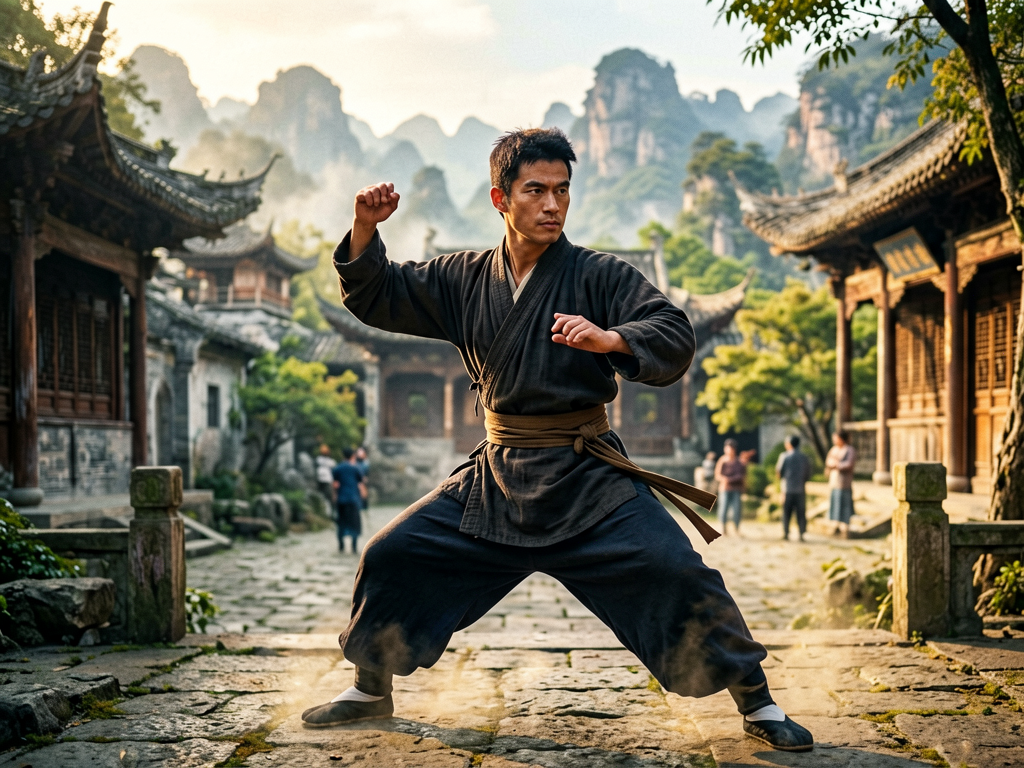
You watch Jet Li in Once Upon a Time in China or Hero and you just stop breathing. It’s not just that he moves fast. It’s that he moves with a kind of terrifying grace that makes your own body ache in sympathy. I’ve spent the last eight years living in China, eating my way through every hotpot joint from Beijing to Chengdu, and trying to understand the soul of this country. But nothing clicked for me quite like watching Li Lianjie fight.
People love to call him a martial arts legend. They call him a kung fu god. I’m no expert, but I’ve sat in tea houses in Shaolin where old monks still train, and I’ve watched street fighters in Guangzhou show off their moves. Jet Li is different. He’s not just fighting. He’s telling a story with his bones.
Here’s the thing. Most action movies today are just noise. They’re loud, they’re shaky, and they’re meaningless. You don’t know who’s hitting whom. Jet Li’s films are different. They’re quiet. They’re clear. And they’re deeply philosophical. Let’s talk about what’s actually going on when he swings that sword.
The Wushu Roots: Beauty Over Brutality
Before he was an actor, Jet Li was a champion. He won five national wushu titles in China before he was twenty. That’s not just a fun fact. It changes everything about how he fights on screen. Most actors hire stunt doubles. They hire guys who look tough. Jet Li didn’t need doubles. He had the muscle memory of a national champion.
Wushu, or modern Chinese martial arts, is distinct from traditional Kung Fu. It’s more about performance. It’s about form, flexibility, and aesthetic beauty. It’s gymnastics with a weapon. When you watch Li, you’re seeing years of discipline. He doesn’t just punch; he flows.
I remember watching Hero in a small theater in Xi’an. The screen was dim, the seats were hard plastic, and the guy next to me was eating sunflower seeds. But when Li faced off against Donnie Yen, the whole room went silent. It wasn’t a brawl. It was a dance. The choreography emphasizes empty-hand techniques, acrobatics, and weapon mastery, but it’s the rhythm that matters.
He uses his body like an instrument. Every extension of the arm, every leap, is calculated. It’s not about breaking your opponent’s nose. It’s about showing how light you can be. It’s the opposite of Hollywood violence. In America, they want to see the impact. They want to see the blood. In Li’s world, they want to see the spirit.
Wu Wei: The Art of Non-Action
You can’t talk about Chinese philosophy without mentioning Laozi. You’ve probably heard of the Tao Te Ching. It’s a short book. It’s everywhere in China, from bookstore windows to temple gates. The core idea is Wu Wei. It translates roughly to “non-action” or “effortless action.”
It doesn’t mean doing nothing. It means not forcing things. It means going with the flow of the universe. It’s like water. Water doesn’t fight the rock. It flows around it. Eventually, the rock is gone.
Jet Li embodies this in his fight scenes. Watch The One or even Robin Hood: Prince of Thieves, though the latter is less pure. In his Chinese films, he rarely strikes first. He waits. He lets his opponent exhaust themselves. He uses their energy against them. This is classic Tai Chi philosophy.
I tried Tai Chi once with a master in Hangzhou. He was tiny. He looked like he’d break in a strong wind. I tried to push him. He didn’t push back. He just moved slightly to the left, and I fell over. It was humbling. Jet Li brings that same energy to the screen. He makes violence look like a mistake made by someone else.
This is why his fights feel so heavy, even when he’s standing still. He’s not just posing. He’s holding back a tidal wave. When he finally moves, it’s not with anger. It’s with necessity. That’s the philosophical weight behind the choreography. It’s not about winning. It’s about balance.
Weapons as Extensions of the Soul
Let’s talk about the swords. Specifically, the straight swords, or Jian. In Hero, Li holds the Jian like it’s part of his arm. In Once Upon a Time in China, he wields the staff with the same ease. But it’s not just skill. It’s symbolism.
In Chinese culture, weapons are extensions of the martial artist’s character. A jagged, broken blade might represent a chaotic mind. A smooth, straight sword represents a clear, focused spirit. Jet Li’s characters often start chaotic. They’re angry. They’re confused. Their fighting style is messy.
As the movie progresses, they find clarity. Their fighting style becomes cleaner. Li’s movements become sharper. It’s a visual representation of internal growth. I love this because it’s rare in cinema. We’re used to heroes getting stronger by lifting weights. Li’s characters get stronger by understanding themselves.
Take the scene in Hero where he fights in the rain. The water slows him down. The mud weighs him down. But he adapts. He doesn’t fight the environment. He uses it. This is another Taoist principle. Harmony with nature. If you fight nature, you lose. If you work with it, you win.
I watched a documentary about the making of Hero. Zhang Yimou, the director, wanted the fights to look like paintings. He wanted colors to tell the story. Red for passion. Blue for peace. Green for memory. Jet Li’s choreography had to fit these visuals. It had to be poetic. It couldn’t just be fast. It had to be beautiful.
This collaboration between director and actor is rare. Zhang Yimou is a visual artist first. Jet Li is a performer first. When they came together, they created something that transcends the action genre. It’s not a fight scene. It’s a visual poem.
The Pain Behind the Grace
We often forget the physical cost of this beauty. Jet Li didn’t have CGI to save him. He didn’t have green screens to hide his mistakes. He did the stunts. He broke bones. He tore ligaments. I read an interview where he talked about his knees. He said they were shot. He meant it literally. Years of high-impact jumps and landings destroyed his joints.
There’s a scene in Iron Monkey where he fights on horseback. He’s older then, or at least he looks it. He’s slower. But he’s smarter. He uses leverage. He uses positioning. It’s a masterclass in efficiency. It’s not about power anymore. It’s about precision.
This shift from power to precision is another philosophical layer. Youth is about force. Age is about wisdom. Jet Li’s later films reflect this. He’s not trying to be the fastest guy in the room. He’s trying to be the most effective. This resonates with anyone who’s aged. You don’t lift as much. You don’t run as fast. But you know exactly how to move.
I met a Shaolin monk in Zhengzhou who told me that true mastery is invisible. He said that when you’re good, you don’t look like you’re trying. Jet Li understands this. He hides the effort. He hides the pain. He gives us the illusion of ease. But if you watch closely, you can see the strain. You can see the human behind the legend.
Why It Still Matters Today
We live in a world of quick cuts and fast edits. TikTok fights. YouTube clips. Everything is hyper-active. Nothing has time to breathe. Jet Li’s choreography is a reminder to slow down. It’s a reminder that violence isn’t just about hitting hard. It’s about control.
I think about this when I’m walking through the parks in Beijing. I see old men practicing Tai Chi in the morning. They move slowly. They look almost asleep. But their balance is perfect. Their focus is absolute. Jet Li’s films capture that same energy. They invite us to look deeper.
They invite us to question our own reactions. When we’re angry, do we lash out? Or do we pause? Do we try to understand? Jet Li’s characters often have to make moral choices. They have to decide when to fight and when to stop. The choreography supports these choices. It slows down when the character hesitates. It speeds up when they commit.
It’s a narrative tool. It’s not just decoration. It’s storytelling. And that’s what makes his work timeless. We don’t just watch it for the spectacle. We watch it for the meaning.
So next time you watch a Jet Li film, don’t just look at the punches. Look at the pauses. Look at the breath. Look at the way he holds his sword. It’s not just a fight. It’s a meditation. It’s a lesson in how to move through the world with grace, even when the world is trying to break you.
I’m still not sure I could do half the moves he did. I’m barely flexible enough to tie my own shoes some days. But I get it now. It’s not about the kicks. It’s about the mind. And that’s a philosophy I can live with.