Look, I get it. When you tell someone you’re heading to Hangzhou, they usually groan. They tell you it’s just “another lake city” or that you can see West Lake in twenty minutes and be done with it. They’re wrong. So wrong it hurts.
I’ve lived in China for eight years now. I’ve chased sunrises in Zhangjiajie, gotten lost in the hutongs of Beijing, and navigated the neon chaos of Chongqing. But Hangzhou? It’s different. It’s the place I come back to when I need to remember why I fell in love with this country in the first place.
Here’s the thing about West Lake. It’s not just a body of water. It’s a living, breathing entity that changes its mood every hour, every season, and every way you look at it. One visit gives you the postcard. Ten visits give you the soul.
The Morning Mist Is Non-Negotiable
If you show up at West Lake at 10 AM, you’re doing it wrong. You’ll see thousands of tourists taking selfies on the Broken Bridge. It’s crowded, loud, and frankly, kind of boring.
You need to be there before sunrise. I’m talking 5:30 AM on a Tuesday. Grab a cheap breakfast of *jianbing* from a street vendor near Su Causeway. The batter sizzles, the scallions crunch, and you’re walking with purpose.
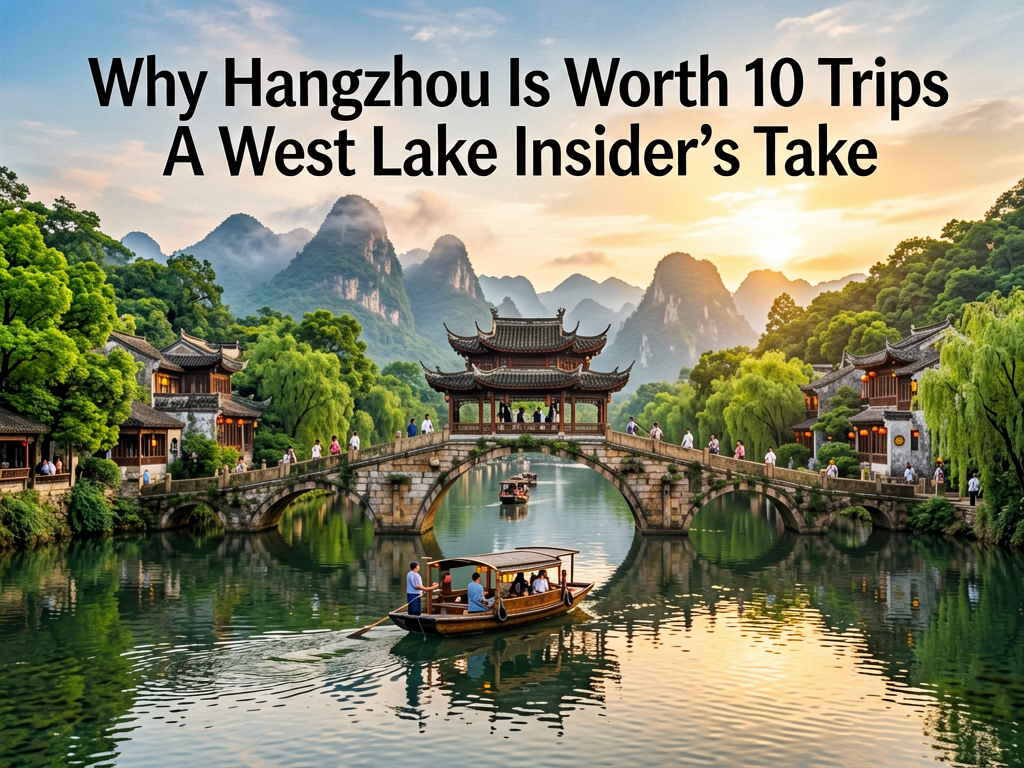
That’s when the magic happens. The mist hangs low over the water. The willow trees look like ink wash paintings. You’ll hear the distant sound of an old man playing the erhu. There’s no one else around.
I remember one specific morning last November. The air was crisp, smelling of damp earth and osmanthus. I sat on a stone bench near the Broken Bridge, just watching the fog roll in. A local jogger nodded at me. I nodded back. That tiny, silent exchange felt more authentic than any guided tour I’ve ever taken.
It’s peaceful. It’s quiet. It’s the kind of moment that makes you want to stay in China forever. Sound interesting? It’s better than you’d expect.
Longjing Tea Isn’t Just a Drink, It’s a Ritual
Let’s talk about Longjing tea. Everyone knows the name. But most people drink it wrong. They buy the generic stuff from a tourist trap and brew it in a plastic cup.
Go to Meijiawu or Longjing Village. Leave the main roads behind. The hike up to the tea plantations is short but steep. Your legs will burn. Your breath will shorten.
But when you reach the top, you’ll see terraced green hills stretching as far as the eye can see. The air smells like roasted beans and grass. It’s intoxicating.
I sat with an elderly tea master named Uncle Chen last spring. He didn’t speak much English. I didn’t speak much Chinese. But he showed me how to hold the glass. Not a mug. A tall, clear glass.
He poured the water at exactly 85 degrees Celsius. Not boiling. He explained that boiling water kills the delicate leaves. I watched the tea leaves dance in the water. They settled at the bottom like a green forest floor. I took a sip. It was sweet, nutty, and utterly refreshing.
It cost me about 50 RMB for two cups. In Beijing, that’s a snack. Here, it’s a meditation. I could sit there for hours. Trust me, you will.
Don’t just buy the tea. Experience the process. Watch the farmers pluck the leaves. Talk to the people who grow it. It’s a whole culture, not just a beverage.
Hidden Alleys Away From The Crowds
West Lake is famous. But the real Hangzhou lives in the shadows. The alleys behind the main tourist spots are where the city actually breathes.
Head north from the lake toward the Lingyin Temple area, but don’t stop there. Turn into the narrow streets of Qingzhen Alley. It’s quiet. It’s old. It feels like stepping back a hundred years.
I found a tiny noodle shop tucked away in a courtyard. No English menu. No pictures on the wall. Just a chalkboard with scribbles in Chinese characters.
I pointed at what looked like beef and asked for it. The lady smiled, handed me a bowl of rich, dark broth with tender chunks of meat and hand-pulled noodles. It was spicy, savory, and incredibly cheap. Maybe 20 RMB.
I shared the table with a local couple who were arguing good-naturedly about their kids’ school fees. They didn’t care that I was watching. They just wanted to eat their noodles.
That’s the Hangzhou I love. It’s not polished. It’s not staged. It’s raw and real. You have to seek it out. You have to be willing to get a little lost.
Most tourists stick to the West Lake perimeter. They take the boat ride. They buy the silk scarf. They leave. But if you wander inland, you’ll find a city that’s still figuring itself out.
The Food Scene Is Underrated
I’m no expert on every cuisine in China, but I’ll say this: Hangzhou food is better than most alternatives in the south.
People think of Sichuan for spice and Cantonese for freshness. But Hangzhou cuisine? It’s subtle. It’s refined. It’s about the quality of the ingredient, not the volume of the seasoning.
Dongpo Pork is the star. It’s braised pork belly that falls apart when you touch it. I had it at a small restaurant near Hubin Street. The meat was so tender it melted on my tongue. The sauce was sweet and salty, perfect with rice.
But don’t just go for the big dishes. Try the West Lake Vinegar Fish. Yes, it’s controversial. Some people hate it. I loved it. The fish is fresh, the vinegar cuts through the richness, and the texture is silky.
It’s an acquired taste, sure. But that’s part of the fun. I remember trying it with a friend from Shanghai. He grimaced. I grinned. We argued about it for twenty minutes. It was the highlight of the meal.
And the street food? Don’t sleep on the *satay* skewers or the stinky tofu. There’s a night market near Yuhuangshan Road that’s open until late. The smoke from the grills mixes with the cool night air. It’s chaotic and delicious.
I ate my weight in grilled squid that night. Did I regret it? Not for a second. It’s easier to eat your way through Hangzhou than you’d expect. And you’re going to want to.
Why You Need To Come Back
Here’s the hard truth. You can’t see Hangzhou in one trip. It’s too layered. Too deep.
The first time you go, you’re a tourist. You take photos. You check boxes. You see the highlights.
The second time, you’re a visitor. You know where to walk. You know which tea house to avoid. You start to understand the rhythm of the city.
The third time, you’re a friend. You have a favorite spot. You know the owner of the noodle shop. You understand why the locals love it here.
I’ve been back five times in three years. Each trip taught me something new. The first time, I was shocked by the beauty. The second time, I was fascinated by the history. The third time, I was relaxed. The fourth time, I was curious. The fifth time, I was home.
There’s always more to discover. A new alleyway. A hidden temple. A seasonal festival. The West Lake changes with the seasons. Spring is cherry blossoms. Summer is lotus flowers. Autumn is osmanthus. Winter is bare branches and mist.
Each season offers a completely different experience. You could visit every year for a decade and still find something new. It’s not a place you conquer. It’s a place you inhabit.
My Honest Take
I’ll be honest. I was skeptical at first. I thought it would be like Suzhou or Shanghai. Just another big city with a pretty pond.
I was wrong. Hangzhou is unique. It balances modernity and tradition in a way that feels effortless. The subway is clean and efficient. The high-speed rail connects you to everywhere. But step off the platform, and you’re in a world of gardens and temples.
It’s not perfect. The humidity in summer is brutal. The crowds in October are insane. But those are small prices to pay for the magic.
So, don’t just go to Hangzhou. Live in it. Spend time there. Get lost in it. Eat the weird food. Drink the strong tea. Talk to the old men playing chess.
It’s worth ten trips. Maybe more. I’m already planning my next one. And if you go, you will too.
Just promise me one thing. Wake up early. See the mist. And leave your camera at home for a bit. Just watch. Just be there.
You won’t regret it. I promise.