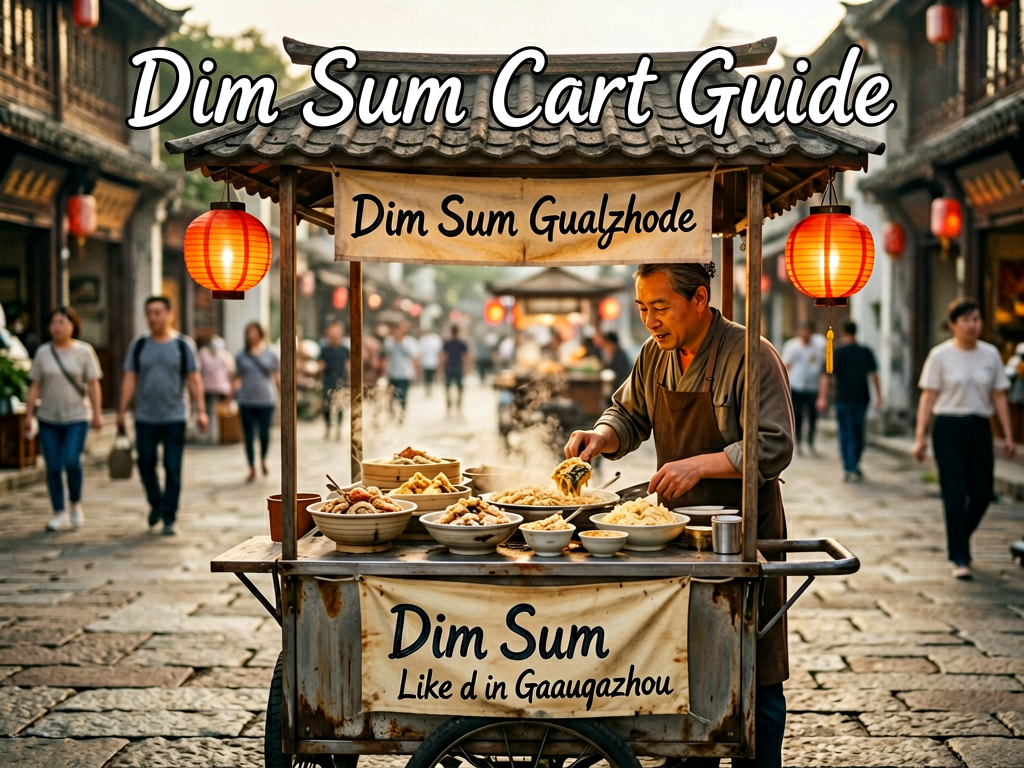
I’ll be honest. The first time I walked into a dim sum restaurant in Guangzhou, I felt completely lost. It wasn’t just the language barrier. It was the sheer, overwhelming chaos of it all. Waiters pushing metal carts through narrow aisles. A sea of steam. The clatter of porcelain bowls. And me, standing there with a blank stare, holding a napkin like it was a shield.
Most foreigners stick to the printed menu. They order steamed buns and rice noodle rolls because they recognize the names. But that’s not how you do it here. That’s not how you live. In Guangzhou, the real magic happens on those carts. It’s a sensory overload that you have to surrender to.
If you want to eat like a local, you have to let go of control. You have to trust the process. And yes, you have to learn the secret language of the yellow tickets. I spent eight years in China, and I’ve seen too many tourists make the same rookie mistakes. They waste money. They eat mediocre food. They miss the point entirely.
The Ticket System Isn’t Just a Quirk
Let’s start with the basics, because if you get this wrong, the whole experience falls apart. In most dim sum places in Guangzhou, you don’t pay per dish. You pay per stamp. You grab a stack of colored cards when you sit down, and the waiter tears one off for every plate they put in front of you.
It’s simple, right? Wrong. It’s tricky. The colors mean different things. Usually, yellow tickets are the cheapest items. Maybe twenty yuan each. Purple tickets might be the premium stuff. I’ve seen some places use green for seafood. It varies by restaurant, so keep an eye on the rack when you first sit down.
I remember my first proper yum cha session at Guangzhou Restaurant. I grabbed twenty yellow tickets, thinking I could get twenty plates of soup dumplings. Big mistake. The waiter looked at me with pity. He knew I was going to get sick. I ended up with three plates and a stomachache that lasted for days. Don’t be that guy.
Here’s the thing about the ticket system. It encourages you to share. You’re supposed to order a little bit of everything. A steamed bun here. A shrimp dumpling there. A piece of sticky rice. You’re building a puzzle on the table, not filling your plate with one thing. It’s about variety. It’s about trying things you wouldn’t normally pick.
Reading the Carts: What to Look For
The carts are rolling libraries of flavor. When a cart stops in front of you, don’t just point at the first shiny thing you see. Look at the labels. Look at the steam. If the dumplings look dry, skip it. If the buns look deflated, move on.
Shrimp dumplings, or har gow, are the litmus test. Any good dim sum place will have these. You’re looking for translucent skin. You want to see the pink shrimp inside, not buried under a cloud of flour. The skin should be slightly chewy, not mushy. If it’s white and opaque, it’s probably old. Walk away.
Siu mai is another classic. These are the open-topped dumplings with the pork filling and the crab roe on top. You want the wrapper thin. You want the meat juicy. If the meat looks gray or dry, that’s a sign the batch was made hours ago. In Guangzhou, fresh is everything. The best places make dumplings in batches throughout the day.
I love the pig’s intestines dish. Yes, really. It’s not for everyone. It’s usually marinated in soy and spices, then deep-fried until crispy. It sounds gross to outsiders, but the texture is incredible. It’s like a savory chip. I tried it on my third week in Guangzhou and I was hooked. Now I order it every time. It’s a local favorite for a reason.
The Tea Ritual: More Than Just a Drink
You can’t talk about dim sum without talking about tea. It’s not an afterthought. It’s the foundation. In Guangzhou, tea is how you cleanse your palate. It’s how you stay hydrated. It’s how you keep the conversation going while you wait for the next cart.
Most people just drink whatever is in the pot. Don’t do that. Ask for jasmine tea or chrysanthemum tea if you’re new. They’re light. They don’t overpower the food. Black tea is too strong for most dim sum dishes. It clashes with the delicate flavors of the dumplings.
Here’s a pro tip that most tourists miss. When you pour tea for others, tap your fingers on the table. It’s called finger-kowtowing. It’s a silent way of saying thank you. I learned this from a local friend who corrected me after my first month. He laughed when I said “thank you” out loud. He said, “Just tap. It’s faster.” Now I do it without thinking.
Some places will give you a small pitcher for rinsing your bowl and chopsticks. Use it. Wash off any dust from the market. It’s hygienic. It’s respectful. And honestly, it tastes better. I’ve had bowls that tasted like soap because they weren’t rinsed properly. Don’t risk it.
Ordering Strategies for the First-Timer
If you’re alone, don’t order too much. You’ll regret it. Two or three items max. Try one dumpling, one bun, and maybe a small plate of something savory like chicken feet. Yes, chicken feet. They’re weird. They’re gelatinous. But they’re delicious if you get the sauce right.
When you’re with a group, the game changes. Order one dish per person. That’s the golden rule. If there are four of you, order four dishes. If there are eight, order eight. It sounds like a lot, but you’re sampling. You’re not eating a full meal. You’re grazing.
I’ve seen groups of friends order ten plates each. They leave the restaurant full but unhappy. They missed the variety. They stuffed themselves with rice noodles and missed out on the exotic stuff. The goal is to leave slightly hungry. That’s when you know you had a good session.
Don’t be afraid to ask for less spice or no chili. Dim sum can be salty. It can be heavy. If you’re sensitive to that, speak up. The waiters are used to it. They’ll adjust the sauce or bring you extra water. It’s not a big deal. Just be polite.
The Secret Menu Items You Need to Try
Every restaurant has items you won’t see on the main cart. These are the specials. The things the chefs are proud of. Ask your waiter what’s fresh. What just came out of the steamer. Usually, they’ll tell you about something hidden in the back.
I remember one place in Liwan District. They had these small, sweet rice cakes stuffed with red bean paste. They weren’t on any cart. The waiter just whispered about them. I ordered two. They were sticky, sweet, and perfect. It felt like I’d been let in on a secret. That’s the feeling you want.
Look for seasonal items. Dim sum changes with the weather. In winter, you’ll see more hearty, warm dishes. In summer, lighter, cooler options. I once had a cold jelly dessert made from seaweed. It was refreshing. It cut through the grease of the earlier meals. It was unexpected. That’s what makes it memorable.
Don’t stick to the safe choices. The steamed buns are fine. But they’re boring. Try the char siu bao, but ask if they have the baked version. The texture is different. It’s crispier. It’s richer. It’s a totally different experience. I prefer the baked version now. It holds the meat better.
Handling the Bill and the Chaos
When you’re done, don’t just walk out. Wait for the bill. In some places, you hand in your remaining tickets. In others, the waiter calculates it for you. If you’re unsure, just point to the tickets. They’ll know what to do.
Check the bill carefully. Sometimes, they miss a ticket. Sometimes, they charge you for something you didn’t eat. I’ve had this happen. It’s rare, but it happens. If you see an error, point it out. Politely. Show them the ticket rack. They’ll adjust it. They won’t be mad. They’ll appreciate you catching it.
Leaving is the hardest part. You’re full. You’re warm. You’re happy. But you have to go. The next cart is coming. And you know you want to try one more thing. Resist it. Save it for next time. Dim sum is a marathon, not a sprint. You’ll be back tomorrow.
I’ve learned so much from these simple meals. It’s not just about food. It’s about community. It’s about slowing down. In a city that never sleeps, dim sum is your pause button. It’s your moment to breathe. To talk. To taste.
So next time you’re in Guangzhou, forget the printed menu. Grab a ticket. Watch the carts. Take a risk. Order the chicken feet. Try the jelly. Tap your fingers. And enjoy the chaos. It’s worth it. I promise.