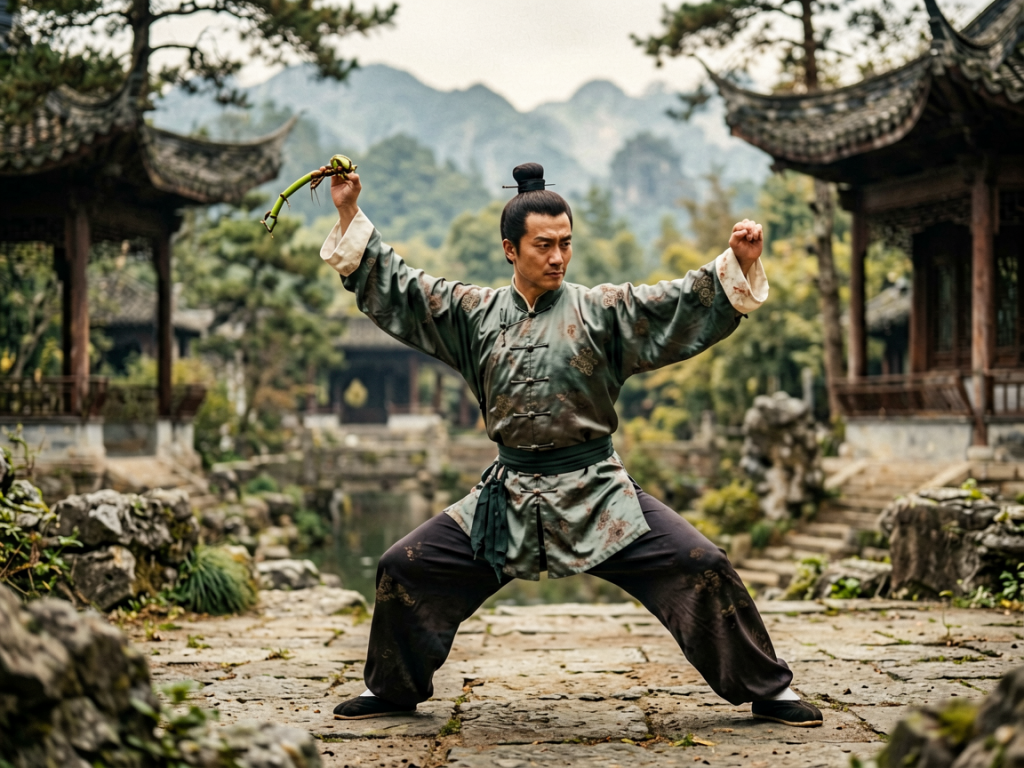
I’ll be honest, I walked into that dusty gym in Yantai expecting another slow-motion demonstration. The old masters love showing off the pretty forms anyway. But then Master Chen dropped into a low stance and snapped his left hand out like a whip. It moved so fast I barely saw it. His fingers hooked my wrist before I could even think about pulling away. That was the moment I realized Tanglang Quan isn’t about power. It’s about pure trickery.
How a Bug Beat the Battlefield
People always ask me why a style named after an insect survived the Cold War, the Cultural Revolution, and decades of MMA hype. I tell them it’s because the praying mantis doesn’t fight fair. It waits. It watches. It strikes where you aren’t looking. Northern Praying Mantis, or Tanglang Quan as we call it back home, actually started in Shandong province sometime around the late Ming dynasty. Legend says a guy named Wang Lang watched two animals fight and copied the moves. I’ve heard that story at least a hundred times, and honestly, I don’t care if it’s true. The philosophy holds up.
Chinese martial arts usually prize either overwhelming force or elegant flow. This style picks a third path. You use your opponent’s momentum against them while setting up traps. The classic eight-method system teaches you to sweep, block, parry, and strike in one continuous motion. It looks messy from the outside. Inside a real fight, it’s just efficient geometry. I remember watching a sparring match in Jinan where a skinny junior fighter kept getting tapped on the ribs before he even knew he was being hit. He wasn’t mad. He was just confused. Right?
The regional variations are fascinating too. Coastal schools in Yantai emphasize longer ranges and sweeping kicks. Inland branches near Tai’an stick to close-quarters trapping and rapid finger hooks. Both versions share the same core idea. You never meet force with force. You redirect it, disrupt the balance, and step inside the attack line before the punch fully extends. I tested this theory during a weekend seminar where we drilled the eight basic methods until my forearms felt like lead. The repetition paid off when I finally stopped reacting and started anticipating. That shift changes everything.
The Art of Looking Like You’re Losing
Here’s the thing about deception in combat. Most people assume they need to look confident to win. Tanglang Quan flips that script. You literally pretend to be open, weak, or off-balance until the other guy commits. Once they step forward, you already know where their center is. Your hands dart in, lock a joint, or redirect their punch right past your shoulder. It’s almost rude how often it works.
I tried this during a weekend workshop with an instructor named Lao Li. He told us to stop trying to overpower our partners. Instead, we should practice slipping punches by exactly three inches while tapping their elbow. Three inches. That’s all it takes. At first, it felt silly. I kept waiting for the big counterattack. There wasn’t one. Just quick, snappy motions that shut down attacks before they fully developed. By day three, my brain actually started reading body language differently. I noticed how shoulders tense up before a jab. How feet plant too early on a kick. Those tiny tells are gold in any street encounter.
The style relies heavily on what fighters call sticky hands drills. You maintain light contact with your partner’s arms so you can feel their intent change. It sounds like something from a movie, but it’s just tactile feedback. When you can sense a strike coming through muscle tension alone, you don’t need to watch the hands. I’m no expert, but I’ve sparred enough boxing and Muay Thai to know most beginners stare at the gloves. Mantis practitioners train their nerves instead.
We spent an entire Saturday just practicing the double-hook block and immediate palm strike combo. My partner threw clean crosses, and I barely moved my feet. I just let his arm slide off my guard while my other hand pressed into his bicep. He kept wondering why his punches weren’t connecting. I kept wondering why he kept trusting empty space. The psychological edge alone makes the style worth studying. You force people to swing at ghosts while you control the actual distance. It’s exhausting for them and effortless for you. Trust me, once you feel that disconnect, you’ll never want to go back to trading blows.
Why Modern Fighters Still Practice It
You’d think traditional Chinese martial arts would’ve faded into museum exhibits by now. But Tanglang Quan keeps showing up in underground gyms and private lessons across the north. Why? Because trickery beats rigidity. Modern combat sports love structured rulesets. Boxing has range. Wrestling has clinch control. Brazilian jiu-jitsu has ground positions. Each sport trains you to excel within those boundaries. Step outside, and you often freeze up.
I’ve seen this firsthand traveling through Hebei and Shanxi. Students practicing Northern Praying Mantis don’t care about point sparring formats. They drill close-quarters trapping, rapid finger strikes to pressure points, and low sweeps that drop knees. It’s not flashy. It’s brutally practical. When I asked one senior student how she handles guys who try to brawl, she just laughed and showed me a simple trap where her forearm catches a punch while her thumb presses into his brachial plexus. The guy drops without her throwing a second strike. I was genuinely impressed.
The beauty lies in adaptability. You aren’t forced into a rigid stance or a fixed rhythm. The footwork shifts constantly. You circle off the line of attack instead of backing straight up. Backing up leaves you trapped against a wall. Moving sideways keeps your options open. I tested this during a rainy afternoon session in Qingdao. My partner kept charging forward, but I just stepped slightly left each time his momentum carried him past me. By round three, he was breathing hard and laughing at himself. Sometimes survival is just about not standing where the trouble lands.
Eating well matters just as much as hitting pads. Chinese martial arts have never separated the body from daily life. You train hungry, you train tired, you train until your muscles remember what your mind forgets. I’d show up to classes with a thermos of ginger tea and a bag of roasted peanuts. The elders never complained. They just nodded and adjusted their footwork drills. Discipline looks different here. It’s less about grinding iron and more about understanding timing. When you grasp that concept, the techniques stop feeling like choreography and start feeling like conversation. You answer, you interrupt, you change the subject before they finish their sentence.
What Happens When You Actually Try It
Let me tell you, learning Tanglang Quan humbles you fast. The forms look graceful on video, but performing them solo feels awkward. Your wrists burn. Your calves shake. You constantly worry about crossing your own limbs or stepping on your partner’s toes. I spent three months just drilling the basic hand blocks and finger hooks. Nothing fancy. Just learning how to turn a linear punch into a rotational trap. To be fair, I expected more explosive movement. What I got was micro-adjustments. Tiny rotations of the forearm. Slight shifts in hip angle. That’s where the real power hides.
The trickiest part isn’t the strikes. It’s maintaining calm under pressure. When someone charges at you, your heart rate spikes. Your vision tunnels. Tanglang Quan drills force you to breathe through the panic. We ran shadow drills where my instructor would tap my shoulders randomly while I practiced hand patterns. Startle response ruined my form ten times before I stopped flinching. That’s the real test. Can you execute a precise joint lock when your pulse is hammering? I can’t do it yet. But I’m getting closer. Every time I slip a punch and redirect it, I feel a little more grounded.
Food breaks became sacred rituals during those early weeks. We’d train until 9 AM, then head to a nearby noodle shop for beef lamian. I still remember the first bowl I ordered. Thick hand-pulled noodles swimming in dark broth, topped with chili oil and cilantro. It tasted like comfort after hours of sweating over wrist rolls. The steam fogged up my glasses. Lao Li always said eating well matters just as much as hitting pads. Chinese martial arts have never separated the body from daily life. You train hungry, you train tired, you train until your muscles remember what your mind forgets.
I used to chase styles that promised knockouts in three seconds. Now I prefer the quiet ones. The ones that teach you how to disappear into someone else’s rhythm. Northern Praying Mantis didn’t survive centuries of war because it’s the strongest. It survived because it’s clever. It wins by making mistakes feel inevitable. I still can’t execute the full sequence without overthinking. That’s fine. The goal was never perfection. It’s just staying alive long enough to learn the next lesson. And honestly, that’s a much better way to spend a Tuesday morning.