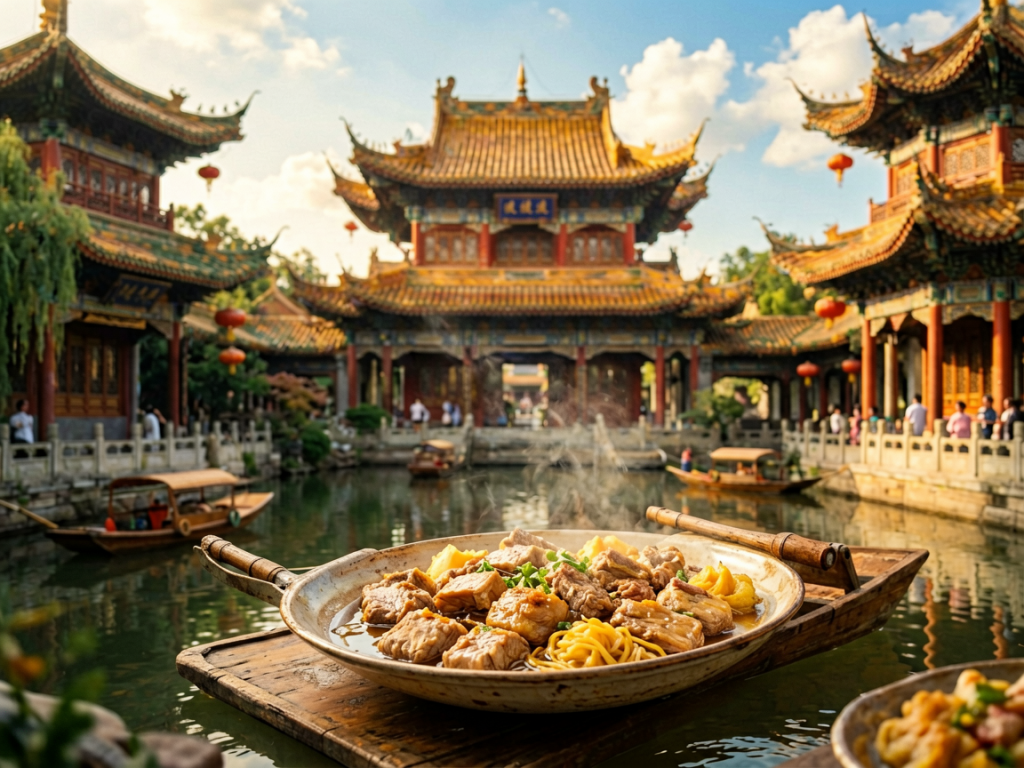
I still remember the night I realized Chinese gastronomy wasn’t just about spicy or not spicy. I was sitting on a plastic stool outside a narrow alleyway in Chengdu, watching a chef toss pickled chilies into a screaming wok. The smoke curled into my eyes. My stomach growled louder than the exhaust pipes.
Most foreigners walk into a Chinese restaurant and guess based on a handful of familiar names. They order kung pao chicken, assume everything else is numbing, and leave confused. That mistake costs you half the country’s flavor profile. Trust me, you don’t want to waste a single trip to China on guessing games.
The real framework locals use is called the 八大菜系. It breaks down regional Chinese food into eight distinct culinary traditions. Each one carries its own history, climate constraints, and cooking philosophies. Learning how they differ changes your entire approach to menus, markets, and late-night eats.
How we actually talk about these eight schools
I’ll be honest, nobody in China hands you a printed chart of the eight traditions. You stumble into them through conversations, train stops, and bad initial guesses that slowly become good final ones. The system started gaining traction in the early twentieth century when food writers tried to categorize centuries of shifting trade routes and imperial kitchens.
Today it’s less of a rigid academic box and more of a cultural shorthand. When a host in Shanghai says they prefer Jiangsu cooking, they’re warning you that your dinner will lean sweet, emphasize delicate knife work, and probably feature plenty of river fish. When someone in Xi’an mentions Shandong dishes, you know they’re talking about garlic, scallions, vinegar punches, and hearty grains.
The beauty of this framework is that it maps directly to geography. Mountains, rivers, coastlines, and seasons dictate what grows where. Cooking styles evolved to preserve, enhance, or balance those ingredients. You can read a province’s weather report and almost predict its dominant spices.
I spent three winters in Harbin and two summers in Guangzhou before the pattern finally clicked. Heat and humidity push people toward fermentation, bitter greens, and light broths. Cold, dry plains demand heavy fats, bold aromatics, and long braises. The eight traditions are just climate wearing an apron.
The fire of Sichuan and the sweat of Hunan
Sichuan cuisine gets worldwide fame for good reason. The dried peppercorns hit your tongue before the chilies ever do. That distinct 麻味 sensation lingers, making every bite feel electric. I learned to love it after a friend dragged me to a basement hotpot joint in Chongqing, told me to swallow my fear, and handed me a bowl of beef tendon swimming in chili oil.
Hunan food shares the spice DNA but throws out the numbing pepper entirely. Locals call it 干辣, which translates to dry heat. The chilies get stir-fried until they blister, releasing a smoky, focused burn that makes you sweat through your shirt within ten minutes. I tried a plate of chopped chilies and pork at a roadhouse near Changsha and nearly cried. Not from pain, but from how perfectly the fat carried the heat.
What separates them goes beyond pepper types. Sichuan relies heavily on fermented broad bean paste, garlic, ginger, and sugar to build layers of complexity. Hunan leans on fresh chilies, smoked meats, pickled vegetables, and clear broths that highlight the ingredient itself. One tastes like a layered orchestra. The other feels like a street fight.
You’ll find both across China now, but heading to their home provinces changes everything. Street vendors in Kunming serve Sichuan-style skewers that taste watered down compared to the originals. Real Hunan food requires locally grown peppers that simply don’t survive long shipments. If you can make it to either capital, do it. Your palate will thank you.
Cantonese quietness meets Jiangsu elegance
Walk into a morning tea house in Guangzhou and you’ll hear porcelain clinking, steam hissing, and waitresses yelling tray numbers like a choreographed play. Cantonese food prizes freshness above almost everything else. Chefs steam, boil, or quickly blanch proteins so the original texture stays intact. Soy sauce gets diluted. Sugar stays out. Fat gets rendered away whenever possible.
I’ve watched grandfathers inspect steamed fish for exactly forty-five seconds before nodding. That’s the standard. Overcooked Cantonese seafood insults the whole kitchen. The region’s subtropical climate delivers year-round produce, so menus rotate with the months rather than clinging to heavy preservation methods.
Jiangsu cooking takes the opposite approach. The Huaiyang branch, centered around Yangzhou and Huai’an, treats vegetables like sculptures and broth like perfume. Knife skills here aren’t showmanship. They’re functional. Thin slices cook evenly in delicate soups. Matchstick cuts release surface area for quick tosses without burning.Jiangsu plates often feature soy reduction, rice wine, and a careful hand of rock sugar. The result tastes sweet on first bite, savory on the second, and clean on the finish. I ate a bowl of fried noodles in Nanjing that took three hours to prepare because the chef hand-pulled the dough dozens of times. The texture stayed springy while the edges crisped slightly. It wasn’t fancy. It was perfect.
Few outsiders realize these two neighbors actually clash sometimes. Cantonese diners roll their eyes at Jiangsu sweetness. Jiangsu chefs shake their heads at Cantonese insistence on chasing pristine ingredients through high heat. Both sides claim superiority. Both sides are right in their own context.
Northern roots, eastern waters, and mountain kitchens
Shandong dishes form the foundation for much of northern Chinese cooking. Imperial kitchens historically borrowed techniques from Shandong chefs, so you’ll find echoes of their methods in Beijing’s top restaurants today. Scallion pancakes, black vinegar braises, and fresh seafood from the Bohai Sea dominate the landscape. I once ate a plate of oysters stuffed with minced pork in Qingdao and swore the ocean flavor never left my throat.
Zhejiang culinary tradition follows the coastline eastward. Hangzhou, Shaoxing, and Ningbo specialize in river fish, bamboo shoots, and tea-infused dishes. The water here runs cold and clear, so locals pair it with light soy, aged shaoxing wine, and just enough ginger to cut the fishiness. West Lake vinegar fish gets a bad reputation among tourists who order it at tourist traps. Real versions barely touch sugar or vinegar. They just taste clean and bright.
Fujian cuisine pulls from the coast and the hills in equal measure. Seafood meets mountain herbs. Oyster omelets sizzle next to slow-simmered soups that use dried scallops and rock sugar for depth. Fujian cooks master the art of 佛跳墙, a famous broth that combines abalone, sea cucumber, bird’s nest, and dozens of other ingredients over twelve hours. I had a simplified version at a family-run spot in Fuzhou that tasted like liquid comfort.
Anhui recipes wrap up the eight with heavy reliance on wild ingredients. Forest mushrooms, river eels, bitter melons, and preserved vegetables define the palette. The mountains isolate communities, so preservation techniques like drying, salting, and fermenting became survival tools rather than stylistic choices. Home cooks there still smoke meats over pine branches for a woody sweetness that city chefs struggle to replicate.
Travel between these four provinces and you’ll notice dramatic shifts in rice versus wheat ratios, noodle thickness, and even chopstick length. None of it is random. Every adaptation solved a real problem in a specific landscape.
Why this framework actually helps you eat better
I could be wrong about people caring about culinary taxonomy, but I’ve seen the same reaction repeat myself across thousands of meals. Visitors start asking fewer questions about spice levels and more questions about technique. They stop fearing unfamiliar ingredients and start hunting for seasonal markers on menus. Ordering becomes less like playing roulette and more like following a trail.
The eight traditions also save you money. Tourist zones charge premiums for generic fusion plates that borrow names without understanding origins. Head to a neighborhood spot in Suzhou and ask for 本帮菜, meaning local-style Jiangsu food. Ask for 私房菜 in Chengdu and you’ll get home recipes passed down through generations. The prices drop. The portions rise. The flavors sharpen.
You’ll still run into debates. Some chefs swear their province invented a dish first. Others insist certain techniques belong exclusively to their region. That friction is part of the culture. Food in China isn’t static museum art. It’s living conversation.
My advice is simple. Stop treating Chinese food as a monolith. Taste the differences between a Hunan stir-fry and a Sichuan dry pot. Notice how Jiangsu sweetness balances Cantonese brine. Watch how northern wheat breads replace southern rice cakes when the climate turns cold. Each choice tells a story about where people grew up and what they valued enough to preserve.
I’ve eaten alone in railway station snack bars and hosted banquets for thirty relatives in provincial capitals. The common thread isn’t any single ingredient. It’s intention. Someone somewhere decided this combination worked, refined it over decades, and passed it forward. Your job as a traveler is just to sit down, keep an open mind, and let the plate speak for itself.
Next time you scroll through a menu or point at a display case, remember the eight traditions behind it. Order something you’ve never tried. Ask what season inspired the dish. Pay attention to how the broth clears by the bottom of the bowl. You’ll walk away fuller, wiser, and ready for the next province.