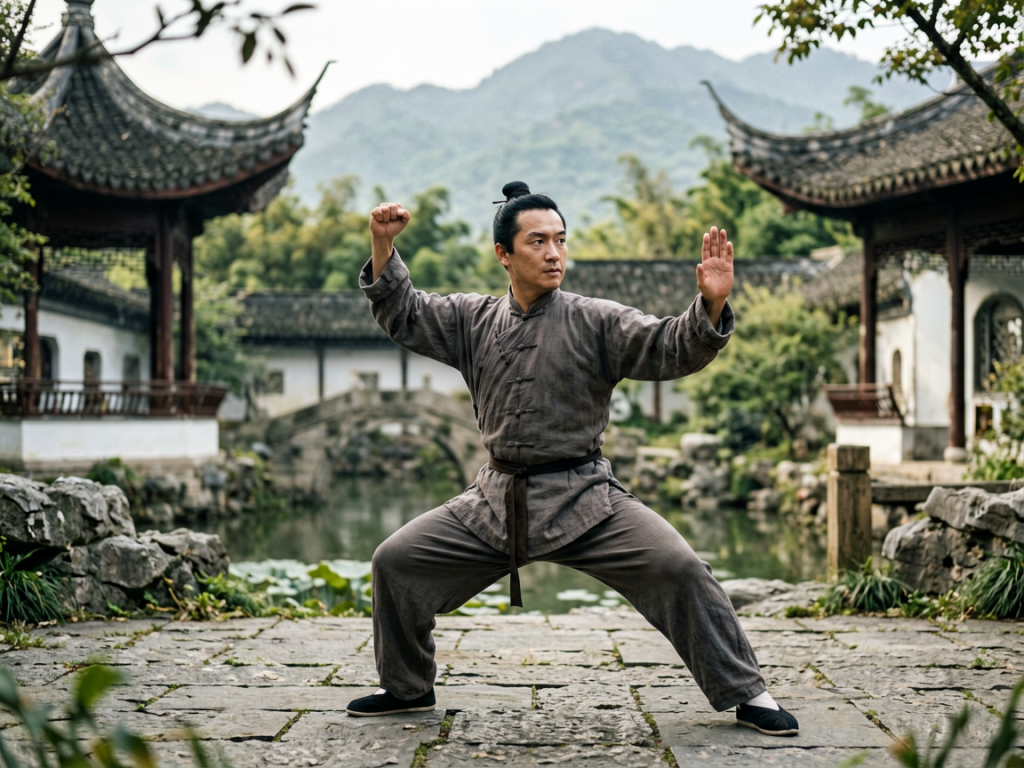
Look, I’ll be honest with you. When I first walked into that small, humid studio in Beijing’s Dongcheng district, I expected enlightenment. I expected to float. I definitely did not expect my knees to sound like dry twigs snapping underfoot every time I turned.
I’d spent years reading about the Eight Trigrams Palm. It’s the crown jewel of internal martial arts, right up there with Tai Chi and Xingyi. But unlike Tai Chi, which got famous for its gentle, slow movements, Bagua feels weird. It’s circular. It’s constant motion. It’s less about punching and more about spinning around people until they get dizzy.
So, I committed. For six months, I showed up. Seven days a week. No excuses. I wanted to see if the hype was real or just marketing fluff designed to sell expensive workshops to foreigners with too much time and money.
Here’s the thing nobody tells you before you start: it’s boring. And it hurts.
The First Month Was Just Walking in Circles
We didn’t even learn a “form” in the traditional sense during those first few weeks. We just walked. You know that move where you keep your torso upright, legs wide, and arms holding an invisible ball? Yeah, that. We called it the “Holding the Pole” stance.
For the first two weeks, my instructor, Lao Li, wouldn’t let us change direction. We just walked in a circle. Clockwise. Counter-clockwise. Back and forth. It felt ridiculous. I looked around the room and saw other students–some young kids, some retirees–all doing this mundane, repetitive walking. It wasn’t majestic. It was just walking.
But here’s where the magic started to creep in, subtly. By week three, my ankles stopped screaming. My hips loosened up. I realized that keeping my spine straight while moving sideways required a core engagement I hadn’t used since I was twenty. It wasn’t meditation, exactly. It was active focus. Every step had to be deliberate. You couldn’t zone out, or you’d trip over your own feet.
I remember standing there one rainy Tuesday, sweat dripping down my back despite the cool air, thinking, “Is this it? Is this what masters mean by ‘internal power’?” It felt like basic calisthenics. But Lao Li kept saying, “The body learns. The mind forgets.” I didn’t get it then. I’m still not sure I fully get it now.
The Pain of Unlearning Bad Habits
By month two, we introduced the palm changes. This is where Bagua gets tricky. You’re not just walking anymore; you’re changing hand positions, angles, and orientations while maintaining that circular momentum. It’s like trying to solve a Rubik’s cube while running on a treadmill.
I struggled. Badly. My shoulders got tight. My neck ached from trying to keep my head level. I caught myself tensing up whenever I felt off-balance, which is the exact opposite of what you’re supposed to do.
One afternoon, after class, I stayed behind to practice. My neighbor, Mei, who had been training for ten years, watched me for a minute. She didn’t offer advice. She just said, “You’re fighting the circle. Let the circle pull you.”
That line stuck with me. I started visualizing an invisible string attached to my belly button, pulling me through the turns. I stopped trying to force the movements. I let my weight shift. Suddenly, the stiffness in my shoulders dropped. It wasn’t a lightning bolt moment, but it was a release. Like unclenching a jaw I didn’t realize I was grinding.
This phase taught me more about my own physical ego than any gym session ever did. I wanted to look cool. I wanted to be fast. Bagua doesn’t care. Bagua cares about efficiency. If you waste energy trying to look impressive, you lose balance. It’s a harsh teacher.
When The Movements Started to Click
Months three and four were the turning point. The individual moves started connecting. We learned the “Eight Mother Palms,” the foundational sequences. At first, they felt like disconnected dances. Now, they felt like a conversation.
I remember the first time I did the full sequence without stopping. It was late autumn, and the studio had huge windows opening to the courtyard. The air smelled of roasted chestnuts from the street vendor outside. I moved through the forms, twisting and turning, palms cutting the air.
For maybe ten seconds, I wasn’t thinking about my feet. I wasn’t counting the steps. I was just moving. It was fluid. It was quiet inside my head. That’s the “internal” part they talk about. It’s not about muscle strength; it’s about neural coordination. Your brain stops micromanaging every tiny adjustment and lets the body handle it.
Was it perfect? Absolutely not. I still stumbled on the transitions. My left arm still lagged behind my right. But that fleeting moment of flow? It blew me away. It made me want to go back the next day. And the day after that.
The Physical Toll Nobody Mentions
Let’s talk about the downside. Six months of daily training took a toll. My knees took the brunt of it. Bagua involves a lot of low stances and pivoting on one foot. If your alignment is off, your meniscus pays the price.
I had to learn to listen to my body. There were days when my joints felt inflamed. I stopped pushing through the pain. Instead, I adjusted my stance height. I focused more on upper body mechanics and less on depth. It wasn’t the “hardcore” approach some martial artists推崇, but it was sustainable.
Also, let’s be real about the mental fatigue. Walking in circles for an hour can make your mind race. You start thinking about your job, your rent, that awkward thing you said to a colleague last week. Bagua forces you to confront your distractions. You can’t hide in the movement. If you’re distracted, you fall.
I found myself meditating more in my daily life, not because I sat on a cushion, but because I carried that awareness with me. Making tea became a mindful act. Walking to the subway became a practice in balance. It bled into everything.
What About Self-Defense?
This is the big question, right? Can you actually fight with this stuff? I won’t lie to you. In a street fight, Bagua isn’t your first tool. It’s not about throwing haymakers. It’s about redirection, joint locks, and off-balancing opponents.
During our sparring sessions, which started around month five, I didn’t win many rounds. I got thrown more times than I care to admit. But I started understanding *how* I got thrown. I saw how a slight shift in angle could unbalance a much larger opponent.
It’s less about winning a brawl and more about controlling the space between you and someone else. It’s defensive. It’s evasive. You’re not meeting force with force; you’re letting force pass by while you slip in at an angle.
To be fair, I’m no combat expert. But I respect the strategy. It requires high emotional control. If you get angry, you lose the circle. If you panic, you break the form. It teaches you to stay calm under pressure, which is useful in fights, sure, but also in boardroom meetings and family arguments.
The Verdict After Six Months
Did I become a master? Hardly. I’m still a beginner. I can walk the circle without falling. I can transition between palms without losing my breath. But I’m not floating. I’m not projecting energy through walls.
However, what I got was something better. I got better posture. I got stronger ankles. I got a mental anchor in a chaotic world. I learned that consistency beats intensity. Showing up every day, even when it’s boring, even when it’s hard, builds something solid.
If you’re thinking about trying Bagua, do it. But drop the expectations. Don’t expect instant mastery. Don’t expect to look like a kung fu movie star. Expect to sweat. Expect to be frustrated. Expect to walk in circles until your legs feel like jelly.
And when you finally hit that moment of flow, when the movement just happens and you’re part of the machine, you’ll understand why we keep coming back. It’s not about the fighting. It’s about the dance. And honestly? It’s a pretty good dance.
Just maybe wear comfortable shoes. And bring a towel. Lots of towels.