Here’s the thing about Chinese food in America. It’s delicious, sure. But it’s also stuck in a time capsule from 1985.
I remember my first week in Brooklyn, starving after a long flight. I walked into a dimly lit spot on 4th Avenue and ordered “Chicken with Broccoli.” The sauce was thick, sweet, and orange. It filled my stomach, but it didn’t fill my soul.
That meal defined what most people think Chinese food is. It’s safe. It’s familiar. It’s designed to please every palate, even the pickiest kids.
But lately, I’ve been eating differently. A lot differently.
I’m sitting in a tiny, steam-filled restaurant in San Francisco’s Richmond District right now. There are no menus on the walls. No pictures of dumplings. Just a line of hungry locals waiting for a table.
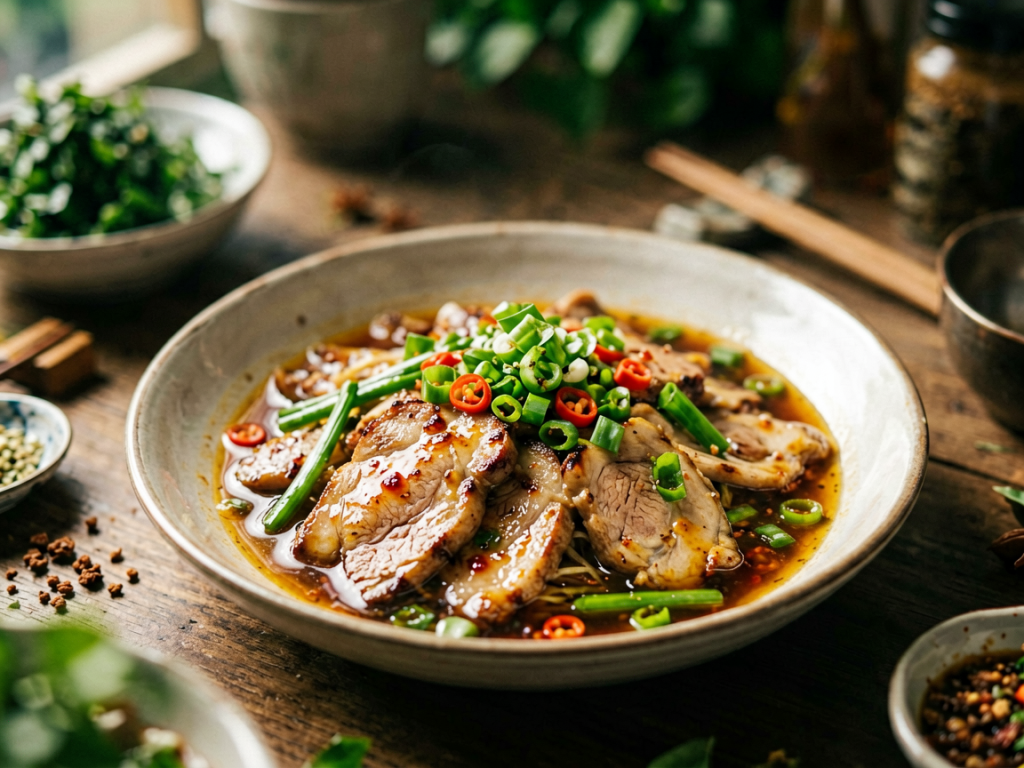
The chef, a guy named Wei who grew up in Chengdu, just handed me a plate of cold noodles. They weren’t covered in peanut butter or soy sauce. They were dressed in a spicy chili oil that smelled like Sichuan peppercorns and fresh basil. There was cucumber ribbons so thin they looked like glass.
It wasn’t takeout. It wasn’t even really “Chinese food” in the way my parents knew it. It was something new. Something alive.
This is what people are calling “New Chinese Cuisine.” And it’s taking over major cities abroad, quietly rewriting the rules of what we expect from Chinese restaurants.
The End of the Orange Sauce
Let’s be honest. The old model is broken. For decades, Chinese restaurants abroad survived on volume. You got cheap prices, huge portions, and food that tasted exactly the same in every city.
If you ordered Kung Pao Chicken in New York, you’d get basically the same dish in Chicago or London. It was consistent, but it was boring.
The new wave of chefs doesn’t care about consistency. They care about origin.
I spent an afternoon last month with a chef named Lin in Vancouver. She runs a small spot that serves dishes from her grandmother’s village in Yunnan. We talked about ingredients while she prepped mushrooms that I’d never seen before.
“In the US, people want sweet and sour,” she told me, shaking her head. “But in Yunnan, we use wild herbs. We use fermentation. We eat what grows nearby.”
She served me a dish called “ant egg salad.” Yes, really. Ant eggs.
I was skeptical. I admit it. I’ve eaten a lot of weird stuff, but ant eggs? They looked like tiny yellow pearls. I took a bite. It was creamy, tangy, and had a texture like soft cheese.
It blew me away. And it wasn’t some fancy molecular gastronomy trick. It was just traditional food from a part of China that most Americans have never heard of.
This is the shift. Chefs aren’t just serving Mapo Tofu anymore. They’re serving regional specialties that challenge your definition of what Chinese food can be.
They’re replacing the deep-fried batter with fresh, local produce. They’re trading the sugar-heavy sauces for vinegar, chili, and fermented bean pastes.
It’s riskier for the restaurants. It’s harder to market. You can’t put a picture of “Ant Egg Salad” on a flyer and expect your auntie to order it.
But customers are tired of the same old thing. We want flavor. We want surprise. We want to taste where the food actually comes from.
Ingredients Matter More Than Ever
One of the biggest changes I’ve noticed is how these new restaurants source their food. In the old days, everything came from a wholesale distributor. Frozen vegetables. Pre-marinated meats.
Now? Many of these chefs are working directly with local farmers.
I visited a spot in London called “Xiao Chi.” It’s tiny. You can’t fit more than ten people inside. The owner, Sarah, used to work in Michelin-starred French kitchens.
She told me she spends three hours every morning at the market. She buys bok choy that was harvested yesterday. She finds ginger that’s actually spicy, not watery.
“Chinese cooking is all about balance,” she said. “If your ingredients are weak, you need to add more salt. More MSG. More sugar to cover it up.”
She showed me a dish of stir-fried greens. Just greens, garlic, and a splash of Shaoxing wine. That’s it.
In a traditional takeout joint, this dish would be drowned in oyster sauce. Here, it tasted like green heaven. Crunchy, sweet, slightly bitter, and deeply aromatic.
It made me realize how much I’d been missing out on.
We’ve been trained to expect heavy sauces. We’ve been conditioned to think that more flavor means more additives. But this new movement proves that simplicity is actually harder to master.
When you can’t rely on sugar to mask bad vegetables, you have to be honest with your cooking.
This approach is gaining traction because it feels healthier. Not in the diet-culture sense, but in the genuine sense. It’s less processed. It’s less oily. It respects the ingredient.
I’m no nutritionist, but I know that eating fresh vegetables tastes better than eating frozen ones. Always has, always will.
The Atmosphere Has Changed Too
You can’t talk about this trend without mentioning the vibe. Old-school Chinese restaurants were often loud, crowded, and fast-paced. You ate quickly, left quickly.
The new spots feel different. They’re designed for lingering.
I dined at a place in Melbourne called “The Wok.” The interior was minimalist. Concrete floors. Soft lighting. Jazz playing quietly in the background.
There were no red lanterns. No dragons on the wall. Just clean lines and warm wood.
The menu was handwritten. It changed every week based on what was in season. We spent forty minutes just discussing which tea to order.
It felt less like a dinner and more like a cultural exchange.
The staff explained each dish. They talked about the region it came from. They suggested pairings. It was educational without being pretentious.
To be fair, this isn’t for everyone. Some people just want a quick fix. They want beef chow fun and a cold beer. They don’t want a lecture on Sichuan geography.
But there’s a growing demographic of foodies who want that experience. Young professionals. Expats. Locals who are curious about the world.
They’re willing to pay more for quality. They’re willing to wait longer for service.
I saw a couple in the corner of The Wok spending an hour over four small plates. They weren’t rushing. They were talking. Laughing. Enjoying the moment.
That’s the dream, right? Food brings people together. Why should it only happen at fancy French bistros?
Challenges on the Horizon
Of course, this isn’t all smooth sailing. I’ll be honest, there are hurdles.
Sourcing authentic ingredients abroad is expensive. Shipping dried tangerine peel or specific types of chili from China costs a fortune. Many chefs struggle to keep prices low enough for regular diners.
I spoke to a cook in Toronto who complained about supply chain issues. He couldn’t find the right kind of Sichuan peppercorn that hit the back of your tongue properly. So he substituted something else.
The dish suffered. Customers noticed. They commented online that it lacked the “numbing” sensation, known as *mala*.
That’s a key part of Chinese cuisine. If you lose the authenticity, you lose the soul.
Chefs are walking a tightrope. They need to adapt to local tastes without diluting the tradition too much. It’s a delicate balance.
Some try to bridge the gap. They offer one or two “safe” dishes alongside the experimental ones. It’s a smart business move, even if it feels a bit contradictory to the ethos.
I also worry about gentrification. When Chinese food becomes high-end, it becomes inaccessible to the communities that created it.
Many of these new restaurants are located in trendy neighborhoods with high rent. The average bill is $40 per person. That’s not cheap for a family of four.
Will the culture survive if it’s priced out of reach? I hope not.
But maybe that’s just my paranoia talking. Maybe the tide is turning. Maybe younger generations are rediscovering their heritage through these modern lenses.
A Future Worth Tasting
I’m optimistic. I really am.
Last weekend, I went to a pop-up event in Shanghai that featured chefs from across Asia. There was a Korean chef making kimchi stew with Chinese noodles. A Thai chef using Sichuan peppercorns in his curry.
It was messy. It was loud. It was delicious.
We sat on plastic stools, sharing plates, laughing in broken English and Mandarin. Nobody cared about the price tag. Nobody cared about the decor.
We just cared about the food.
This is what the future looks like. Not rigid categories. Not strict traditions. But a fluid, evolving conversation between cultures.
The rise of New Chinese Cuisine isn’t just about better food. It’s about respect. Respect for the ingredients. Respect for the history. And respect for the diner who wants to learn something new.
So next time you’re craving Chinese food, skip the takeout app.
Look for the small place with the handwritten menu. Ask the chef what’s fresh today. Be brave. Try the weird stuff.
You might just find yourself staring at a plate of ant eggs, wondering why you never tried them sooner.
I certainly did.
And trust me, it’s worth it.