Humidity That Feels Like A Warm Hug
I still remember the moment I stepped off the plane in Jinghong. The air hit me like a wet towel, thick with heat and the scent of rotting vegetation. It wasn’t unpleasant, exactly. It was just… alive. If you’re used to the sterile, air-conditioned bubbles of Beijing or Shanghai, this will shock your senses.
Xishuangbanna isn’t just another tourist trap in Yunnan. It’s something entirely different. It’s China’s tropical edge, a place where the border with Laos feels closer than the distance to Kunming. The locals here aren’t Han Chinese. They are Dai, an ethnic group with roots that stretch back through Southeast Asia.
I’ve been living in China for eight years now. I’ve seen a lot. But nothing prepares you for the sheer humidity here. You sweat within five minutes of leaving the airport. Your shirt sticks to your back before you even find your taxi. And honestly? I loved it. It felt like being washed clean of all that northern dust.
Elephants With Attitude
You can’t talk about Banna without talking about the elephants. Not the ones in cages, but the wild Asian elephants that roam these jungles. They’re shy, sure, but they’re also powerful. And occasionally, they’re rude.
I went to the Wild Elephant Valley last spring. The guide, a local Dai man named Lao Li, warned us immediately. “Don’t make noise,” he said. “They hate loud noises.” I nodded, trying to look respectful. Then a guy behind me sneezed. Loudly.
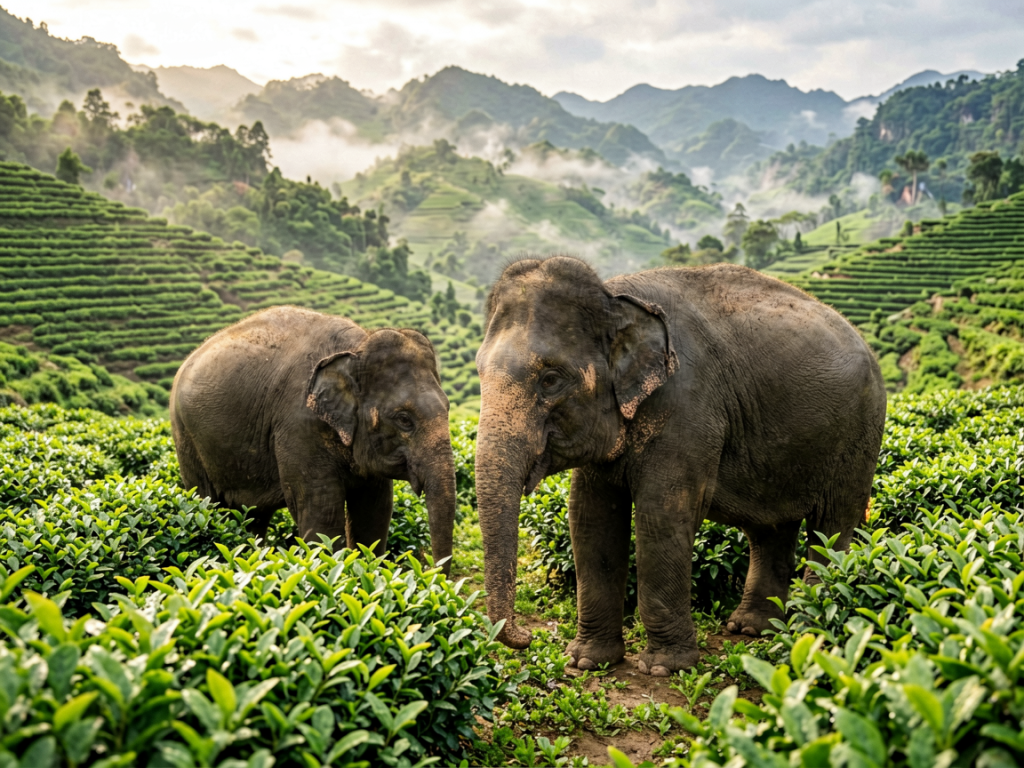
The jungle went silent. Even the birds stopped singing. We waited for twenty minutes. Finally, we spotted a matriarch leading two calves across a muddy ridge. They were gray, wrinkled giants. The calves were playful, swatting at each other with trunks longer than my legs.
It blew me away. In China, you see wildlife mostly in zoos or on stamps. Here, it’s real. It’s breathing. It’s watching you back. I felt small. Not in a bad way, but in a humbling way. These animals have owned this land for thousands of years. We’re just guests.
If you go, hire a local guide. Don’t try to scout it yourself. The forest is dense, and the terrain is tricky. Plus, Lao Li told me stories about the elephants’ migration patterns that I’d never find in a book. He knows which trails they use in the rainy season. He knows where they dig for salt. That’s the kind of knowledge you can’t buy online.
Tea Trees Older Than My Grandparents
Let’s talk tea. I know, I know. Everyone loves tea in China. But the tea in Banna is different. It’s pu’er. And the trees here are ancient.
I visited a village called Manzhonglin to see some of the oldest tea bushes in the world. Some of these trees are over a thousand years old. Can you imagine? They were growing when the Mongols were still riding horses across the steppe.
The farmer there, Auntie Wang, took me into her garden. She plucked leaves from a branch that looked more like a tree trunk. She brewed a cup right then and there. The water was hot, clear, and smelled faintly of flowers.
I sipped it. It was bitter at first. Then sweet. Then floral. It changed flavors with every sip. I’ve drunk pu’er in big cities, aged in warehouses. But this? This was raw. Unfiltered. It tasted like the earth itself.
Buying tea here is an experience, not a transaction. You don’t just grab a bag and leave. You sit down. You drink. You talk. Auntie Wang told me how her family has tended these trees for generations. She showed me how to identify the best leaves. She laughed at my clumsy attempts to roll the fresh leaves between my fingers.
“Patience,” she said. “The tea waits for no one, but it rewards those who wait.”
I bought three kilograms of dried leaves. I drank half of it in the next week. The rest I sent home. My friends in New York think I’m crazy for paying so much for green leaves. But they haven’t tasted the real thing. They haven’t sat under a thousand-year-old tree while the monsoon rain starts to fall.
Food That Burns And Heals
Okay, let’s get to the good stuff. Food. Dai cuisine is spicy, sour, and fresh. It’s a far cry from the heavy, oily meals you get in Sichuan or Hunan. Here, they use lemongrass, ginger, and chilies. Lots of chilies.
I tried “sour soup fish” at a night market in Jinghong. The broth was yellow, cloudy, and smelled intensely of fermented vegetables. The fish was fresh, caught that morning from the nearby Mekong River tributaries. I added a spoonful of chili paste. My mouth burned. I started sweating again. But I couldn’t stop eating.
The flavors are complex. Sweet from the coconut milk in some dishes. Sour from the vinegar and tamarind. Salty from the fermented shrimp paste. It’s a flavor profile that doesn’t exist anywhere else in China.
I also ate grilled chicken wings covered in cumin and chili powder. The skin was crispy, the meat juicy. I drank beer–local Brand New Star beer–with guys I met at the bar. We didn’t speak the same language perfectly, but we understood each other. Laughter translates well.
One night, I ordered a dish called “stuffed banana flower.” I had no idea what it was. The server pointed to a large purple bud. “Sweet,” she said. It was definitely not sweet. It was savory, stuffed with minced pork and herbs, steamed until tender. It was delicious. I learned to trust the menu pictures after that.
Buddhist Temples And Golden Roofs
You can’t walk around Jinghong without noticing the temples. Buddhism is huge here. Specifically, Theravada Buddhism, the kind you see in Thailand or Myanmar. The temples are bright gold, reflecting the sun. They’re stunning.
The Great Buddha Temple is the biggest. It’s massive. I went there at dusk. The monks were chanting. The sound echoed off the walls. It was peaceful. I sat on a bench and just listened.
A monk noticed me staring. He smiled and invited me in for tea. We sat on the floor, cross-legged. He poured green tea into small bowls. We talked about nothing important. Life, weather, the traffic in Jinghong. He told me that for Dai people, the temple is the center of community. It’s where they celebrate new year. It’s where they marry.
I respect that. In the West, religion is often private. Here, it’s public. It’s part of the fabric of daily life. You see people praying in front of shrines on street corners. You see them offering food to monks early in the morning. It’s sincere. It’s not performative.
During the Water Splashing Festival, which marks the Dai New Year, the whole town joins in. Everyone gets wet. Strangers splash each other. It’s chaotic. It’s fun. I got soaked. I lost my phone once, but found it later, dry in my pocket. A small miracle.
The Jungle Night Market
If you want to see the real pulse of Banna, go to the night market. It opens late and stays open late. The air is filled with smoke from grills and the smell of spices.
I walked past stalls selling exotic fruits. Mangoes the size of my head. Pineapples that were pink inside. I bought a bag of rambutan and peeled one open. The flesh was translucent, sweet, and slightly tart. It stained my fingers red. I didn’t care.
There were vendors selling insects. Fried crickets. Grilled silkworms. I watched a young couple eat them like popcorn. I tried a scorpion. It tasted like shrimp, but crunchier. I won’t lie, it was an acquired taste. But hey, I went for it.
The music is loud. Electronic beats mixed with traditional Dai instruments. People dance in the streets. No lines, no stages, just movement. I joined in. My dancing skills are limited, but nobody cared. Everyone was having too much fun to judge.
Why You Should Go
I’ll be honest. Traveling in China can be exhausting. The crowds in major cities are overwhelming. The language barrier is real. But Banna? Banna is different. It’s slower. It’s greener. It’s warmer.
You don’t need to speak perfect Mandarin here. Many older Dai people speak limited Chinese, but they’re friendly. A smile goes a long way. Most younger people speak English, especially those working in tourism.
The cost is low. You can eat a great meal for five dollars. A hotel room with AC runs maybe thirty bucks. It’s affordable luxury. You can live like a king on a budget.
But more importantly, it’s authentic. You’re not seeing a theme park version of Chinese culture. You’re seeing a living, breathing culture that has survived centuries of change. The Dai people hold onto their traditions tightly. Their clothes, their food, their religion–it’s all still there.
I left Banna feeling refreshed. Not just from the heat, but from the simplicity of it all. No rush. No stress. Just nature and people.
So, pack your bags. Bring sunscreen. Bring an empty stomach. And leave your prejudices at the door. Xishuangbanna might just change the way you see China. Or maybe it’ll just change the way you see yourself. Either way, you won’t regret it.