I still remember the first time my landlord, Uncle Li, refused to sleep in the corner bedroom of his shabby apartment in Chengdu. He didn’t want to talk about it. He just shook his head, patted the wall, and muttered something about “unresolved business.” I was young then, fresh off the plane from Chicago, and I thought he was just being superstitious in that quirky, endearing way that so many Chinese elders are.
Turns out, I was wrong. It wasn’t quirkiness. It was reverence. And it was terrifyingly real to him.
You might think ghost stories are just bedtime scares for kids. But in China, they’re something else entirely. They’re cultural archives. They’re the way families keep their history alive when the official records don’t care about the little people. Every old house in this country seems to have one. A whisper in the hallway. A cold spot in the kitchen. A face in the window.
If you’ve never lived here long enough to hear them, you might miss the point. You’ll just hear nonsense. But once you listen closely, you’ll realize these aren’t stories about demons. They’re stories about belonging.
The Weight of the Walls
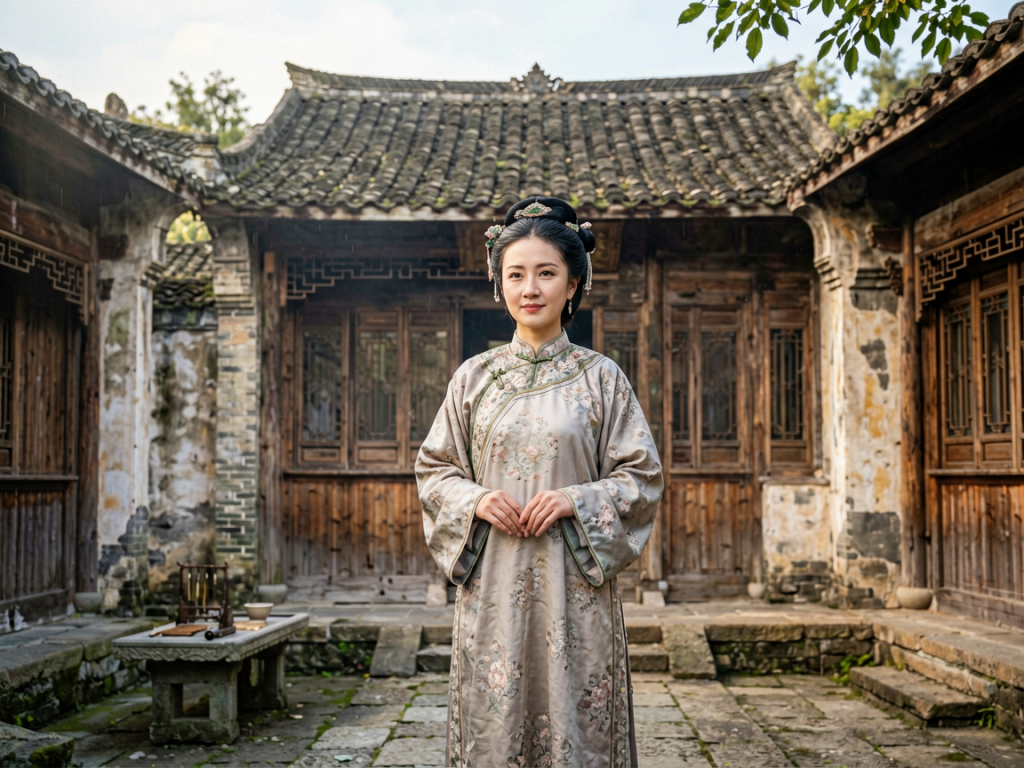
I spent three weeks with a friend named Wei in her grandmother’s hometown, a crumbling courtyard house in Beijing. The place was a mess of peeling paint and broken tiles. To an outsider, it looked like a demolition site waiting to happen. To Wei, it was a temple of memory.
Wei told me the story of the house every winter. She said that during the Cultural Revolution, her great-uncle had been taken away in the night. He never came back. The neighbors stopped talking about him. But the house? The house remembered.
Wei claimed you could hear him coughing in the study if you sat there after midnight. Not a scary cough. Just a tired, rhythmic sound. Like he was waiting for someone to ask him how he was doing.
I laughed at first. I’m an American. I believe in physics, not phantoms. But then I slept in that study. And I swear to you, the air felt heavy. Thick. Like the atmosphere itself was holding its breath.
This is the thing about Chinese ghost stories. They’re rarely about evil intent. The spirits aren’t trying to hurt you. They’re trying to be seen. They want acknowledgment. In a culture where filial piety is the highest virtue, forgetting the dead is almost worse than death itself.
So the ghosts haunt the living to remind them: I was here. I mattered. Don’t forget me.
It’s a beautiful, tragic concept, really. And it explains why so many families refuse to sell their old homes. They aren’t just protecting property values. They’re protecting memories. Selling the house feels like kicking your ancestors out onto the street.
Rituals Over Ridicule
When I first moved into my current apartment, I noticed the small shrine in the hallway. It held incense, fruit, and a framed photo of a woman I didn’t recognize. The previous tenant had left it there. My heart sank. I thought, “Great. Now I’m renting a haunted space.”
I asked my Chinese colleague, Sarah, about it. She didn’t flinch. She just nodded and said, “That’s Auntie Chen. She lived here for forty years. She’s still looking after the building.”
I was confused. Why leave a shrine? Why not remove it?
Sarah explained that in Chinese tradition, a spirit left unacknowledged becomes a wandering orphan. And orphaned spirits are restless. By leaving the shrine, by offering incense on Qingming Festival or the Hungry Ghost Festival, you’re keeping the peace. You’re saying, “We see you. You’re safe here.”
I started participating. It wasn’t easy. I’m not Buddhist or Taoist. But I bought some joss sticks. I lit them. I bowed. It felt strange, sure. But also… comforting.
There’s a profound sense of continuity in these rituals. In the West, we often treat death as a finality. A closed book. Here, it’s a conversation. The old house isn’t just bricks and mortar. It’s a participant in the family dynamic.
I’ve seen families argue over which ancestor gets the best spot on the altar. I’ve seen cousins fight over who gets to burn the paper money for the upcoming festival. It sounds materialistic to outsiders. But it’s actually about connection. It’s about keeping the family tree rooted in soil that hasn’t existed for generations.
And if the house is empty? Well, that’s when things get tricky. An empty old house in China is like a library with no librarian. Books go missing. Pages turn yellow. Stories get lost.
The Fear of Being Forgotten
Let’s talk about the darker side of this. Not all ghost stories are sweet. Some are warnings.
In rural Sichuan, I met a man named Lao Zhang. His family had lived in a valley village for centuries. The house was ancient, built from rammed earth and timber. But lately, the roof had been leaking. The walls were cracking.
Lao Zhang told me that the last person who lived in the house was his grandfather’s second wife. She had been mistreated by the family and died alone in the attic. Since then, anyone who tried to renovate the house found that their tools went missing. Their finances collapsed. Their health failed.
Most people would call that bad luck. Lao Zhang called it justice.
He didn’t want to demolish the house. He wanted to restore it. Not because he believed in ghosts, but because he believed in responsibility. “If we fix the house,” he said, “we fix the memory. If we fix the memory, we honor the pain. If we honor the pain, maybe she can finally rest.”
That line stuck with me. Maybe she can finally rest.
It flips the script on Western horror movies. Usually, the ghost is the problem. The living need to exorcise it. Here, the ghost is the victim. The living need to heal it.
It’s a subtle but massive difference. It means that these stories aren’t about fear. They’re about empathy. They force the living to confront the hardships of the past. To look at the marginalized, the forgotten, the victims. And to say, “Your suffering matters too.”
I’ve noticed this pattern everywhere I go. Whether it’s a high-rise in Shanghai or a farmhouse in Henan, the ghost stories are always tied to trauma. A war. A famine. A divorce. An injustice. The house absorbs the pain. And then it leaks it out through drafts, creaks, and shadows.
It’s psychological, sure. Trauma lives in bodies, and apparently, it lives in buildings too. But treating it as literal truth helps people process it. It gives form to formless grief.
Modern Homes, Ancient Spirits
You might think this is all outdated. That young Chinese people have moved on to concrete apartments and smart homes, leaving superstition behind.
You’d be surprised.
I live in a brand-new condo in Shenzhen. Glass walls, steel beams, zero character. Or so I thought. Last month, a neighbor complained that her new baby wouldn’t stop crying in his room. No matter what she did. Pacifiers, lullabies, late-night feeds. Nothing worked.
She called a feng shui master. He walked around, sniffed the air, and pointed to the wall shared with the unit above. “Someone died there,” he said. “Natural causes, but with unfinished business.”
The previous owner hadn’t mentioned anything. The developer definitely hadn’t. But the feng shui master knew. He told the woman to place a mirror facing that wall. Not a convex mirror. Just a regular one.
She did it. The next day, the baby slept through the night.
Was it magic? I don’t know. Maybe it was placebo. Maybe the mother just needed permission to worry about something other than her own inadequacy as a parent. Giving her a “reason” took the pressure off.
But here’s the thing: the belief is real. The ritual is real. And the result? Peace of mind.
Even in hyper-modern China, the old houses linger. Not physically, necessarily. But culturally. We’ve inherited the emotional geography of our ancestors. We walk through spaces they carved out. We breathe air they stabilized.
So when we tell ghost stories about our new apartments, we’re not rejecting modernity. We’re bridging the gap. We’re saying, “Yes, I have Wi-Fi and central heating. But I also respect the spirits who came before me.”
It’s a balancing act. And it’s getting harder as cities expand. Demolition crews move fast. Old neighborhoods vanish overnight. The physical anchors are disappearing. So the stories become more important. They become the only proof that someone was ever there.
Why You Should Listen
Next time you’re in China, and someone tells you a spooky story about their old home, don’t roll your eyes. Don’t dismiss it as backward thinking.
Listen.
Ask them who it was. Ask them what happened. Ask them why the house remembers.
You’ll likely hear a tale of love, loss, or injustice. You’ll hear about a grandparent who loved gardening too much. A sibling who disappeared during wartime. A lover who promised to return but never did.
These stories are the soul of the place. They’re more authentic than any museum exhibit. More honest than any history textbook.
And maybe, just maybe, they’ll help you understand why the Chinese hold on so tightly to their homes. It’s not just about real estate. It’s about identity. It’s about knowing where you come from.
When the lights flicker in an old house, it’s not always electricity failing. Sometimes, it’s a wave. A hand reaching out from the dark, asking to be remembered.
So let them reach. Let them speak. The dead have a lot to say, if you’re quiet enough to hear it.
I still think about Uncle Li’s corner bedroom. I never slept in it. But I visit it sometimes. I sit there. I drink tea. And I listen.
Sometimes, the silence feels like an answer.