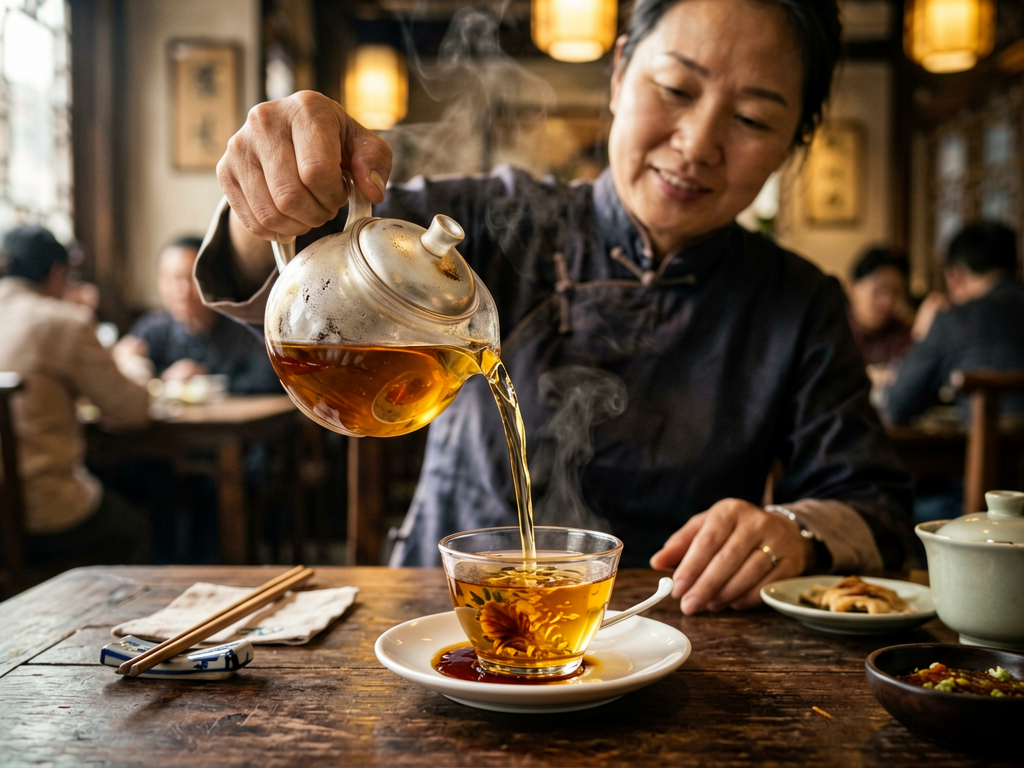
I remember my first dinner in Shanghai. I walked into a noisy, steamy restaurant with friends who had been living there for years. We were hungry, tired, and ready to eat. Within thirty seconds of sitting down, a waiter appeared out of nowhere.
He didn’t ask if we wanted water. He didn’t check our dietary restrictions. He just pulled out a large metal kettle and started pouring hot green tea into our small cups. The water was scalding. The aroma was earthy and strong.
I was confused. Wasn’t tea part of the meal? Or was it an appetizer? My friend laughed and told me to relax. That little moment sparked a curiosity that has followed me through every city and province in China since.
If you’ve ever eaten at a casual Chinese restaurant, you’ve seen it. The tea arrives before the menu even hits the table. It’s constant. It’s free. And it comes with a weird, silent language of thanks that tourists almost always miss.
The Unspoken Hospitality Rule
In Western dining, the first thing you get is usually a glass of tap water or a bottle of beer. In China, it’s tea. But it’s not just about quenching thirst. It’s about showing respect.
The host–or the staff acting on behalf of the establishment–is saying, “We value your presence.” By filling your cup immediately, they are acknowledging you. It sets a tone of warmth before a single dish is ordered.
I’ve noticed this isn’t limited to high-end places. I’ve had this happen in tiny hole-in-the-wall spots in Chengdu where the chairs were plastic stools and the walls were peeling. The owner still came over with a big teapot.
This practice dates back centuries. Tea wasn’t just a drink; it was medicine, currency, and social glue. When you sit down, the tea is already brewing. It’s ready. Waiting for you.
To be fair, some tourists find it annoying. You’re trying to decide between spicy mapo tofu and sweet and sour pork, but the waiter keeps interrupting to refill your cup. But here’s the thing: that interruption is the point.
It slows you down. It forces you to breathe. In a country that moves at a breakneck pace, the tea break is a mandatory pause. It’s a reminder that food is about more than fuel. It’s about connection.
The Finger Tap Secret
Now, let’s talk about the etiquette. This is where most visitors mess up. They just say “thank you” in broken Mandarin or nod awkwardly. The waiter pours again. You nod again. It gets repetitive.
There’s a better way. It’s called the finger tap. Or, as I like to call it, the invisible bow.
Legend has it that this started during the Qing Dynasty. Emperor Qianlong traveled incognito across the south. His servants were terrified of being recognized while he poured tea for them. But they couldn’t break character.
So, they bent their fingers and tapped the table. It was a subtle way to show respect without drawing attention to the Emperor’s humble status. Today, we use it for everyone, from waiters to your boss.
When the waiter fills your cup, don’t speak. Look at them. Then, tap two or three fingers on the table. If someone much older or higher status is pouring for you, tap all five fingers together. It’s like a whole hand bow.
I practiced this in private for weeks. I sat in my apartment, pretending to pour tea for imaginary guests. My neighbors probably thought I was crazy. But the next time I went out, I tried it.
The waiter paused. He looked at my hand. He smiled. Just a little. But it was enough. I felt like I had passed a test I didn’t know existed. It’s a small gesture, but it changes everything.
It signals that you’re not just a customer. You’re someone who understands the rhythm of the place. And in China, understanding the rhythm is half the battle. Once you start tapping those fingers, people treat you differently. You become part of the flow.
Why They Keep Refilling
You’ll notice that the tea never stays empty. In fact, it’s hard to keep it empty. Every few minutes, a fresh wave of hot water hits your cup. Why?
Simple. Cold tea is considered rude. It’s stagnant. In Chinese culture, freshness is key. Whether it’s food or drink, it should be new, hot, and lively. A cold cup of tea suggests neglect. It suggests you aren’t valued.
Also, tea cuts through grease. Many of the dishes we crave–dumplings, fried rice, braised pork–are rich and heavy. The tannins in the tea cleanse your palate. It’s like hitting a reset button between bites.
I used to hate green tea. It tasted like grass to me. But after eating Sichuan peppercorn beef, that grassy flavor was exactly what I needed. It woke up my tongue. It prepared me for the next bite.
There’s also a practical side. If you’re drinking alcohol, you need to stay hydrated. If you’re just talking, you need something to do with your hands. The teacup becomes a prop in your conversation.
Watch a group of old men playing chess in a park. They have tea. Watch a business meeting in a skyscraper. They have tea. Even a date. They have tea. It’s the universal lubricant of social interaction.
Don’t try to stop them from refilling you. If you push the pot away, it’s like slamming the door. Let it flow. Enjoy the heat. Sip slowly. Let the steam fog up your glasses if you have to.
The Mystery of the Menu
Here’s another quirk. You might realize that the tea you’re drinking isn’t on the menu. You look around. Other tables have different teas. Some have jasmine. Some have oolong. Some have pu’er.
This is standard. Most casual restaurants serve whatever tea is cheapest and freshest for them. It’s house tea. Think of it like the bread basket at an Italian restaurant. You don’t order it. You just get it.
If you want something specific, you ask. But be prepared. Specialty teas cost extra. And the staff might look at you like you’ve asked for a diamond ring instead of a coffee.
I once asked for a specific aged pu’er in Guangzhou. The waiter came back with a look of pity. He explained that they only had it for VIPs or special orders. I ended up drinking the jasmine tea. It was fine. Actually, it was really good.
Embrace the randomness. The house tea is often a surprise. One night it might be bitter and strong. The next night it might be floral and light. It adds an element of chance to your meal.
It’s similar to wine pairing, but looser. The goal isn’t perfection. The goal is hydration and hospitality. As long as it’s hot and clean, you’re good.
Make It Part of Your Routine
After eight years, I don’t think I can eat Chinese food without tea. It feels incomplete. Like having a burger without a drink. Or a song without music.
When I bring friends here, I watch them closely. I see the confusion in their eyes when the kettle appears. I see the hesitation when they realize they need to tap their fingers.
Then, the lightbulb goes on. They try the tap. They feel the warmth of the cup. They taste the tea between bites. And suddenly, the meal transforms. It stops being just dinner. It becomes an experience.
Next time you’re in a Chinese restaurant, put down your phone. Ignore the menu for a minute. Watch the waiter. Wait for the pour.
When the tea hits your cup, lift two fingers. Tap the table. Say nothing. Just smile. You’ll see the difference in how they treat you. And trust me, that small shift makes all the difference.
It’s not about the tea itself. It’s about the connection. It’s about accepting the hospitality offered to you. So, drink up. The meal hasn’t even started yet.