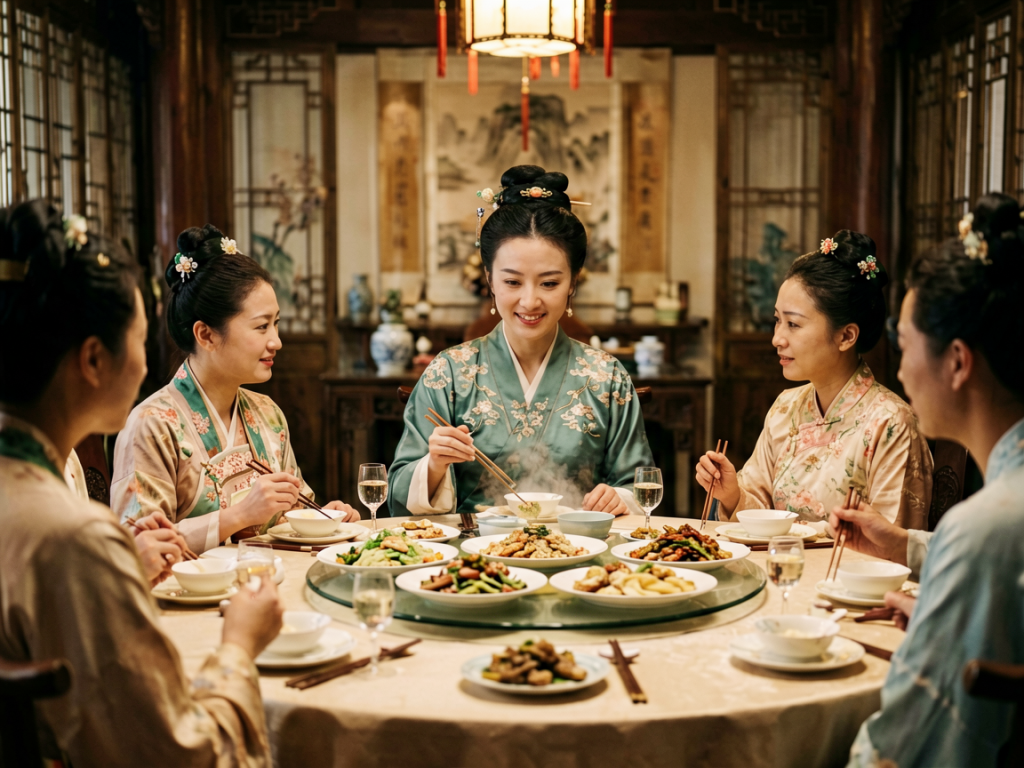
I remember my first major business dinner in Chengdu. I was twenty-six, eager, and completely clueless. I walked into a private room with a massive round table, seven other people, and a host who looked at me with polite curiosity. I sat down at the seat facing the door. That’s what I did in every restaurant back home. In New York, it’s just the best view.
In China, I had just committed a social faux pas bigger than wearing white socks with sandals to a wedding. The host didn’t say anything. He just smiled, gently pointed to the empty chair across from the door–the one with the best sightline to the entire room, farthest from the noise of the hallway–and waited. I moved. The air in the room shifted instantly. The hierarchy was established. The night proceeded without a hitch.
That moment taught me more about Chinese culture in five minutes than eight years of textbooks ever did. Seating isn’t just about comfort. It’s about respect, power, and social cohesion. If you get it right, you’re part of the family. Get it wrong, and you’re the outsider who doesn’t understand the game.
The Golden Rule: Facing the Door Is King
Here’s the thing about Chinese dining rooms, especially in restaurants or hotel banquet halls. The seat of honor is almost always the one directly facing the entrance. It’s not arbitrary. It’s strategic. Historically, this position allowed the guest of honor to see everyone entering the room. It also kept them safe from drafts coming from the door and gave them the best view of the action.
Today, it’s less about safety and more about status. The person sitting there is the boss, the elder, or the most important client. Everyone else arranges themselves relative to that central point. It’s like a solar system, with the guest of honor as the sun. You orbit around them.
I’ve seen this rule bent in small, cramped hotpot joints in Beijing where the seating is chaotic and first-come, first-served. But in any formal setting, this rule holds firm. If you’re invited to a banquet, wait to be seated. Don’t just grab the chair closest to the TV or the one with the nicer cushion. Let the host assign your spot.
Left vs. Right: The Nuance of Hierarchy
Once you’ve identified the head of the table, the rest of the seating chart becomes a matter of left and right. And here is where things get tricky because it changes depending on the era and the region. Traditionally, the left was considered superior to the right. You’ll still hear elders talk about “Zuo Shang” (left honor). But in modern diplomatic and business protocols, the right-hand side of the host is often the second most important seat.
Think of it this way: the host sits in the middle of the opposite side, facing the door. To their right is the second most important guest. To their left is the third. Then it alternates. Right, left, right, left. It creates a balance. It’s not just random placement. It’s a dance of precedence.
I attended a government reception in Shanghai once where the protocol officer had a detailed map of the seating arrangement. He spent ten minutes adjusting chairs by millimeters. Why? Because the Deputy Director needed to sit exactly forty-five degrees off-center from the Minister. It looked excessive to me. But to them, it was crucial. The visual geometry of the table communicated the chain of command before a single word was spoken.
For foreigners, trying to memorize the exact left-right logic can be exhausting. My advice? Keep it simple. Look for the host. The seat next to them is usually the VIP. If there are two hosts, the main guest sits between them. Just observe where the other locals are sitting. They usually know exactly where they belong.
The Lazy Susan: More Than Just a Plate Spinner
You can’t talk about Chinese banquets without mentioning the lazy susan. That rotating glass disk in the center of the table isn’t just a convenience for sharing dishes. It’s a metaphor for harmony. Food is communal. We eat from the same pots, share the same flavors. It breaks down individualism at the dinner table.
But the lazy susan also dictates movement. Who controls the rotation? Usually, the junior staff or the youngest person at the table. It’s a subtle way of showing service. I used to think it was annoying when someone spun the table while I was trying to pick out a piece of fish. But then I realized it’s part of the ritual. You have to trust the spinner. You have to wait for your turn. It slows you down. It forces you to be present.
There’s a specific etiquette around the rotation, too. You never spin the table while someone is reaching for food. You wait for them to finish. You serve the elders first. If you’re the junior, you might find yourself spinning the plate, offering the best cuts of meat to the person at the head of the table. It’s a physical act of deference.
I learned this the hard way during a family reunion. I grabbed for a dumpling while my cousin was still reaching for the chili oil. The table went silent. Not angry silent. Just… stopped. Everyone paused. I felt the heat rise in my cheeks. From then on, I watched the rotations closely. It’s a small thing, but it shows you’re paying attention.
Tea Culture and the Finger Tap
Seating arrangements don’t end when the meal starts. The tea ceremony continues throughout. And there’s a quiet language of gestures involved. When someone pours tea for you, you don’t just say thanks. You tap your fingers on the table. Two or three fingers tapped quickly is the traditional way to show gratitude, mimicking the kowtow of old.
This usually happens regardless of where you sit, but it’s most important when the person pouring is higher in status than you. If your boss pours your tea, you tap your fingers. If you pour for your boss, you stay silent and accept their thanks with a nod. It reinforces the vertical relationship defined by your seating.
I’ve seen tourists get confused by this. They just say “thank you” verbally. It’s not rude, exactly. But it misses the point. The finger tap is non-verbal. It’s efficient. It fits the flow of a busy table. It’s a small detail that signals cultural fluency. People notice. They respect the effort.
What Happens When You Get It Wrong?
Let’s be honest. Most Chinese hosts are incredibly gracious. They won’t kick you out if you sit in the wrong chair. They’ll likely move you or gently suggest you switch. But the awkwardness lingers. You feel like you’re trying to speak a language you haven’t quite mastered.
I once sat in the “guest of honor” seat at a friend’s house because I didn’t know any better. My friend’s father was standing near the kitchen, waiting to be seated. I felt terrible. As soon as he walked over, I stood up, laughed at myself, and apologized. He patted my shoulder and told me not to worry. But I knew. I had missed the cue. I had treated the space as democratic when it was meant to be hierarchical.
That experience changed how I approach dining in China. Now, I arrive early. I stand near the door. I watch who arrives first. I let the eldest or the most important person take the lead. If there’s no obvious leader, I ask, “Where should I sit?” It sounds humble, but it actually shows confidence. It shows you respect the structure enough to ask for clarification.
Modern Shifts and Casual Gatherings
Is this all still true in 2024? Yes, but with caveats. Among younger generations, in casual settings, or in very close friend groups, the rigid seating charts are loosening. People sit wherever there’s space. They chat louder. They order different dishes. The atmosphere is less formal.
But the underlying respect remains. Even in casual dinners, if an elder is present, they will likely be offered the seat with the best view. It’s instinctual. It’s baked into the culture. You won’t see a twenty-year-old force a sixty-year-old into the seat next to the bathroom door.
Business dinners, however, remain strict. The stakes are higher. The relationships are built on trust and respect, and seating is the first test. If you can’t read the room, you can’t lead the team. It’s that simple.
Embrace the Ritual
I used to find these rules complicated. Too much pressure. Too many unwritten codes. But now, I love it. There’s a beauty in knowing exactly where you fit in. It grounds you. It connects you to the people around you. It turns a meal into an event.
Next time you’re in China, or even at a Chinese restaurant abroad, pay attention to the table. Watch who sits where. Watch how the tea flows. Watch the lazy susan spin. Don’t rush to sit down. Take a second to observe. You’ll learn more about Chinese society in those few seconds than in hours of conversation.
It’s not about memorizing a chart. It’s about understanding the values behind the seats. Respect for age. Valuing hierarchy. Prioritizing harmony. These aren’t just rules for dinner. They’re rules for life. And once you get it, the food tastes better. The company feels warmer. And you’ll never look at a round table the same way again.
So, who’s sitting next to you? Make sure it’s someone worth knowing. And make sure they’re sitting in the right spot. Trust me, it makes all the difference.