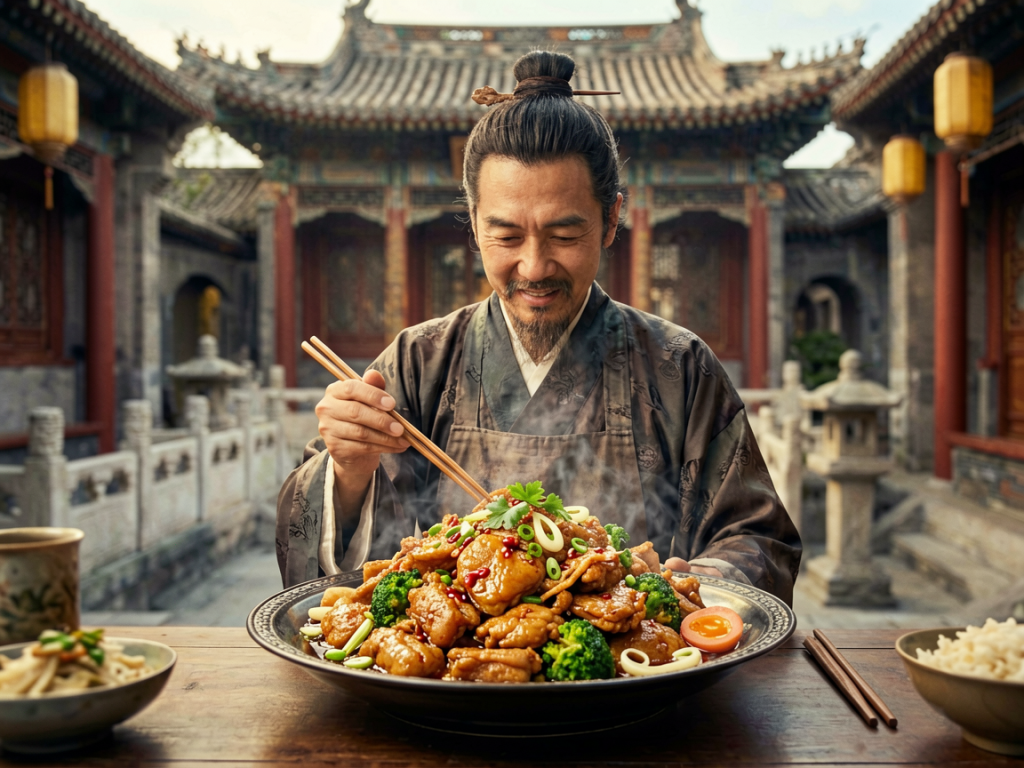
Here’s the thing. I spent three days in Changsha last year, hunting down the absolute best spicy chicken dishes in Hunan province. I was ready for magic. I was ready to eat until I couldn’t sit up.
I walked into a crowded, steam-filled restaurant near the Xiang River. The air smelled of fermented chili paste and fresh garlic. The waiter brought me a plate of bright red, crispy chunks of chicken.
It was incredible. It was also completely different from anything you’ve ever ordered at a takeout place in Ohio.
If you’re American, you probably know General Tso’s Chicken. It’s the gold standard of Chinese takeout. Sweet, sticky, mildly spicy, and served with steamed white rice. It’s comforting. It’s familiar. It’s basically the national dish of American-Chinese food.
But here’s the kicker. That dish doesn’t exist in China. Not really. Not under that name, anyway.
I asked a chef in Beijing if he knew what General Tso’s was. He looked at me like I’d asked him if I wanted to try eating his shoe. He didn’t know the chicken. He definitely didn’t know the sauce.
This disconnect isn’t just about geography. It’s about history, taste, and how we’ve rewritten the story of Chinese food to fit our palates over the last fifty years.
The Ghost of a General
Zuo Zongtang was a real person. He was a Qing dynasty general and statesman who played a huge role in restoring the empire’s control over western territories in the late 19th century.
He was a military man, not a chef. But he did have a taste for spicy food. Specifically, the spicy, fiery cuisine of his home province, Hunan.
In Changsha, they actually do have a dish called Zuo Zongtang Jiji. It translates roughly to “General Zuo’s Chicken.”
So, there’s a connection. Right?
There is. But let me tell you, the chicken in Changsha isn’t the sweet, breaded nugget we know in New Jersey.
The real version is deep-fried chicken thighs, yes. But they’re tossed in a sauce made with dried chilies, vinegar, garlic, and ginger. It’s sour, it’s spicy, and it’s savory. There is barely any sugar involved.
I tried it. The first bite shocked my tongue. It was hot. Like, actual heat. Not the mild warmth of soy sauce. It was the aggressive bite of fresh chili peppers.
The American version? It’s a different creature entirely. It’s sweet. It’s saucy. It’s designed to be eaten by people who are afraid of spice.
A Tale of Two Sauces
Let’s talk about that sauce because that’s where the magic happens. And by magic, I mean invention.
In China, sauces are usually thin. They coat the ingredient lightly. They enhance the flavor of the meat or vegetable without drowning it.
The American takeout sauce is thick. Glazed. Almost like a barbecue sauce that got lost on its way to a Sichuan restaurant.
I remember sitting in a diner in San Francisco back in 2015. I ordered the General Tso’s out of curiosity. My friend, who had just moved back from Shanghai, took one look at the plate and laughed.
He said, “That looks like candy.” And it did. It was coated in a glossy, amber glaze that shimmered under the fluorescent lights.
We’ve dumbed down the profile so much that it barely resembles a Chinese dish anymore. It’s closer to Korean fried chicken or American sweet-and-sour pork.
Is that bad? Maybe. Or maybe it’s just evolution.
Food adapts. It changes based on what ingredients are available and what customers want. When Chinese immigrants came to America in the 19th and early 20th centuries, they didn’t have access to the same chilies or spices they used back home.
They had what was available. Bell peppers instead of bird’s eye chilies. Cornstarch to thicken sauces. Sugar to balance the acidity of vinegar.
They created something new. Something that worked for American tastes. And we loved it.
Why We Love the Lie
I think it’s easy to look down on American-Chinese food. We call it fake. We call it inaccurate.
But honestly? I love it. There’s a comfort in that first bite of crispy chicken covered in that sweet, tangy sauce.
It reminds me of Friday nights. It reminds me of college dorms. It reminds me of rainy Sundays when I didn’t want to cook.
The dish serves a purpose. It’s approachable. It’s safe. For many Americans, it was their first introduction to Asian flavors.
Before they knew what cilantro was, before they dared to try tofu, they had General Tso’s.
That doesn’t make the authentic Hunan version less valuable. In fact, it makes it more precious. The real dish is bold. It’s complex. It demands attention.
The American version invites you in. It says, “Come sit. Try this. It won’t hurt you.”
I’ve seen chefs in Guangzhou shake their heads when tourists order “Kung Pao Chicken” that tastes like honey and soy sauce. They know it’s not Kung Pao. Kung Pao has peanuts. It has dried chilies. It has a specific balance of salty, sour, and spicy.
But does it matter?
Maybe not. Food is subjective. Taste is personal.
What This Says About Us
So why does this matter? Why spend time dissecting a chicken dish that millions of Americans adore?
Because it shows us how we consume culture.
We often want the story without the struggle. We want the exotic flavor without the intense heat. We want the history without the complexity.
General Tso’s Chicken is a sanitized version of Chinese culinary heritage. It’s a friendly face of a culture that is actually wild, varied, and often overwhelming.
When I travel now, I seek out that overwhelm. I go to small holes-in-the-wall in Chengdu. I eat street skewers that drip oil onto my lap. I drink tea that tastes like dirt and flowers mixed together.
It’s messy. It’s loud. It’s real.
But I still keep a bottle of chili crisp in my pantry. And sometimes, when I’m tired and stressed, I order the sweet, sticky chicken. I eat it in my pajamas. I don’t feel guilty.
We don’t need to choose one over the other. We can appreciate the innovation of the American version while respecting the roots of the original.
The original dish honors a general. The American dish honors our desire for comfort.
Both are valid. Both are delicious.
Next Time You Order
The next time you’re at a Chinese restaurant in the States and you see General Tso’s on the menu, smile.
You’re eating a piece of history. A history written by immigrants who adapted to survive. A history that spans oceans and generations.
Then, if you’re feeling brave, ask the waiter if they have any spicy Hunan dishes. See if they know what chili oil tastes like when it’s fresh.
You might just find yourself falling in love with the real thing. Or you might stick to the sweet stuff.
Either way, you’re part of the story.
And that’s pretty cool.