I still remember the first time I saw the Humble Administrator’s Garden. It was early June, humid enough to make my shirt stick to my back, and I was completely exhausted from the high-speed train ride from Shanghai. But then I stepped through that moon gate, and suddenly, the noise of the modern world just vanished.
Suzhou doesn’t just look different from Shanghai or Beijing. It feels different. It’s quieter. Slower. There’s a rhythm to life here that you don’t find anywhere else in China. If you only have two days, don’t rush it. You need to breathe it in.
I’ve lived in China for eight years now. I’ve eaten street food in Chengdu and haggled in Xi’an, but nothing compares to the slow burn of a weekend in Suzhou. It’s not just about the classical gardens, even though they’re the main event. It’s about the water. It’s about the silk. It’s about eating dumplings while watching boats drift by.
Day One: The Big Fish in Big Ponds
You can’t talk about Suzhou without talking about its gardens. They’re UNESCO World Heritage sites for a reason. But here’s the thing: if you go to the big ones without a plan, you’ll just end up staring at a sea of selfie sticks. That’s no fun.
Start your morning at the Humble Administrator’s Garden. Go when the gates open at 7:30 AM. I know it’s hard to wake up, but trust me. The light hits the lotus ponds just right, and the mist hasn’t burned off yet. It looks like an ink painting come to life. Right?
I walked the winding paths and tried to ignore the tour groups. Most people rush through in twenty minutes, snapping photos and leaving. Don’t do that. Sit on a bench near the central lake. Watch the koi fish dart under the lily pads. Listen to the distant sound of a suona pipe or maybe just the chatter of locals playing cards nearby.
The garden is huge. It took me three hours to get through it properly. You’ll see rockeries that defy gravity, pavilions connected by zigzagging corridors, and windows framed to look like perfect pictures of the garden itself. That’s the trick. Every angle is designed to be photographed.
Afterward, you’ll be hungry. And you will be thirsty. Head over to Pingjiang Road. It’s a historic street running alongside a canal. It’s touristy, sure, but it’s also the best place to soak in the atmosphere. Grab a cup of Biluochun tea from one of the small stalls. It’s a green tea native to this region, and it tastes like fresh spring leaves. Sweet. Floral. Not bitter like some coffee shops’ green tea offerings.
I stopped at a tiny noodle shop tucked between a silk store and a souvenir stand. The sign was handwritten on a piece of cardboard. I didn’t speak Mandarin, and the owner didn’t speak English. He pointed at a bowl of clear broth with white noodles and sliced pork. I pointed back. Simple. Delicious.
The noodles were springy, and the broth was rich but light. It wasn’t fancy, but it was exactly what I needed after wandering the rocks and hills of the garden. Sound interesting? It’s cheap too. Maybe three or four dollars. Worth every penny.
In the afternoon, head to the Lingering Garden. It’s smaller than the Humble Administrator’s, but it’s denser. The rock formations are more dramatic. I love how compact it feels. You’re always turning a corner and finding a new vista. It’s easier to manage in a tight schedule if you run out of steam.
Where to Eat: Beyond the Tourist Traps
Suzhou cuisine is famous for being sweet. Like, really sweet. Don’t be scared of that. It’s part of the charm. The flavors are delicate, focused on freshness, and often balanced with vinegar to cut the sugar.
For lunch on Day One, try the Squirrel-Shaped Mandarinfish. Yes, the name sounds weird. The dish looks like a squirrel sitting on a branch, covered in a sweet and sour sauce. It’s technically fried fish shaped to look like an animal. I was skeptical at first, but once I tried it, I was hooked. The texture is crispy outside, tender inside. The sauce clings to every bite.
If you want something more traditional, look for a place called Nanxiang Steamed Bun Restaurant. They’re famous for their soup dumplings, or xiaolongbao. You know the kind. Thin skin, hot broth inside. Be careful not to burn your tongue. I’ve seen tourists do it. It’s painful.
Here’s a pro tip: order the pork and crab roe buns. The crab adds a briny depth that balances the sweetness of the pork. Dip them in black vinegar and shredded ginger. It’s a classic combo for a reason.
Don’t eat at the restaurants right on the main strip of Pingjiang Road. Walk ten minutes inland. You’ll find locals sitting at plastic tables, drinking beer and eating spicy tofu. That’s where the real flavor is. I had a bowl of stinky tofu one evening there. Yeah, it smells strong. But the taste? Salty, spicy, crunchy. It grew on me fast. Surprised?
Day Two: Silk, Shadows, and Slow Walks
Spend your second morning at the Suzhou Museum. It’s designed by I.M. Pei, the same guy who did the Louvre Pyramid. But this building fits into the landscape perfectly. It uses modern geometry but incorporates traditional Chinese elements like gray tiles and white walls.
The museum sits right next to the Humble Administrator’s Garden. In fact, the garden acts as a backdrop to the museum’s courtyard. It’s seamless. I spent about two hours there, looking at jade artifacts and ancient paintings. The architecture alone is worth the visit. The play of light and shadow in the courtyard is mesmerizing without being flashy.
After the museum, walk over to the Tiger Hill. It’s called Tiger Hill, but there’s no tiger. It’s a historical site with a leaning tower, the Yunyan Pagoda. They call it the Leaning Tower of China. It tilts slightly to the west. It’s been standing for over a thousand years, and it’s still there. Pretty impressive engineering, right?
The climb isn’t steep, but it’s worth it for the view. You can see the city spread out below you. On a clear day, you might even spot the distant silhouette of the mountains. I went in the late afternoon, and the golden hour light turned the pagoda a warm amber color. It was magical.
For dinner, I wanted something local and unpretentious. I headed to Shantang Street. It’s another historic canal area, but it’s more commercialized at night. The lanterns are lit up, reflecting on the water. It’s beautiful, yes, but also crowded. I found a small restaurant tucked away in an alley off the main street. It served Su-style noodles and braised pork belly.
The pork belly, or hongshao rou, melted in my mouth. It was fatty but not greasy, thanks to the long braising process. The meat was tender enough to cut with a spoon. I ate it with jasmine rice and washed it down with a glass of local yellow wine. It felt like a warm hug after a long day of walking.
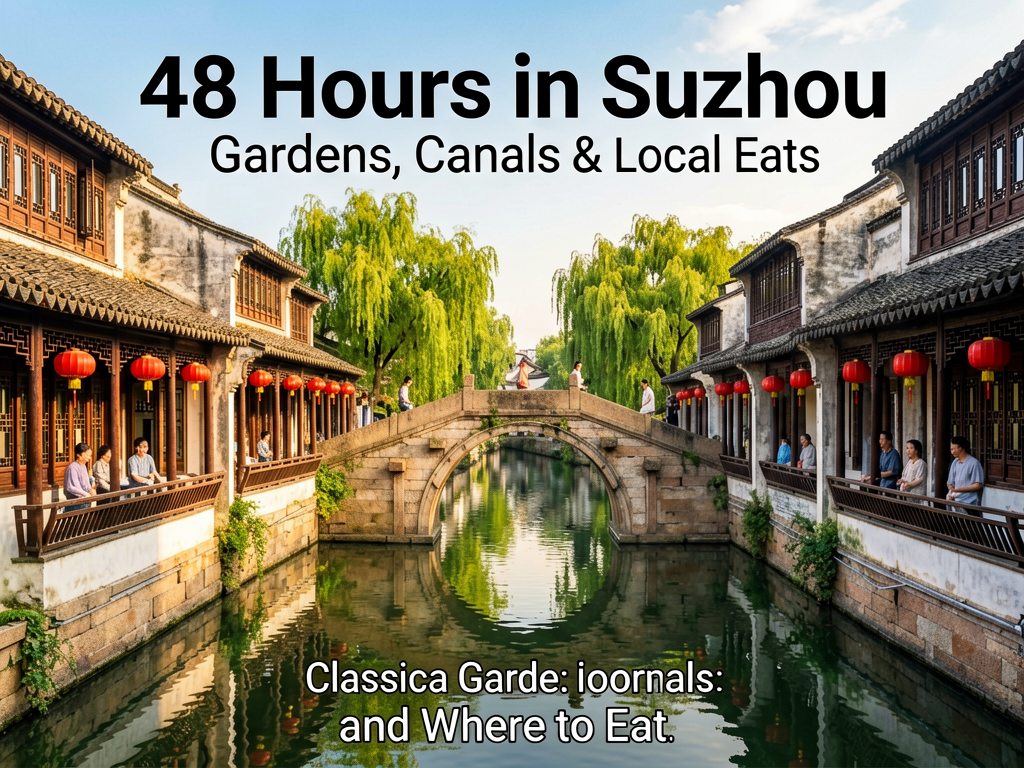
Later that night, I took a boat ride on the canal. This is essential. You can’t experience Suzhou from the sidewalk alone. The boats are traditional wooden vessels with canopies. The driver poles them along gently. The water is calm. The buildings on either side are old, with wooden lattices and stone bridges overhead.
I sat back and listened to the water lap against the hull. It was peaceful. I thought about how different this place is from the rest of China. It’s softer. More artistic. Less aggressive. It reminded me why I fell in love with this country in the first place.
Practical Stuff: Getting Around and Staying
You don’t need a car in Suzhou. The subway is clean and efficient. Line 1 and Line 4 connect most of the major attractions. For shorter hops, Didi (the Chinese Uber) is cheap and reliable. A ride across town usually costs less than five dollars.
As for where to stay, I recommend staying near Pingjiang Road or Shantang Street. You want to be close to the action but not right in the middle of the loudest bars. There are plenty of boutique hotels in renovated courtyard houses. They offer a unique blend of comfort and history. I stayed in one last year, and waking up to the sound of a rooster crowing (yes, really) was a highlight.
Pack comfortable shoes. You will walk a lot. The gardens are large, and the streets are paved with stone. Heels are a bad idea. Also, bring a small umbrella. The weather can change quickly, and rain adds to the poetic atmosphere of the city.
And one last thing about money. Cash is less common now, but it’s good to have some on hand for small vendors. Alipay and WeChat Pay work almost everywhere. Just set them up before you arrive if you can. It makes life infinitely easier.
Why You Should Go
I could write pages about the history of the Ming Dynasty and the poetry of the Tang poets, but that’s not why you’re here. You’re here because you want to feel something.
Suzhou offers a respite from the speed of modern life. It invites you to slow down, to look closer, to appreciate the details. The gardens aren’t just plants and rocks. They’re metaphors for harmony and balance.
I left Suzhou with a full stomach, tired feet, and a lighter heart. I didn’t take many photos compared to other trips because I was too busy living in the moment. That’s the best souvenir I could ask for.
So, pack your bags. Book the train ticket. Come see for yourself. You won’t regret it. Trust me.