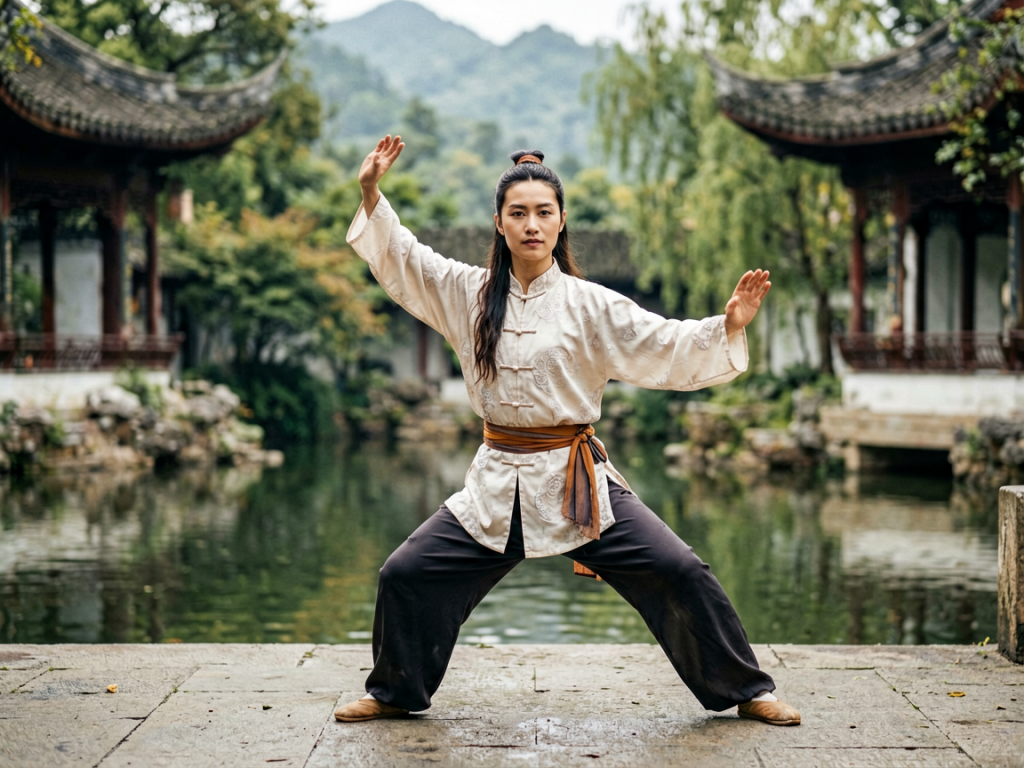
Here’s the thing. I walked into my first Kung Fu class in Beijing back in 2016 with a lot of preconceived notions. I thought martial arts would be straightforward. You punch, you kick, you learn the form. Simple, right?
I was dead wrong. Within ten minutes, my instructor, Master Chen, had me performing what he called a “Dragon’s Tail Sweep.” Five minutes later, another senior student corrected him, saying it was technically a “Tiger’s Paw Drag.” By the time class ended, a third person whispered that it was just a sloppy version of a basic grappling entry.
I stood there in my loose cotton uniform, sweating through my t-shirt, utterly confused. Which name was the right one? Was the move good? Was it bad? Or did it just depend on who was holding the belt?
If you’ve ever studied Chinese martial arts, or even watched a movie set in the wuxia genre, you know this confusion isn’t unique to me. The naming conventions in traditional Chinese martial arts (TCMA) are famously inconsistent. It’s a linguistic maze that can trip up beginners and veterans alike.
So, why does this happen? Is it some secret code meant to keep outsiders out? Or is it just centuries of cultural evolution? I spent years trying to untangle this web, and I’m here to tell you it’s less about secrecy and more about history, geography, and metaphor.
The Great Dialect Divide
Let’s start with the obvious hurdle. China is huge. We’re talking about a country with five thousand years of history and over a billion people. And yes, the dialects are a nightmare if you’re not local.
In Mandarin, “Long” means dragon. In Cantonese, it’s “Lung.” But then you go to Fujian province, and the pronunciation shifts again. Now, imagine that same shift applied to technical martial arts terms.
I remember visiting a school in Guangzhou. The master demonstrated a striking technique. He called it “Jin Gang Zhua,” or Diamond Claw. A visitor from Shanghai heard “Jin Gang Zhua” but interpreted the tone differently. To him, it sounded like a different character entirely, implying a crushing grip rather than a sharp strike.
This isn’t just about translation errors. It’s about phonetic drift. Over decades, or even centuries, the way a word sounds changes in different regions. When a style moves from North to South, or vice versa, the name often changes to fit the local mouthfeel.
It’s like how Americans say “soda” and Brits say “pop.” It’s the same liquid, just a different label based on where you grew up. Except in martial arts, the stakes are higher because you’re literally trying to hit someone with it.
Don’t get me wrong. Learning the standard Mandarin terms helps if you want to travel and train across provinces. But if you’re sticking to one local school, their specific dialect rules will always trump standard textbooks.
Metaphor is King
Chinese martial arts aren’t just mechanics. They’re poetry. And poetry is subjective.
A move doesn’t just have to work; it has to *feel* like something else. This is where the animal styles come from, but they’re deeper than just mimicking a tiger. Every movement is compared to nature, mythology, or objects.
Take a simple elbow strike. In one school, it might be called “The Elephant Trunk.” Why? Because the power comes from the trunk’s heavy, sweeping motion. In another school, the exact same elbow strike is “The Snake’s Fang.” Why? Because it targets the throat or soft tissue with precision.
To an outsider, these are the same biomechanical action. To the practitioners, they represent different intents. One is about brute force; the other is about penetration.
I found this fascinating when I started studying Baguazhang. The footwork patterns have names like “Walking the Moon” or “Crossing the River.” But the actual steps are nearly identical across different lineages. The name tells you *how* to visualize the energy flow, not just how to place your feet.
Think about it. If you’re trying to learn a complex body mechanic, telling someone to “rotate your hip 45 degrees” is dry and clinical. Telling them to “rotate like a potter shaping clay” gives you a tactile image. It sticks in your brain better.
That’s why there are so many names for the same move. Each name offers a different visualization tool. It’s not that the move is ambiguous; it’s that the teaching method is flexible. Different students need different metaphors to grasp the concept.
I’ll be honest, I struggled with this at first. I wanted concrete labels. Left hook, right kick. Stop. But once I accepted that the names were mental cues, everything clicked. The name wasn’t the move. The name was the instruction manual for the mind.
Lineage and Ego
We can’t talk about martial arts naming without addressing the elephant in the room: lineage.
Traditional Chinese martial arts are passed down from master to student. It’s a family business, in a sense. And families have their own quirks, their own inside jokes, and their own pride.
Sometimes, a master changes a name to honor a specific ancestor. Maybe his grandfather invented a variation of a punch, so he renamed the whole family of punches after him. Now, everyone in that lineage uses a name that outsiders don’t know.
Other times, it’s about branding. In the late Qing dynasty, schools competed for students. If you named your technique “Heavenly Thunder Strike,” it sounded cooler than “Straight Punch.” Marketing mattered, even back then.
I saw this firsthand in Chengdu. There were two schools of Xingyiquan within walking distance of each other. Both taught the same Five Elements. But School A called the Lightning Fist “God’s Hammer,” while School B called it “Dragon’s Breath.”
Were they fighting different fights? No. But when they sparred, they’d yell different battle cries. It created a psychological edge. You didn’t just know what punch was coming; you knew whose ego was attached to it.
There’s also the element of secrecy. Historically, masters didn’t want rivals learning their techniques quickly. By giving a common move a obscure, esoteric name, they made it harder for outsiders to find resources or ask questions online.
Today, that secrecy is fading. The internet has standardized a lot of terminology. But old habits die hard. Many traditionalists still prefer the obscure names because they feel more authentic to the tradition.
It’s not necessarily malicious. It’s a way of preserving the integrity of the art. If everyone uses the same generic term, the nuance gets lost. The specific name keeps the story alive.
The Modern Standardization Problem
After the founding of the People’s Republic of China, there was a push to standardize Wushu. The government wanted a unified national sport. They created Changquan (Long Fist) and other standardized routines.
This helped create a common vocabulary for athletes. Judges needed to score moves consistently. If a judge in Beijing sees a “Butterfly Kick,” and a judge in Shanghai sees a “Butterfly Kick,” they need to agree on what it looks like.
But this clashed with the traditional schools. Traditionalists argued that standardization killed the soul of the art. They said you can’t put a price tag or a score on “Dragon Hook” if you’ve stripped away its cultural context.
I’ve seen both sides. As a tourist, standardization makes it easier to understand what’s happening in a performance. But as a practitioner, I miss the rich, muddy complexity of the traditional names.
Nowadays, you’ll hear a mix. Youngsters in academies might use the standardized terms to pass exams. But when they train with older masters, they switch to the traditional, regional names.
It’s a hybrid system. And it’s confusing, sure. But it’s also living history. It shows how the art adapts to the times while holding onto its roots.
How to Navigate the Chaos
So, what should you do if you’re interested in learning Chinese martial arts and you’re drowning in names? Don’t panic.
First, focus on the mechanics, not the label. If the move works for your body, it’s correct. The name is secondary. I’ve seen masters call the same movement ten different things in a single lesson depending on their mood.
Second, ask your teacher about the meaning behind the name. Why is it called that? What animal is it imitating? What object is it comparing itself to? That answer will teach you more about the intent than the name itself.
Third, accept that you’ll never know all the names. There are hundreds of styles, each with its own glossary. Even within one style, like Tai Chi, there are Yang, Chen, Wu, and Sun forms, and they all have slight variations in terminology.
I stopped trying to memorize every term around year three. Instead, I started keeping a journal. I’d write down the name, draw the move, and note what my teacher emphasized. Over time, the patterns emerged.
You realize that “Tiger,” “Crane,” and “Snake” are just archetypes. They’re frameworks for understanding movement. Once you get the framework, the specific names become just labels on a jar.
It’s liberating, really. You stop worrying about being “right” and start focusing on being effective.
The Beauty of Ambiguity
I’ll admit, I used to hate the inconsistency. I’m an American. I like things neat. I like A equals A. But living in China changed me.
I learned that ambiguity isn’t a bug; it’s a feature. It allows for adaptation. It allows for creativity. It keeps the art alive because it’s not frozen in a textbook.
When a move has multiple names, it means it has multiple applications. It means it’s versatile enough to be interpreted in different ways. That’s the essence of martial arts wisdom.
The next time you hear a new name for an old move, smile. Don’t get frustrated. Ask yourself: what story is this name trying to tell? What image is my teacher trying to paint in my mind?
That’s where the real learning happens. Not in the dictionary, but in the conversation between master and student.
And trust me, once you start listening to the stories behind the names, the moves themselves become much clearer. You’re not just copying shapes. You’re embodying legends.
That’s pretty cool, isn’t it?