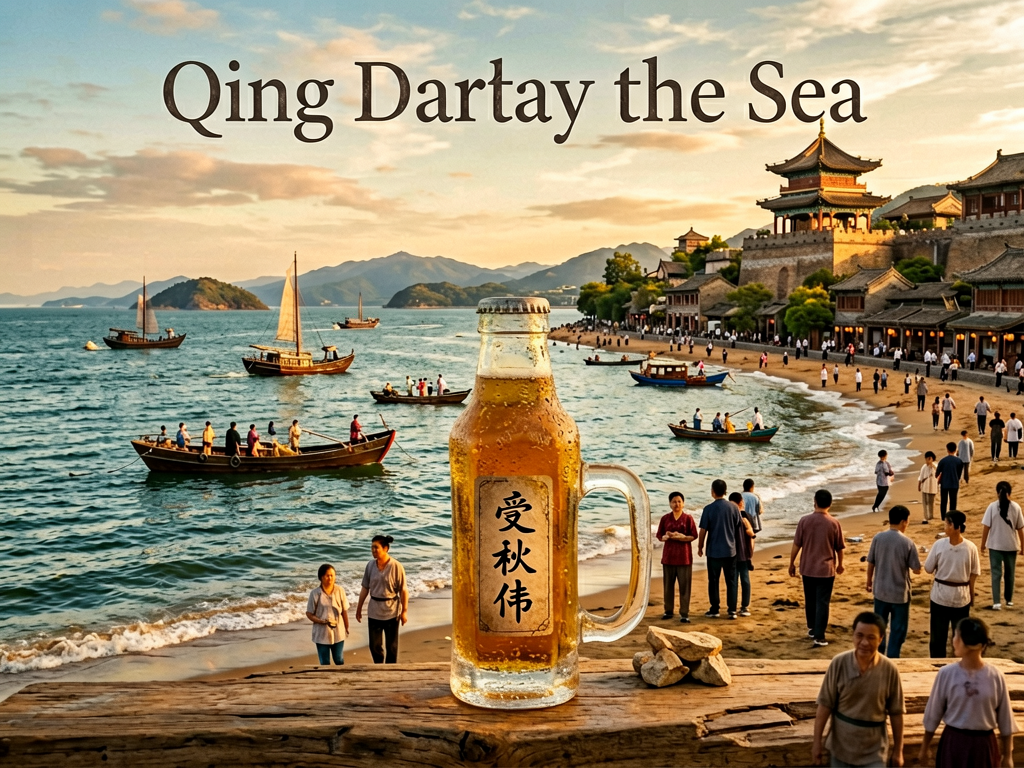
Look, I’ll be honest. When I first told people I was moving to China, they always asked where I wanted to go. Beijing? Shanghai? The Great Wall? But when I mentioned Qingdao, their eyes would light up with a weird mix of confusion and curiosity. They’d ask if it was really true that people drink beer out of plastic bags there.
I’m not exaggerating when I say that moment defined my entire stay. It wasn’t just about the alcohol. It was about the vibe. Qingdao doesn’t take itself too seriously. It’s got this lazy, salty air that hangs over the city even in winter. It’s a place where history feels tangible, where you can touch a hundred-year-old brick wall one minute and eat street food the next.
That German Ghost Town Feeling
You can’t talk about Qingdao without talking about the Germans. They were here in the late 1890s, leasing the area for ninety-nine years. It sounds like a joke, but they built a city that still stands today. And I mean literally stands. The architecture isn’t a replica. It’s the real deal, weathered by time and sea salt, but still incredibly sturdy.
I remember my first real walk through the old concession area. I was walking down Zhongshan Road, trying to figure out which way was north. The sky was that heavy, gray-blue color only found near the ocean. Suddenly, I looked up and saw the red-tiled roofs of St. Michael’s Cathedral. It looks exactly like the churches back home in Europe, but set against a backdrop of modern skyscrapers.
The contrast is jarring in the best way possible. You’ve got these ornate, neo-Gothic stone buildings sitting right next to cheap souvenir shops selling plastic swords. It’s chaotic, yes. But it’s also charming. I loved wandering into the little alleys off the main streets. One minute you’re looking at a grand consulate building, and the next you’re squeezed between two laundry lines hanging with damp shirts.
To be fair, not everything survived. The Japanese took over after the Germans, and then the Communists arrived. But the bones remain. The best part is that these buildings aren’t just museums. People live and work in them. I once sat in a cafe inside a former German bank vault. The walls were thick stone, the ceiling high. It felt like stepping into a different century while sipping an Americano.
If you want to see the heart of this colonial past, head to the Qingdao Beer Museum. It’s housed in the original Great Beer Factory, which opened in 1903. The building itself is a masterpiece of brickwork and timber. Inside, they’ve preserved the original brewing equipment. Seeing those massive copper tanks still intact gives you chills. You realize that the beer you’re about to drink is made using almost the exact same process as it was a century ago.
The Bagged Beer Phenomenon
Now, let’s get to the reason everyone comes here. The beer. Or rather, how they sell it. In most of the world, you buy beer in bottles, cans, or drafts. In Qingdao, you buy it in clear plastic bags.
I know how it sounds. You stand at a stall, point to the tap, and hand over some cash. The vendor pours the foamy liquid into a small, tied-off plastic bag. You hold it up to the sun, watching the golden liquid slosh around. It looks ridiculous. It tastes like heaven.
I tried to explain this to my friends back home. They couldn’t believe it. They asked if it tasted like plastic. Let me tell you, it doesn’t. The beer is cold, crisp, and slightly sweet. The bag keeps it chilled without needing ice, which melts and dilutes the drink. Plus, it’s portable. You can walk along the beach holding a bag of Laoshan Beer like it’s a fancy cocktail. Sure, you look a bit silly. But hey, everyone else is doing it.
We spent an evening on Badaguan Beach doing exactly that. It was sunset, and the air was warm. We bought three bags of beer and some grilled squid from a nearby cart. The squid was charred and salty, perfectly paired with the frothy beer. We sat on the sand, legs dangling, watching the waves roll in. It was simple. It was perfect. There’s no better way to spend a summer night in China.
I’m no beer connoisseur. I don’t care about hops percentages or alcohol by volume ratings. What I care about is the experience. Qingdao Beer is light, easy to drink, and deeply connected to the local culture. It’s not an IPA that tastes like pine needles. It’s a lager that says, “Hey, relax. You’re on vacation.”
The locals take pride in this stuff. You’ll hear older men arguing passionately about which batch of beer is freshest. It’s a serious topic here. But it’s never stressful. It’s just part of the daily rhythm. I learned to appreciate the subtleties over time. There’s a slight bitterness, but it’s balanced by a clean finish. It pairs incredibly well with seafood, obviously.
Eating Your Way Through the Coast
You can’t talk about Qingdao without mentioning the food. Specifically, the clams. Qingdao is famous for its razor clams, known locally as *Gao Li*. And I mean famous. Every restaurant, every street corner seems to specialize in them.
I’ll never forget my first bowl of stir-fried razor clams with garlic and cilantro. The chef worked fast, tossing the ingredients in a screaming hot wok. The smell hit me before the plate even arrived. It was garlicky, spicy, and savory all at once. The clams themselves were tender, sweet, and briny. I ate until I couldn’t move.
Most places charge around 30 to 50 RMB for a large plate. For that price, you get more food than you can possibly finish. It’s a feast for the senses. The sound of the sizzling oil, the visual of the bright green cilantro against the pale clams, the taste explosion in your mouth. It’s culinary nirvana.
Beyond the clams, there’s also the beer-soaked clams. This is another local specialty. They simmer the clams in cold beer with spices until the shells open. The meat absorbs the flavor of the beer, adding a depth you don’t get with water or stock. It’s rich and comforting, especially on a windy day by the sea.
I also loved the breakfast options. Scallion pancakes are everywhere, but here they’re thinner and crispier. I’d grab two from a street vendor for just a few yuan. Sometimes I’d add a side of soy milk or a bowl of noodle soup. Simple, cheap, and delicious. It’s the kind of breakfast that fuels you for hours.
Honestly, the street food scene is underrated. Most travelers stick to the malls and big restaurants. But if you wander into the night markets, you’ll find the real soul of the city. Stalls selling grilled fish, skewers of lamb, and steamed buns lined up under neon lights. I’d sit on a plastic stool, sweating slightly, and enjoy a meal that cost less than a coffee in New York.
Chasing Waves and Views
Qingdao isn’t just about eating and drinking. It’s a coastal city, after all. And the views are spectacular. The coastline stretches for miles, offering plenty of spots to catch the sunrise or watch the sunset.
One of my favorite places was Xinghai Square. It’s huge. I mean, massive. You could walk across it for twenty minutes and still be in the square. It’s a public space filled with statues, fountains, and wide-open lawns. Locals come here to dance, play instruments, and fly kites. It’s a great place to people-watch.
But if you want nature, head to the Laoshan Mountains. They rise right out of the sea, creating a dramatic landscape that’s hard to find elsewhere in China. The peaks are misty, often shrouded in clouds. There are ancient temples nestled in the valleys, surrounded by tea plantations.
I hiked up a section of Laoshan one autumn morning. The trails were steep, covered in loose stones. My legs burned, but the view from the top was worth every step. Looking down, I saw the turquoise water crashing against the rocks. The colors were unreal. Blue, green, white foam. It was peaceful. Quiet. A stark contrast to the busy streets below.
The tea grown there is also famous. Laoshan Green Tea has a distinct vegetal flavor, slightly nutty. I bought a few tins as gifts for friends. The shopkeeper explained the history of the tea gardens, which date back thousands of years. It’s impressive to think that people have been cultivating this land for so long.
Another spot worth visiting is the Second Bathing Beach. It’s smaller than the first, but cleaner and less crowded. The sand is fine and white, unlike the black volcanic sand you might see in other parts of the country. It’s a perfect spot for a lazy afternoon. Bring a book, some sunscreen, and maybe a bag of beer.
Trust me, the water can be cold. Even in July, it’s refreshing. I took one dip, and my teeth chattered for ten minutes. But it’s invigorating. The shock of the cold wake you up instantly. I didn’t stay in long, but I appreciated the feeling. It’s a reminder that you’re standing on the edge of the continent, facing the vast Pacific Ocean.
Why You Should Go
So, why Qingdao? Why not just go to Sanya or Dalian? Because Qingdao has a personality. It’s not just a beach resort. It’s a living, breathing city with layers of history, a unique culinary identity, and a laid-back attitude that’s hard to find elsewhere.
I loved the unpredictability of the weather. One day it’s sunny and warm, the next it’s foggy and chilly. But that just adds to the charm. You learn to adapt. You put on a jacket. You find a cozy cafe. You embrace the moment.
The people are friendly, too. Not overly polite in the stiff, service-industry way. Just genuinely nice. They’ll smile if you struggle with your chopsticks. They’ll help you order if you look confused. It’s a small kindness, but it matters.
I’m leaving Qingdao now, heading to a new city, a new chapter. But I’ll miss the smell of the sea. I’ll miss the taste of that cold, bagged beer. I’ll miss the sound of the waves crashing against the shore. It’s not just a place I visited. It’s a place I loved.
If you ever get the chance, go. Walk the old streets. Eat the clams. Drink the beer. Don’t worry about looking silly with that plastic bag. That’s the point. Life is better when you don’t take it too seriously. And in Qingdao, nobody is taking anything too seriously.
It’s a reminder that happiness can be simple. A cold beer, a warm meal, a beautiful view. That’s all you need. Right?