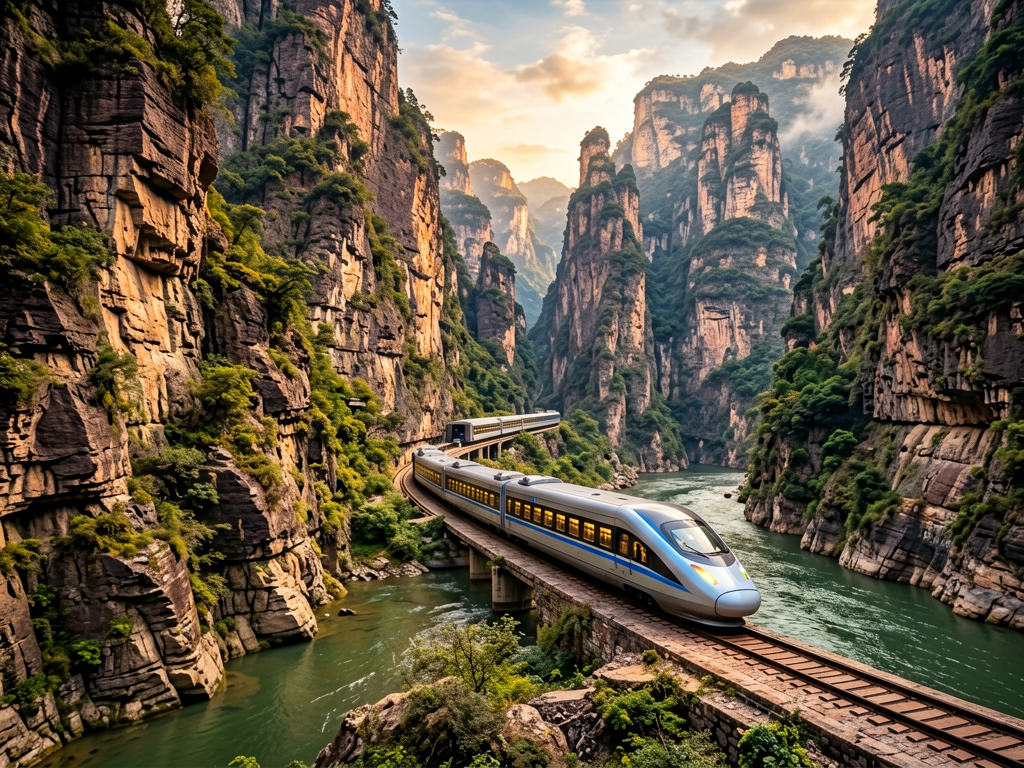
Look, I’ll be honest with you. When I first told people I was taking a slow train through the Yangtze Gorges, their eyes glazed over. They pictured sleeping on a hard seat, sweating through their clothes, and missing out on the “real” experience of a luxury river cruise.
I get it. China’s high-speed rail network is a marvel of modern engineering. It’s clean, fast, and efficient. But sometimes, efficiency is the enemy of memory. You can zoom past the Three Gorges in four hours, snapping a selfie and forgetting the landscape by the time you arrive in Yichang.
I’ve lived in China for eight years now. I’ve taken the bullet trains, the overnight sleeper buses, and even the cargo-hauling freight lines in disguise. But nothing, and I mean nothing, compares to the old-fashioned K-train rattling its way through the steep cliffs of the Yangtze.
It’s not just about getting from point A to point B. It’s about watching the country change color. It’s about the smell of instant noodles mixing with the humid river air. It’s about seeing the real China, not the sanitized version reserved for tourists.
If you’re willing to trade speed for soul, here’s how you do it right.
Why the Slow Train Beats the Cruise
Let’s address the elephant in the room. Why wouldn’t you just book a cruise? The Yangtze River cruises are famous for a reason. They’re comfortable. You have room service. You don’t have to worry about where to sleep.
But here’s the thing. Cruises are passive. You’re a spectator. You sit in a lounge, eat buffet food, and listen to a guide explain things you already saw on Google Images. It’s safe. It’s boring.
The slow train? It’s alive. You’re moving with the rhythm of the country. You’re sharing the journey with locals who are going home to visit their parents, farmers heading to market, and students returning to university. The conversations are unpredictable. The stops are unscheduled. The views are unfiltered.
I remember one afternoon in 2019. We were stuck behind a freight train for forty minutes near Fengjie. Instead of getting annoyed, I ended up talking to a grandmother next to me. She had brought a whole chicken in a plastic bag, still warm. She shared it with us. We didn’t speak the same language, but we shared a meal, a laugh, and a view of the sunset hitting the river.
You won’t find that on a cruise. On a cruise, everyone is an outsider. On the train, for a few hours, you’re part of the flow.
Picking Your Train and Class
You don’t need to suffer to enjoy this. There are different types of trains running this route. Most of them are the older K-series (Kuai) or T-series (Te-kuai) trains. They’re not the flashy new D-trains or G-trains.
I highly recommend booking a soft sleeper if you can afford it. It’s not much more expensive than a hard sleeper, and the difference is night and day. Hard sleepers are open bays with six beds per row. It’s social, sure, but it’s also noisy and exposes you to the elements.
Soft sleepers have four beds per compartment with a sliding door. You get some privacy. You can store your luggage under the lower bunks. It’s quiet enough to sleep, but you’re still in the communal space. It’s the sweet spot.
Book your tickets at least three days in advance. I use the Trip.com app for foreigners. It’s reliable, accepts international cards, and gives you an English interface. If you’re already in China, the 12306 app is the official source, but the interface can be clunky for non-Chinese speakers.
Here’s a pro tip: try to get a window seat. On the lower bunk, it’s harder. On the upper bunk, you’re higher up, which gives you a better vantage point over the train windows. Plus, you get the full experience of climbing the ladder. It’s good cardio.
The Route: Chongqing to Yichang
The classic route runs from Chongqing to Yichang. This is the heart of the Three Gorges. The journey takes about nine to ten hours, depending on the specific train. Some trains are faster, some are slower. Check the schedule.
We start in Chongqing. It’s a city that defies logic. It’s built on mountains, shrouded in fog, and smells like hotpot. The train station, Chongqing North, is a massive hub. Get there early. The crowds are intense. The signs are in Chinese. You’ll feel small.
Once you’re on the train, settle in. The air conditioning can be freezing. Bring a light jacket, even in summer. The heating can be non-existent in winter. Bring layers. Always bring layers.
As the train leaves the city, the concrete jungle gives way to green hills. The landscape changes slowly. First, it’s suburban. Then, it’s rural. Then, it’s wild.
The Yangtze River appears, usually on the right side of the train if you’re heading east. Keep an eye out. The river is wide here, winding through the steep limestone cliffs. The colors shift from muddy brown to a deep, murky green.
Don’t try to sleep the whole time. I know it’s tempting. The rumble of the wheels is hypnotic. But if you miss the daylight, you miss the magic.
What to Eat and Bring
Let’s talk food. The train station platforms are a food court waiting to happen. You’ll see vendors selling steamed buns, sausages on sticks, and bottled water. It’s cheap. It’s hot. It’s delicious.
I always stock up on instant noodles. The spicy beef flavor is a classic. It might taste like cardboard to some, but after twelve hours on a train, it tastes like home. You’ll get hot water from the carriage attendants for free. Just ask.
Bring snacks. Apples, bananas, and dried fruit are good. They’re healthy and don’t make a mess. Avoid anything with strong odors. The smell of durian or stinky tofu can ruin the mood for everyone in your compartment.
Alcohol? Maybe a small bottle of beer. But don’t get drunk. You want to be sharp enough to enjoy the view. The trains in China are generally safe, but personal responsibility is key. Keep your valuables close. Use a money belt if you’re paranoid. I am.
Water is essential. Bring a reusable bottle. You can fill it up at the station before you board. Staying hydrated helps with the altitude and the dry air of the train cabins.
The Highlights: Qutang, Wu, and Xiling
The Three Gorges are named Qutang, Wu, and Xiling. They’re not just names; they’re distinct experiences.
Qutang Gorge is the shortest, but it’s the most dramatic. The cliffs rise straight up from the water, towering over the train. It feels like you’re in a canyon. The light changes rapidly. Shadows play across the rock faces. It’s intense.
Wu Gorge is longer and more complex. It’s known for its twelve peaks, some of which are said to resemble women. Legend has it that the peaks are goddesses who fell in love with a mortal shepherd. It’s a romantic story, but the reality is just as impressive. The peaks are shrouded in mist. They feel mysterious.
Xiling Gorge is the longest. It’s more serene. The water is calmer. The cliffs are less steep. It’s a good time to relax and reflect. You’ll pass by small villages clinging to the sides of the mountains. You’ll see farmers working in tiny terraced fields. It’s a reminder of how hard life can be in these remote areas.
One specific spot to watch for is the Twelve Peaks of Wushan. If you’re lucky, the mist will clear just enough to see the silhouette of the peaks against the sky. It’s fleeting. Don’t blink.
Another highlight is the Qutang Gorge post card view. There’s a spot where the river bends sharply, and the cliffs frame the water perfectly. It’s the image on the fifty-yuan bill. You’ll see locals pointing it out. Try to capture it from your window seat. It’s harder than it looks because of the train’s movement.
Arriving in Yichang
The train arrives in Yichang in the evening. The station is modern and clean. It’s a stark contrast to the old train cars. You’ll feel a sense of relief. The journey is over.
Yichang is a city in Hubei province. It’s known for the Three Gorges Dam, which is nearby. If you have time, take a taxi to the dam. It’s massive. It’s engineering at its most extreme. It’s a reminder of China’s ambition.
But don’t rush off. Spend a day in Yichang. Eat the local fish. The Yangtze River fish is fresh and delicious. Try the spicy fish head. It’s a local specialty. It’s messy. It’s flavorful. It’s perfect.
I’ll be honest, I was skeptical at first. I thought the slow train would be a hassle. I was wrong. It was the highlight of my trip. It slowed me down. It made me notice things I would have otherwise missed. It connected me to the people and the place in a way a cruise never could.
So, next time you’re in China, don’t just zoom through. Slow down. Take the K-train. Bring a snack. Talk to the stranger next to you. Watch the mountains roll by. You might just find that the journey is better than the destination.
Sound interesting? It is. Trust me.