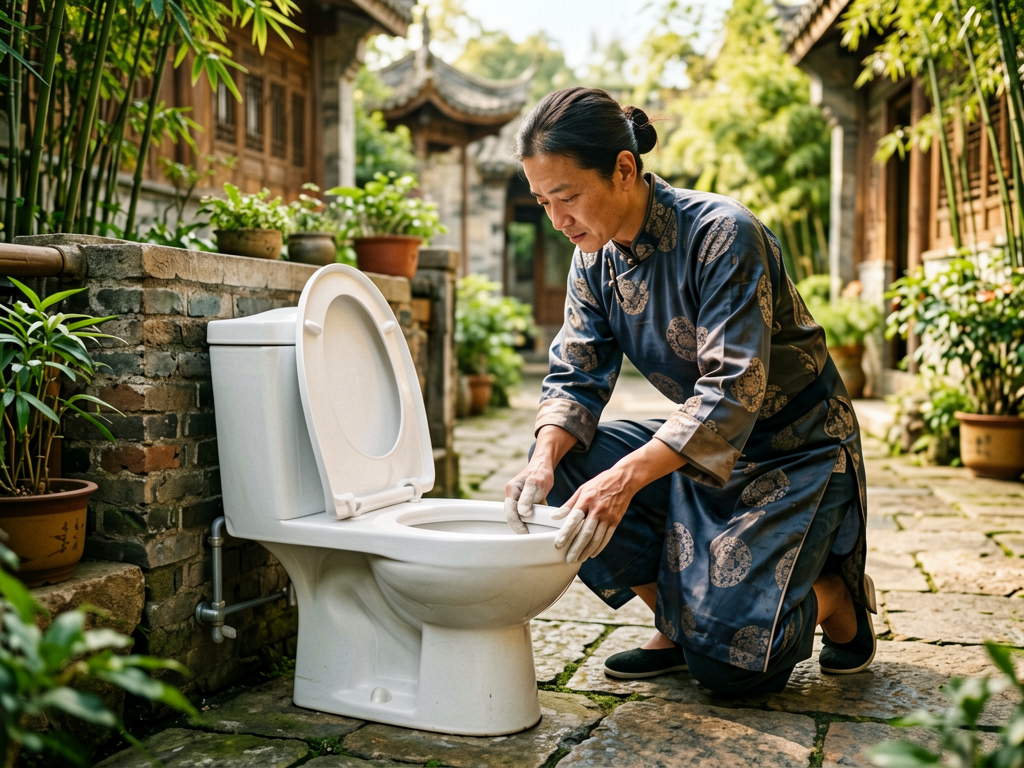
So, you’re terrified of the “squat.” I get it. Most foreigners think the first time they step into a public restroom in rural China is going to be a medical emergency. I’ll be honest, I was pretty skeptical myself when I first moved here in 2016.
I’d heard horror stories. I’d seen the memes. I expected the worst. But after eight years of living here, eating my way through every province, and using far more toilets than I care to admit, I’ve learned that panic is usually unnecessary.
It’s just a matter of preparation and keeping your cool. Let’s talk about how to handle bathrooms in China without losing your dignity.
The Great Squat vs. The Sit
Here’s the thing about toilets in China. You are going to encounter two main types: the Western-style seated toilet and the traditional squat pan. In major cities like Shanghai, Beijing, or Shenzhen, you’ll find seated toilets almost everywhere. Even in older neighborhoods, renovations have updated a lot of public facilities.
However, if you venture into smaller towns, rural villages, or even older parts of cities, you will likely find the squat toilet. Don’t let that word scare you. It’s actually not that hard once you get the hang of it.
I remember my first time trying a squat toilet in a roadside restaurant in Yunnan. The driver stopped for tea, and I followed him inside. The bathroom was a simple concrete room with a hole in the floor covered by metal bars. I stood there, sweating, wondering how I was supposed to balance without falling in.
The trick is simple. You don’t need to be a gymnast. You just need to spread your legs wider than your shoulders and grip the side rails or the wall if you’re feeling wobbly. Keep your weight on your heels. It’s actually a very natural position for many people here.
Once you do it once, you’ll probably do it ten more times before you leave the country. It’s easier than you’d expect. Just trust your balance, don’t look down if it makes you dizzy, and you’ll be fine.
The Golden Rule: Bring Your Own Paper
If there is one piece of advice I give to every new expat, it’s this: never, ever rely on the toilet paper provided in a public restroom.
It’s not that the paper doesn’t exist. It’s that the plumbing often can’t handle it. In most public places, including many restaurants and train stations, the paper is either non-existent or it’s rough, scratchy stuff that feels like sandpaper.
I learned this lesson the hard way in a museum in Xi’an. I assumed the dispenser would have paper. It was empty. I was left standing there, feeling very exposed. Fortunately, a kind local woman noticed my distress and handed me a small packet of tissues from her purse. I’ve carried tissues ever since.
Always carry a small pack of tissues or wet wipes in your bag. They come in handy for so much more than just bathroom breaks. You can use them to wipe down a table at a street food stall. You can clean your hands before eating. They are a lifesaver.
Wet wipes are even better. They feel much nicer and they’re more hygienic. Just remember to throw them in the trash bin provided, not in the toilet. Again, the plumbing is usually old and narrow. Clogging it is a rude gesture and can cause a real mess.
The Mystery of the Pedal
Another aspect of handling toilets in China that trips people up is the flush mechanism. In the West, we’re used to pushing a handle or pulling a lever. In China, it’s often a button, a pedal, or sometimes nothing at all.
I remember walking into a high-end hotel in Chengdu. I was tired, I needed to go, and I just wanted to get it over with. I sat down, finished my business, and stood up. I waited for the flush. Nothing happened.
I waited another minute. Still nothing. I started to wonder if the toilet was broken. Then I noticed a small, shiny button on the wall next to the toilet. I pressed it. The water roared. I felt like an idiot, but also relieved.
In public restrooms, look for a pedal at the base of the toilet. Sometimes it’s on the right, sometimes on the left. If there’s no button or pedal, check for a hose or a bucket. In some older facilities, you might need to manually pour water to flush. It sounds primitive, but it works.
If you’re unsure, watch what the locals do. They never hesitate. They just push, step, or pour. Mimicry is your best friend in these situations. It’s a great way to blend in and avoid looking confused.
Washing Up: The Bidet Alternative
One of the biggest culture shocks for foreigners in China is the lack of bidets. You won’t find them in most homes or public restrooms. Instead, there is usually a hose attached to the wall or a spray bottle next to the toilet.
At first, I was hesitant to use the hose. I didn’t want to get wet. But then I tried it. And I have to say, it’s a much more thorough cleaning method than any bidet I’ve used in the West.
I tried it for the first time in a friend’s apartment in Guangzhou. She showed me how to hold the nozzle and adjust the pressure. It felt a bit like washing a car at first, but once you get the hang of it, it’s refreshing.
Just be careful. The water pressure can be surprisingly strong. Start with a gentle stream and adjust from there. Also, make sure you’re aiming correctly. I don’t need to describe the consequences of getting that wrong.
After using the hose, you’ll still need to dry off. That’s where those wet wipes or tissues come in handy again. It’s a simple process that keeps you clean and fresh. I actually prefer it to the cold, dry air of a bidet seat.
Hygiene and Hand Washing
Let’s talk about hand washing. In Western countries, we’re taught to wash our hands for twenty seconds with soap. In China, it’s a bit different.
Many public restrooms don’t have soap dispensers. They might have a bar of soap that’s been sitting there for days, or nothing at all. You’ll often find a basin with a faucet, but no soap.
This doesn’t mean you shouldn’t wash your hands. It just means you need to be prepared. Carry a small bottle of hand sanitizer. It’s compact and effective. I use it after every bathroom break in public spaces.
When you do wash your hands, use the water from the faucet. Even if it looks dirty, it’s usually clean enough for rinsing. Just make sure to dry your hands thoroughly. Many places provide paper towels, but again, you can’t always count on them.
I’ve started carrying a small handkerchief in my pocket for this exact reason. It’s reusable, eco-friendly, and it never runs out of stock. My friends in China think it’s weird, but they love it when they’re out and about.
Respect the Space
Finally, let’s talk about etiquette. Using a toilet in China isn’t just about functionality. It’s about respecting the space and the people around you.
First, don’t litter. I know we’ve talked about this, but it’s worth repeating. Throw your toilet paper, tissues, and wipes in the trash bin. Never flush them. It’s not just a suggestion; it’s a rule.
Second, keep the noise down. Some public restrooms are very cramped and noisy. People talk, phones ring, and doors slam. Try to be mindful of your volume. It’s not a place for loud conversations or phone calls.
Third, be quick. In busy places like train stations or tourist attractions, lines can be long. Use the facilities efficiently. Don’t take your time browsing on your phone while the line grows behind you. It’s considered rude.
I learned this in the subway system in Shanghai during rush hour. I was taking too long in the bathroom, and a group of students behind me started tapping their feet. I finished up and moved out, feeling a bit chastised. It was a good lesson in efficiency.
Embrace the Experience
Look, handling toilets in China is not glamorous. It’s not the highlight of any trip. But it’s a necessary part of life here. And once you get over the initial shock, it becomes just another routine.
I’ve come to appreciate the simplicity of it. No fancy gadgets, no complex mechanisms. Just water, paper, and a little bit of common sense. It’s refreshing in its own way.
Plus, it gives you a chance to interact with locals. Asking for help, sharing a laugh over a tricky flush, or receiving a pack of tissues from a stranger. These small moments of connection make the experience less daunting.
So, the next time you’re in China and you need to find a restroom, don’t panic. Just remember to bring your own paper, watch for the flush, and keep an open mind. You’ll be just fine.
And who knows? You might even find yourself enjoying the squat. I certainly did.