Look, I’ll be honest with you. When I first arrived in China eight years ago, I was terrified of the trains. Not because I thought they’d crash–I knew they were safe–but because I had no idea how to get on one. The stations looked like mini-airports, the signs were in characters I couldn’t read, and the sheer scale of the thing was intimidating. I stood at a ticket counter, sweating in my summer clothes, while a queue of locals moved with efficient, practiced ease around me.
Today? I’m the guy locals ask for help. I’ve ridden the bullet trains from the snowy peaks of Harbin in the north to the humid, neon-lit streets of Guangzhou in the south. I’ve taken them to see pandas, to eat spicy hotpot, and to escape the city noise. And let me tell you, it’s the best way to see this country.
Forget the airports. Forget the long security lines and the cramped seats. China’s high-speed rail network, or gaotie as the locals call it, is a marvel. It’s clean, it’s punctual, and it drops you right in the heart of cities. If you’re planning your first trip here, you need to know how to use it. It’s easier than you think, once you get the hang of it.
Getting Your Ticket: Skip the Paper
Here’s the thing about buying tickets in China today: you rarely need to touch paper. Yes, you can still go to a station kiosk or a counter, and yes, you can pay with cash if you really want to. But that’s not how anyone does it anymore. It’s slower, it’s fussier, and it’s just not necessary.
I always recommend getting the Trip.com app or using WeChat if you have it set up. Trip.com is basically the go-to for foreigners because the interface is in English, and they handle the ID verification for you. It’s not free–they charge a small service fee–but for a first-timer, that fee is worth every penny. It saves you from having to explain your passport number to a ticket agent who might not speak much English.
If you’re feeling adventurous and want to save that few dollars, you can try the official 12306 app. It’s the source, after all. But be warned: the English version is functional but clunky. The Chinese version is smoother but requires a Chinese phone number and bank card for the best experience. I tried it once, got stuck on a payment screen for twenty minutes, and ended up just buying the next ticket on Trip.com with a sigh of relief.
Once you book, you don’t need a printed ticket. Your passport is your ticket. Just scan it at the gate, and you’re in. It’s seamless. It’s modern. It’s efficient. Don’t overthink it. Just book ahead, especially if you’re traveling during holidays like Chinese New Year or National Day. Those trains sell out weeks in advance. I learned that the hard way in 2019, standing on the platform watching my train leave without me.
Choosing Your Seat Class
So, you’ve got your ticket. Now, which seat do you pick? China’s high-speed trains usually have two main classes: Second Class and First Class. There’s also Business Class on some routes, but that’s for people with deeper pockets or longer, more expensive journeys.
Second Class is what most travelers will choose, and for good reason. It’s comfortable, it’s cheap, and it’s plenty spacious. The seats are arranged in a 3-2 configuration. That means three seats on one side of the aisle, two on the other. The seats recline slightly, and there’s a footrest. You get a small table between the seats in front of you, or on the armrest if you’re by the window. It’s not luxury, but it’s better than most economy seats on domestic flights.
I love Second Class. It’s where the action is. You’re close to other people, which makes it easier to ask for help or strike up a conversation. Plus, it’s significantly cheaper. A ride from Beijing to Shanghai, for example, costs about 660 RMB in Second Class. In First Class, it’s nearly double. Is it worth it? For a short ride, no. For a six-hour journey, maybe. But honestly, the difference isn’t night and day.
First Class has a 2-2 configuration. That means two seats on each side. It’s quieter, the seats are wider, and there’s usually a free snack and drink service. If you’re tall, or if you just value your personal space, First Class is a nice treat. But don’t feel pressured to upgrade. I’ve seen people in Second Class sleeping soundly on six-hour trips. It’s fine.
Business Class is another story. It’s basically a lounge on wheels. The seats lie flat. You get slippers, a blanket, and gourmet snacks. It’s expensive–often three times the price of First Class. I rode it once on a whim during a layover. It was nice, sure. But did it change the experience of getting from Point A to Point B? Not really. The train moves at the same speed. The view is the same. It’s just a nicer place to sit while you watch the world go by.
Boarding and Onboard Etiquette
Let’s talk about the station experience. When you arrive, look for the big signs that say “High Speed Rail” or “Gaotie.” You’ll see rows of security scanners, just like at an airport. Take your bag off your shoulder, put your laptop in a bin, and walk through the metal detector. It’s quick. Usually under five minutes.
After security, you’ll head to the waiting area. Find your platform number on the big screens. They change, so keep an eye on them. When it’s time, you’ll line up at the gate. Show your passport to the staff member. They’ll scan it and hand you back your passport and your boarding pass (if you printed one, which you don’t need to). Then, you walk onto the platform.
The platforms are huge. The trains are long. Don’t panic if you can’t see the end of yours. Look for the signs above the doors indicating your carriage number. If you’re in Second Class, you’re usually in carriages 1 through 8. First Class is often in the middle, like carriages 4 or 5. Just look up. The numbers are huge.
Once you’re on the train, find your seat. It’s marked on the seatback and on the wall above the window. A, B, and C are on the window side, D and F are on the aisle side. In Second Class, A and F are the window seats. They’re the best seats in the house. I always grab one. The view of the countryside blurring past is part of the charm.
Now, a quick note on etiquette. China is a quiet place on trains, but not silent. People talk. Kids cry. People eat. That’s normal. But there are rules. Don’t put your feet up on the seat in front of you. That’s a big no-no. Keep your voice down when you’re on the phone. And please, don’t eat smelly food. I’m looking at you, durian. And strong-smelling stinky tofu. Save those for the street food stalls.
There’s usually a dining car in the middle of the train. It’s a bit pricey, but the food is decent. I’ve had noodles, sandwiches, and boxed meals. If you want local flavor, bring your own snacks. Instant noodles are cheap here, and the stations have hot water dispensers. You can make them on board. It’s a staple of Chinese travel. I’ve made instant noodles with shrimp flavor on three different trains. It’s not gourmet, but it’s hot, and it’s cheap.
Navigating Delays and Transfers
One thing I’ll say about China’s high-speed rail is that it’s incredibly punctual. Delays are rare. When they happen, it’s usually due to extreme weather–typhoons or heavy snow. On a normal day, you can trust the schedule. The trains arrive within minutes of their posted time.
But what if you have a transfer? Say, you’re going from Shanghai to Chengdu, but you need to switch trains in Wuhan. This is common. The key is to leave enough time. Most people give themselves two hours. That’s plenty. You can even stay airside in some major hubs, meaning you don’t have to exit the station and go through security again. Just follow the signs for “Transfer.” It’s a separate corridor, and it’s clearly marked.
If you do have to exit and re-enter, don’t worry. Your passport is still your ticket. You don’t need a new physical ticket. Just scan your passport at the new gate. The system knows you’re already checked in. It’s seamless, again. Just don’t wander too far. I’ve seen tourists leave the station, get lost in the city, and miss their connection. Don’t be that person. Stay close to the transfer zone.
And if your train is delayed? The staff will announce it. Usually in Chinese, but sometimes in English too. They’ll give you a new time. If the delay is long, they might offer refunds or rebooking. Just ask at the service desk. They’re helpful. I once missed a connection because of a signal issue. I waited four hours in the station. The staff brought me a bottle of water and pointed me to the free charging stations. It wasn’t ideal, but it wasn’t a disaster. Patience is key.
Why You’ll Fall in Love With It
Here’s the truth. I didn’t expect to love the high-speed rail. I thought it would be just a means of transport. But it became one of my favorite parts of living in China. It’s the connective tissue of the country. It binds the massive cities together, but it also lets you see the in-between spaces. The rice paddies, the mountains, the small towns that don’t make it into the guidebooks.
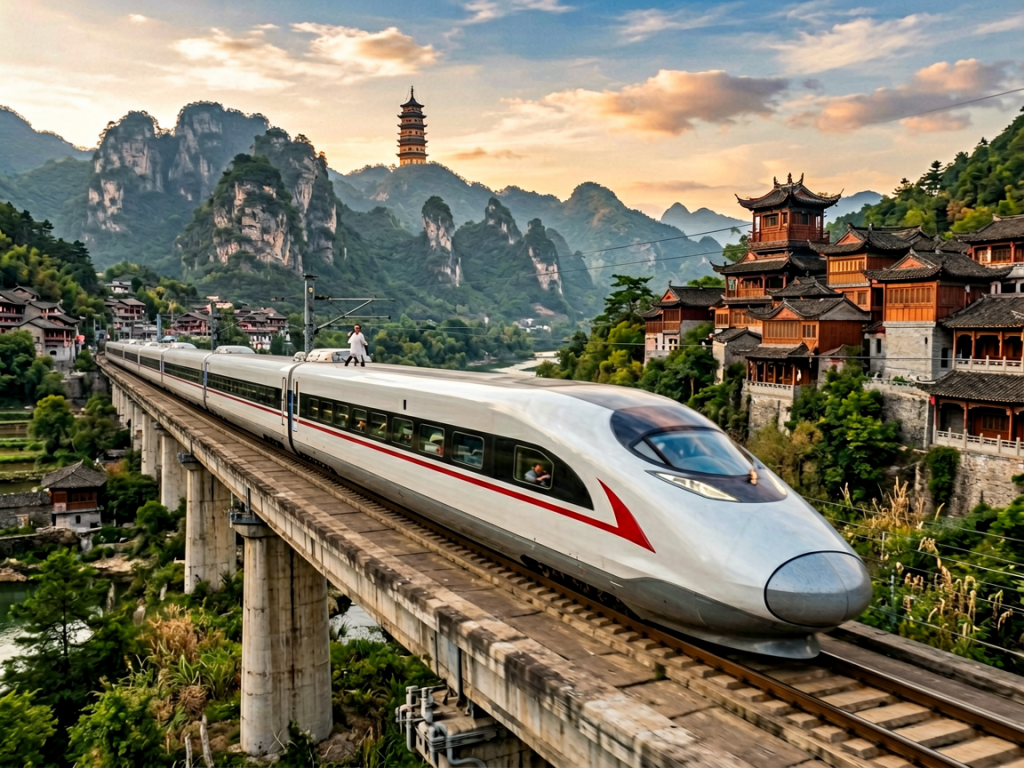
I remember a trip to Guilin. I took the train from Changsha. For three hours, I watched karst mountains rise out of the green fields like islands in a sea. It was peaceful. It was beautiful. It was nothing like flying, where you’re sealed in a metal tube and see nothing but clouds. On the train, you’re part of the landscape.
It’s also a great way to meet people. I’ve shared tables with business travelers, students, and families. We’ve exchanged stories about our travels. I’ve learned about local customs I’d never have known otherwise. The train is a microcosm of China. It’s diverse, it’s busy, and it’s moving forward.
So, if you’re planning a trip here, don’t skip the train. Book that ticket. Grab a window seat. Watch the world go by. And don’t forget to bring a book. Or a good pair of noise-canceling headphones. Or just your curiosity. You’re in for a ride.
Trust me, you’ll come back wanting more. I know I did. Next time you’re in China, put down the guidebook and look at the map. Pick a town you’ve never heard of. Buy a ticket. Go see it. It’s easier than you think. And it’s way more fun than sitting in an airport lounge.