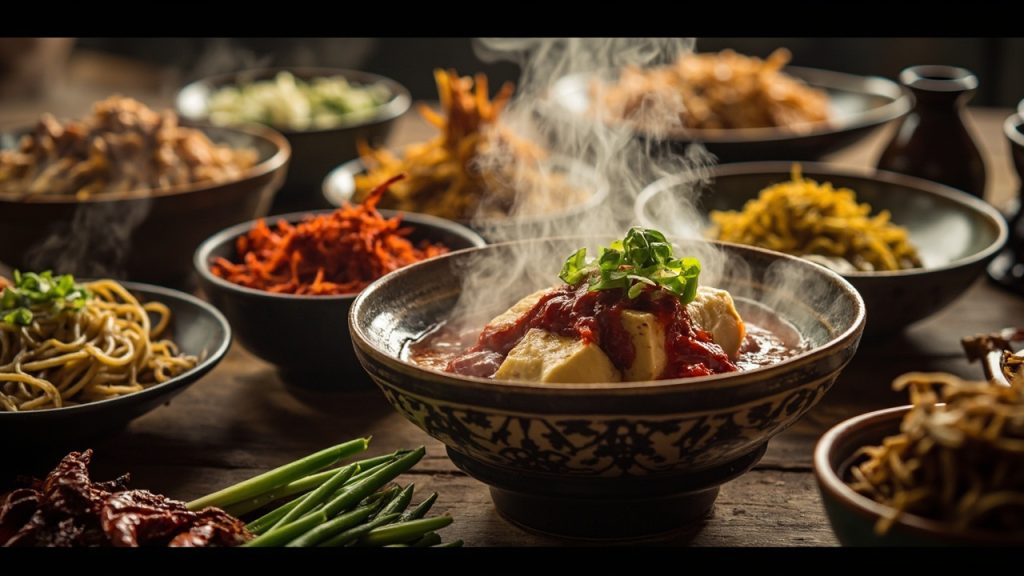
Chengdu Food Guide: Beyond Hot Pot
Chengdu Food Guide: Beyond Hot Pot
Chengdu is a UNESCO City of Gastronomy. That’s not a marketing slogan — UNESCO actually gave it the title. And while hot pot (火锅, huǒguō) gets all the attention, Chengdu’s food scene goes way deeper. Here’s what to eat beyond the boiling pot.
Mapo Tofu (麻婆豆腐)
This is Chengdu’s most famous dish and one of the most misunderstood outside China. Real mapo tofu is not a vegetarian dish — the ground pork is essential. It’s not just spicy — the Sichuan peppercorns create that numbing sensation (麻, má) that makes your lips tingle. And it’s not gloopy — the sauce should coat the tofu without drowning it. The best version is at Chen Mapo Tofu, a restaurant that’s been serving it since 1862.
Dan Dan Noodles (担担面)
Named after the carrying pole (dan dan) that street vendors used to carry their wares. The noodles are thin, served with a sauce of chili oil, Sichuan pepper, preserved vegetables, minced pork, and chopped peanuts. The key is the balance — spicy, sour, salty, and sweet all at once. Chen Chi Dan Dan Noodle in the city center is the spot.
Chuan Chuan (串串)
Think of it as hot pot’s more casual cousin. Skewers of meat, vegetables, and tofu are laid out on shelves — you grab what you want and cook them in a shared pot of spicy broth at your table. The bill is calculated by counting the skewers. It’s social, cheap (about $10 per person with beer), and you can try more things than a full hot pot meal. Look for a place packed with locals — that’s where the best chuan chuan is.
Kung Pao Chicken (宫保鸡丁)
This is one of the few Chinese dishes that actually tastes better in China than abroad. The real version uses chicken thigh (not breast), dried Sichuan chilies (not fresh), and whole peanuts. It’s sweet, sour, and spicy, with a slight smokiness from the wok. The chicken should be tender, the sauce should cling to every piece, and there should be enough chilies to make you pick through them carefully.
Fuqi Feipian (夫妻肺片)
The name translates to “husband and wife lung pieces,” which sounds alarming. It’s actually sliced beef offal (tripe, tongue, heart) tossed in chili oil, Sichuan pepper, and sesame. The texture combination — chewy tripe, tender tongue, crispy peanuts — is what makes it work. Get it from a cold dish counter rather than a restaurant menu.
Tea House Culture
Food in Chengdu isn’t complete without the tea house experience. Chengdu has more tea houses than any city in China. The classic is People’s Park (人民公园) — grab a seat, order a cup of jasmine tea, and watch the locals play mahjong, practice calligraphy, and gossip. A pot of tea costs about $2 and comes with unlimited hot water refills. Stay as long as you want — nobody rushes you out.
Where to Eat
Jinli Ancient Street: Tourist trap, but good for trying multiple snacks in one walk. Kuanzhai Alley: Slightly overpriced but worth it for the atmosphere. University district: The food stalls near Sichuan University serve some of the best and cheapest food in the city. Yulin neighborhood: Zhao Lei’s song “Chengdu” made this area famous, but locals know it for having some of the city’s best hole-in-the-wall restaurants.
Chengdu’s food philosophy is simple: flavor first, everything else second. The city doesn’t care about presentation or trends. It cares about whether the food tastes good. By that standard, Chengdu might be the best food city in the world.