Chinese Philosophy: Confucianism Explained Simply
Chinese Philosophy: Confucianism Explained Simply
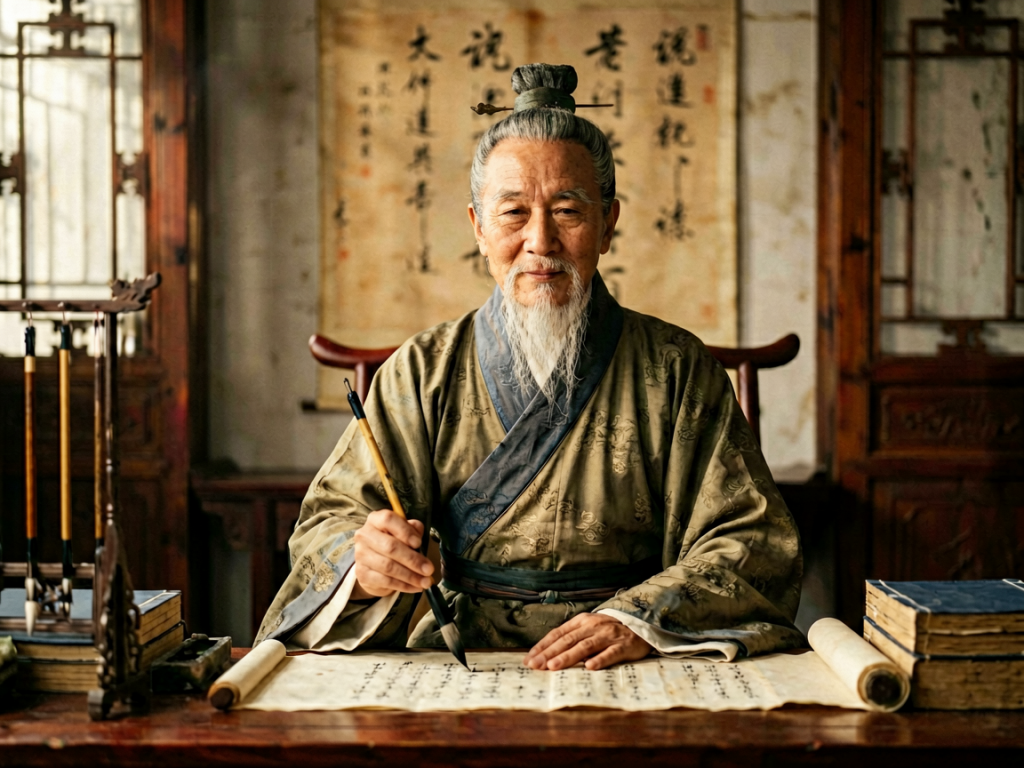
Confucius — Kongzi (孔子) in Chinese — was born in 551 BC, but his ideas shape daily life in China more than almost anything that’s happened since. If you want to understand why Chinese people behave the way they do, you need to understand Confucianism.
The good news: it’s simpler than most people think.
The Core Idea: Harmony
Confucius wasn’t interested in gods or the afterlife. He was interested in how people should live together. His answer: through relationships. Everyone has roles — father, son, ruler, subject, friend — and each role comes with obligations. If everyone fulfills their role properly, society works. That’s it. That’s the whole system.
This is why Chinese culture puts so much weight on filial piety (孝, xiào) — respect for parents and ancestors. It’s not just about being nice to your mom. It’s the foundation of a functioning society. If you don’t honor your parents, the whole system falls apart.
Ren — The Quality That Makes Us Human
Confucius’s most important concept is ren (仁), often translated as “benevolence” or “human-heartedness.” It’s the quality of being a good person. Confucius said ren means “loving others” and “wanting to establish yourself, establish others; wanting to advance yourself, advance others.”
In practice, that means: don’t do to others what you don’t want done to you. Confucius said this 500 years before Christ.
Li — The Rules of Engagement
Li (礼) means ritual, propriety, or etiquette. It’s the outer expression of ren. If ren is the feeling of respect, li is bowing when you greet someone. If ren is loyalty, li is standing up when your boss walks in. Li turns internal virtue into visible action.
This explains why Chinese social interactions can feel formal to Westerners. The rituals — pouring tea for others, using two hands to give a business card, addressing people by their titles — aren’t empty formality. They’re li in action.
Five Constant Relationships
Confucius identified five key relationships and their proper virtues:
– Ruler and subject — loyalty and justice
– Parent and child — love and filial piety
– Husband and wife — mutual respect
– Older and younger sibling — brotherly care
– Friend and friend — trust
Notice that most of these are hierarchical. That’s intentional. Confucius believed that clear hierarchies create stable societies. The key is that those in power have obligations too — a ruler who abuses his power loses the mandate of heaven.
Confucianism Today
You’ll see Confucian values everywhere in modern China: the emphasis on education (Confucius was ultimately a teacher), the respect for elders, the importance of saving face (maintaining dignity in social situations), and the preference for group harmony over individual expression.
The Chinese government has been promoting Confucianism again in recent years as a counterweight to Western values. Schools teach Confucian classics. There are Confucian institutes worldwide. After a century of being blamed for China’s weakness, Confucius is back.
But at its heart, Confucianism isn’t a political tool. It’s a practical guide to being a decent person. And that never really goes out of style.