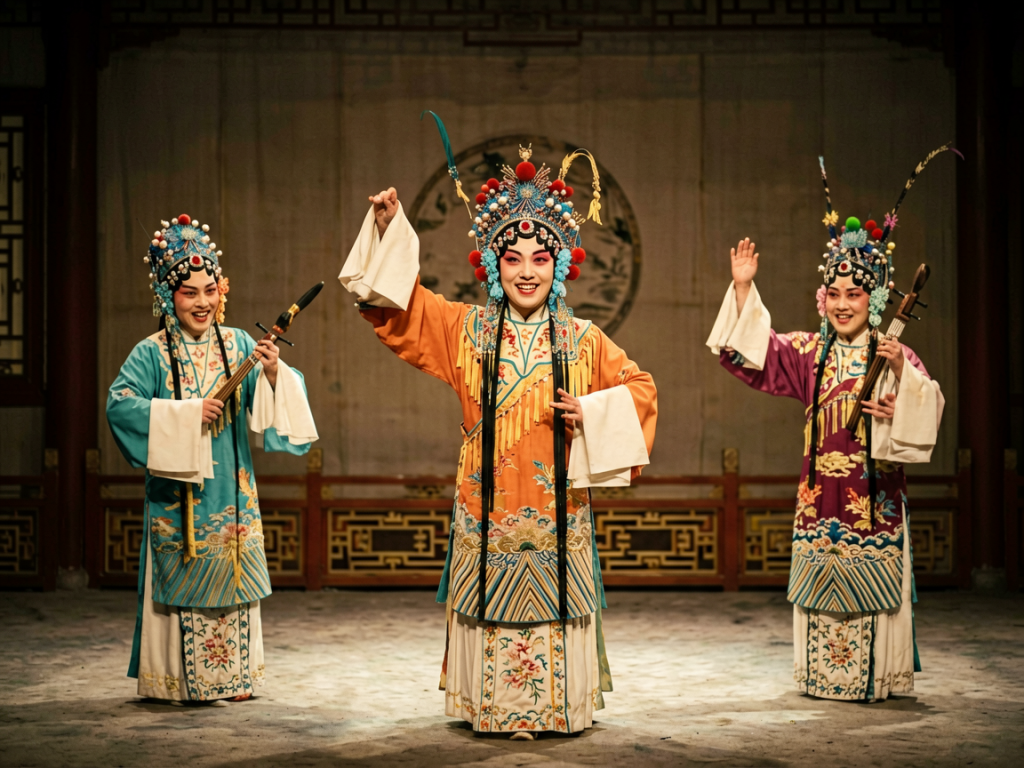
Chinese Opera: Music, Acrobatics and Storytelling
Chinese opera (戏曲, xìqǔ) combines music, dance, acrobatics, and martial arts into a single performance art form with a history spanning 1,000 years. The most famous is Peking Opera (京剧, jīngjù), but every region has its own style — Kunqu (Kunshan), Yueju (Shaoxing), Chuanju (Sichuan), and over 300 other regional variations.
Peking Opera is the most recognized. Performers wear elaborate costumes and painted face masks — each color has a meaning: red for loyalty, black for integrity, white for treachery, yellow for bravery, blue for stubbornness. The performances combine singing, spoken dialogue, martial arts, and acrobatics. The instruments are mostly percussion and string — the piercing sound of the jinghu (a two-stringed fiddle) is unmistakable.
The stories are drawn from Chinese history and legend — the Romance of the Three Kingdoms, Journey to the West, and traditional folk tales. If you’ve never seen Chinese opera, start with a short excerpt rather than a full performance (which can run 3-4 hours). The acrobatic and martial sequences are the most accessible entry point for newcomers.