Traditional Chinese Medicine: An Introduction
Traditional Chinese Medicine (中医, zhōng yī) is a complete medical system that’s been practiced for over 2,000 years. It’s not “alternative medicine” in China — it’s integrated into the national healthcare system alongside Western medicine. Most Chinese hospitals have both TCM and Western departments.
The core concept: health is about balance. The body has two opposing forces — yin (cool, passive) and yang (hot, active) — and a vital energy called qi (气) that flows through channels called meridians. Illness results from imbalances or blockages. Treatment restores balance rather than targeting specific symptoms.
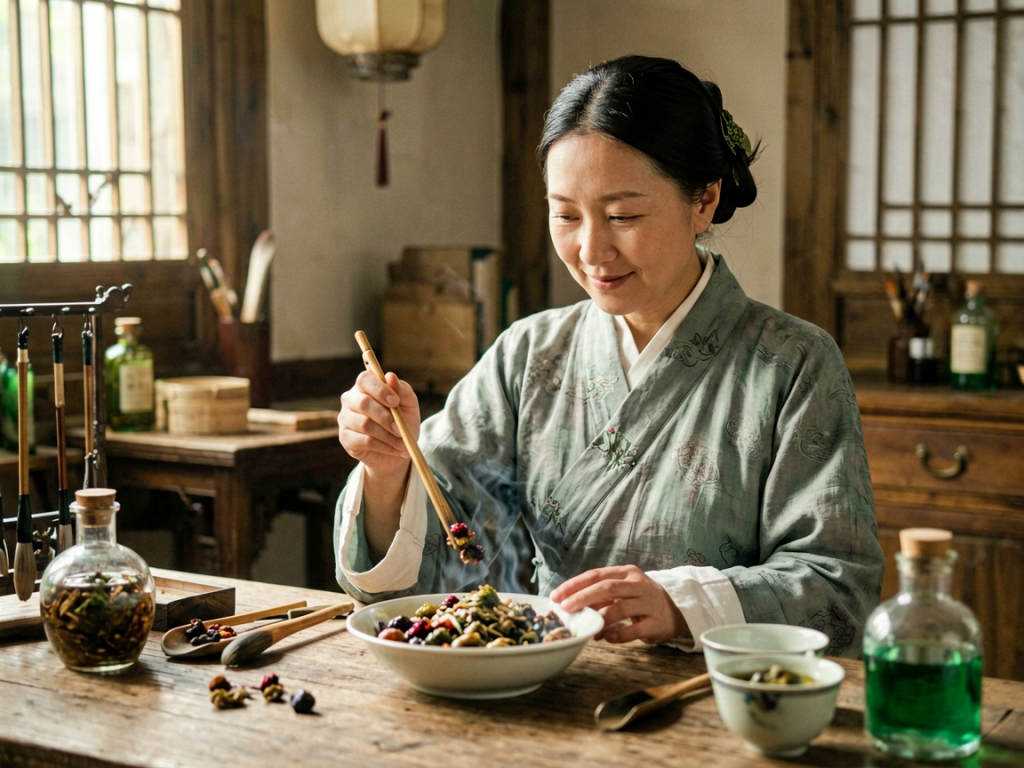
The main treatments: Acupuncture (针灸) — needles inserted at specific points along meridians to regulate qi flow. Herbal medicine (中药) — complex formulas of plant, mineral, and animal products tailored to the individual. Cupping (拔罐) — heated cups create suction on the skin to release stagnation. Tui na (推拿) — therapeutic massage targeting acupressure points. Qigong (气功) — gentle movement and breathing exercises.
Skeptics question TCM’s scientific basis, and it’s true that many TCM claims haven’t been proven in Western clinical trials. But acupuncture has solid evidence for pain management, and many herbal formulas have active compounds that Western medicine recognizes. In practice, most Chinese people use TCM for chronic conditions and prevention, and Western medicine for acute care and emergencies.