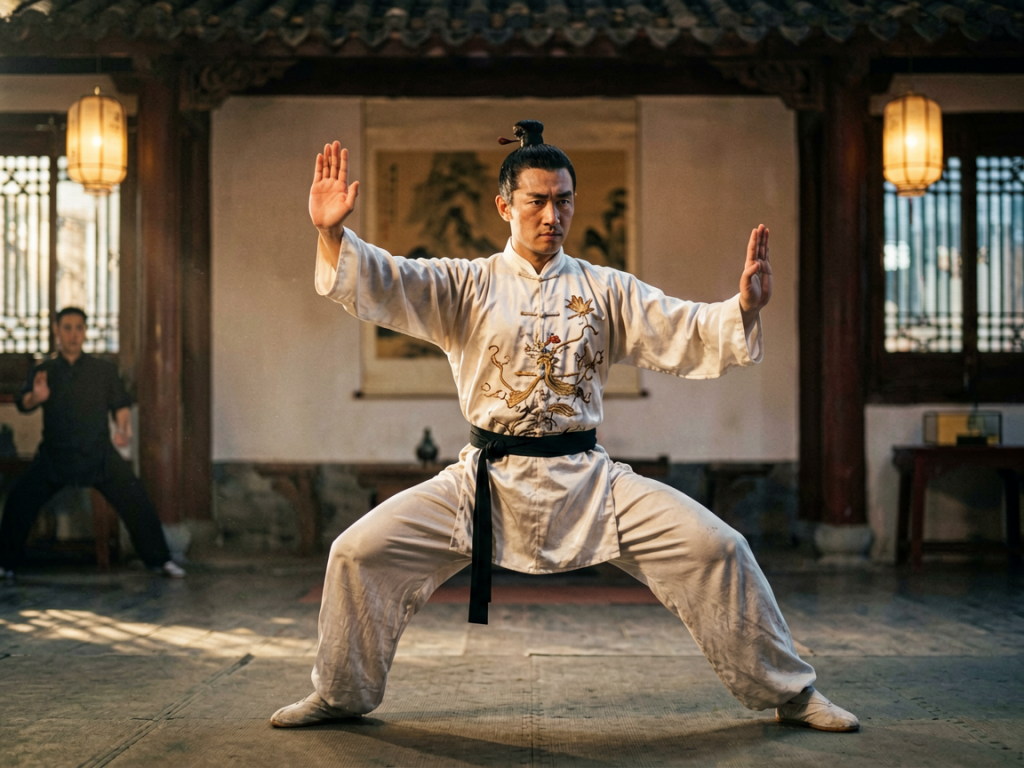
Kung Fu Philosophy: How Martial Arts Shapes the Chinese Mind
Kung fu is not a sport. It’s not self-defense techniques. It’s a complete system of personal development that uses the body to train the mind. The physical movements are secondary — the real practice happens inside your head.
This is why Chinese martial arts look different from Western boxing or Muay Thai. The goals are different. A boxer trains to win a fight. A kung fu practitioner trains to master themselves. The fight is just the test.
The Shaolin Foundation — Discipline Through Suffering
Shaolin kung fu was developed by Buddhist monks who needed both physical health and mental discipline for long meditation sessions. The connection is direct: sitting still for hours requires physical endurance. The monks found that training the body made the mind stronger, and training the mind made the body more capable.
This creates a feedback loop that’s the core of Shaolin philosophy: push your body past its comfort zone → learn that discomfort is temporary → apply that mental toughness to other areas of life → repeat. The physical pain of training is the teacher. The lesson is that you can endure more than you think.
Modern research backs this up. Studies show that martial arts training increases gray matter density in brain regions associated with emotional regulation and executive function. The monks figured this out 1,500 years ago through pure observation.
Wudang and the Tao — Effortless Action
Where Shaolin is hard, Wudang is soft. The philosophy comes from Taoism, particularly the concept of wu wei (无为) — effortless action or doing without doing. In martial terms, this means not meeting force with force but redirecting it. The opponent attacks → you yield → their momentum carries them past you → you counter.
The Wudang approach teaches a different lesson: not every problem needs a head-on solution. Sometimes the best response is to step aside and let the problem exhaust itself. This philosophy shows up in Chinese business negotiations, political strategy, and everyday social interactions. The person who stays calm and flexible wins more often than the person who pushes hard.
The Internal Arts — Qi, Intention, and Awareness
Chinese martial arts distinguish between “external” (外家) and “internal” (内家) styles. External styles like Shaolin focus on muscular strength, speed, and endurance. Internal styles like Tai Chi, Baguazhang, and Xingyiquan focus on qi (气) — vital energy — and yi (意) — intention.
The internal arts train awareness above all else. A Tai Chi practitioner learns to feel subtle shifts in balance, to sense an opponent’s intention before the attack moves, to move from the center of the body rather than the limbs. This heightened awareness carries into daily life — you become more attuned to your own mental state, more sensitive to social dynamics, more present in whatever you’re doing.
The Moral Code — Wude (武德)
Every kung fu school teaches wude — martial virtue. The code includes: respect for teachers and elders, humility in victory, restraint in using your skills, courage to defend the weak, and discipline to train consistently. A kung fu master who bullies others has failed the real test, regardless of how well they fight.
This moral dimension is what separates kung fu from pure fighting. The training makes you dangerous. The philosophy ensures you use that danger responsibly. Many traditional schools won’t teach advanced techniques to students who haven’t demonstrated the right character — the assumption being that a skilled fighter without moral discipline is a threat to society.
Kung Fu as Life Training
The ultimate purpose of kung fu philosophy is not to win fights but to build character. The thousands of repetitions of a single punch are not about perfecting the punch — they’re about developing patience. The sparring sessions are not about learning to hit — they’re about learning to stay calm under pressure. The forms (套路) are not dance routines — they’re moving meditation.
This is why many of the greatest martial artists are peaceful people. Bruce Lee said it best: “The art of fighting is the art of being yourself.” Kung fu strips away pretense, ego, and fear. What remains is your true nature — and the work of improving it.
Whether you practice kung fu for fitness, self-defense, or competition, the philosophy works on you whether you notice it or not. The hours of practice build discipline. The humility of learning builds patience. The sparring builds courage. And over years, these qualities become part of who you are — not because you studied philosophy, but because you lived it, one repetition at a time.