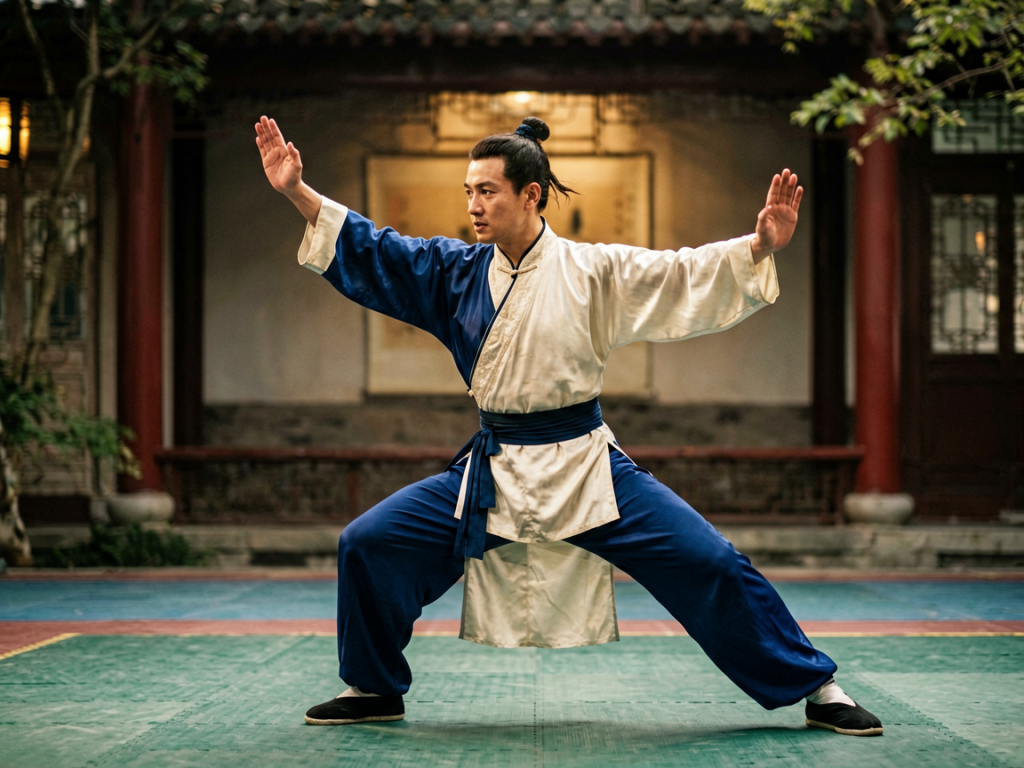
Wing Chun: The Martial Art Made for Speed
Wing Chun (咏春拳) is designed for one thing: ending a fight as quickly as possible. It’s not flashy. There are no high kicks, no acrobatics, no spinning techniques. The movements are small, direct, and efficient — built for close-range combat where every inch matters.
The Origin Story
Legend says Wing Chun was created by a Buddhist nun named Ng Mui during the Qing dynasty. She observed a crane fighting a snake — the crane’s precise strikes against the snake’s fluid movements — and developed a martial art that combined the best of both. The style was passed to a woman named Yim Wing Chun, from whom the art takes its name.
Whether the legend is true doesn’t really matter. What matters is that Wing Chun was designed by someone who couldn’t rely on size or strength — making it ideal for smaller practitioners. That’s why it’s one of the most popular martial arts for women in China.
The Key Principles
Centerline theory: Wing Chun assumes that the most direct path to your opponent’s body is along the centerline — an imaginary vertical line running through the middle of their body. Every technique aims to control or strike along this line. If you control the centerline, you control the fight.
Simultaneous attack and defense: Wing Chun never separates blocking from striking. The same movement that deflects an incoming punch delivers a counter-attack. There’s no “block, then punch” — it’s all one motion.
Chain punching: Wing Chun’s most famous technique — rapid, straight punches delivered in succession, each punch shorter than the last. The goal isn’t power. It’s overwhelming speed and pressure that leaves no gap for the opponent to counter.
Sticky hands (Chi Sao): A training drill where practitioners maintain arm contact while flowing through attacks and defenses. It develops sensitivity — the ability to feel where an opponent’s force is going before the attack fully develops. After enough Chi Sao practice, you stop thinking about techniques and just react.
Wing Chun in Modern Culture
Wing Chun’s global fame comes mostly through Ip Man and Bruce Lee. Ip Man was the grandmaster who taught Wing Chun in Hong Kong. Bruce Lee trained under him before developing Jeet Kune Do — which borrows heavily from Wing Chun’s centerline theory and efficiency principles.
The Ip Man film series (2008-2019) starring Donnie Yen brought Wing Chun to a mainstream audience. The films popularized the rapid chain punches and the “one-inch punch” — a Wing Chun technique that generates explosive power from a distance of one inch. Lee famously demonstrated it on a volunteer who had to be caught before he hit the floor.
Is It Practical?
Wing Chun has its critics. Some martial artists argue that the style lacks range, doesn’t prepare practitioners for leg kicks or takedowns, and relies too much on chi sao sensitivity that may not translate to real fights. These criticisms have some validity — Wing Chun was designed for a specific context (close-range, empty-hand combat).
But it’s hard to argue with a system that produced Bruce Lee, that’s taught to police and military units in several countries, and that has survived and evolved for over 300 years. Like any martial art, Wing Chun is a tool. It works incredibly well for what it’s designed to do. The question is whether “what it’s designed to do” matches what you need.