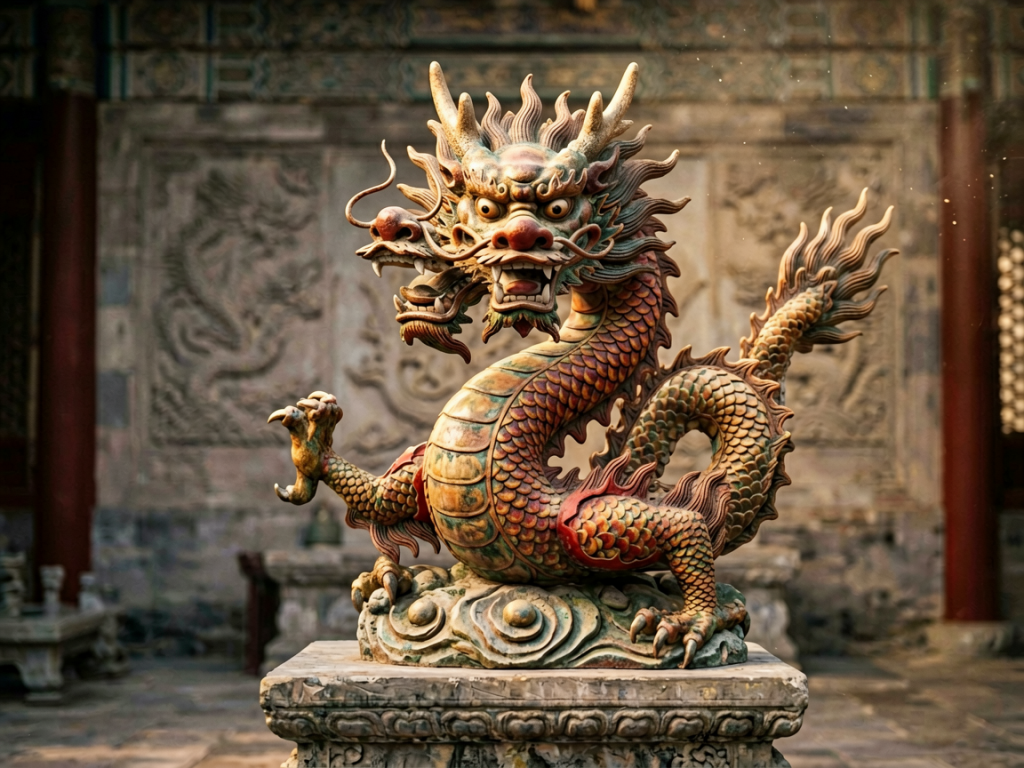
Chinese Dragon Symbol: History and Meaning
The Chinese dragon (龙, lóng) is not the fire-breathing, hoard-guarding monster of Western mythology. Chinese dragons are benevolent — bringers of rain, symbols of power, and ancestors of the Chinese people. The difference tells you everything about how Chinese and Western cultures view power.
Origins
The dragon symbol appeared in China over 6,000 years ago. The earliest dragon artifacts — carved jade and pottery — come from the Hongshan culture in what is now Inner Mongolia. These early dragons were serpentine creatures with pig-like heads, a far cry from the majestic creature that later became the imperial symbol.
By the Shang dynasty (1600-1046 BC), the dragon was associated with rain and water — it was believed to control rivers, seas, and weather. Farmers prayed to the dragon for rain. Emperors claimed descent from the dragon to legitimize their rule. The dragon was both a divine force of nature and a political tool.
The Imperial Dragon
During the Ming and Qing dynasties, the five-clawed dragon became the exclusive symbol of the emperor. Commoners could not use five-clawed dragon imagery — that was punishable by death. Four-clawed dragons were for nobility, three-clawed for officials. The imperial dragon was always depicted facing forward, holding a pearl (representing wisdom and spiritual energy) in its claws.
The dragon was the centerpiece of the Forbidden City — carved into marble, woven into silk, painted onto beams and ceilings. The emperor’s robe was called the “dragon robe” (龙袍). His throne was the “dragon throne.” Even the emperor’s face was called the “dragon countenance.”
Nine Sons of the Dragon
Chinese mythology says the dragon had nine sons, each with different abilities. You’ve seen them without realizing it: Bixi, the tortoise-like son who carries stone tablets (found on steles across China); Chiwen, the roof guardian (the dragon-shaped tiles at the corners of temple roofs); Pulao, whose roar is thunder (cast into temple bells). Each son has a distinct role, and you’ll find them in the most overlooked details of Chinese architecture.
The Dragon in Modern China
The dragon survived the fall of the empire. It’s still everywhere — in festivals, tattoos, brand names, and nationalist rhetoric. The dragon dance at Chinese New Year is a tradition that goes back to the Han dynasty. Dragons are carved into modern buildings, printed on currency, and used as symbols of Chinese identity worldwide.
The Chinese phrase “descendants of the dragon” (龙的传人) is commonly used to express Chinese ethnic identity. The dragon is the central symbol of Chinese nationalism — a contrast to the West’s more complicated relationship with its own mythical creatures.