Guilin Travel Guide: Mountains, Rivers and Rice Terraces
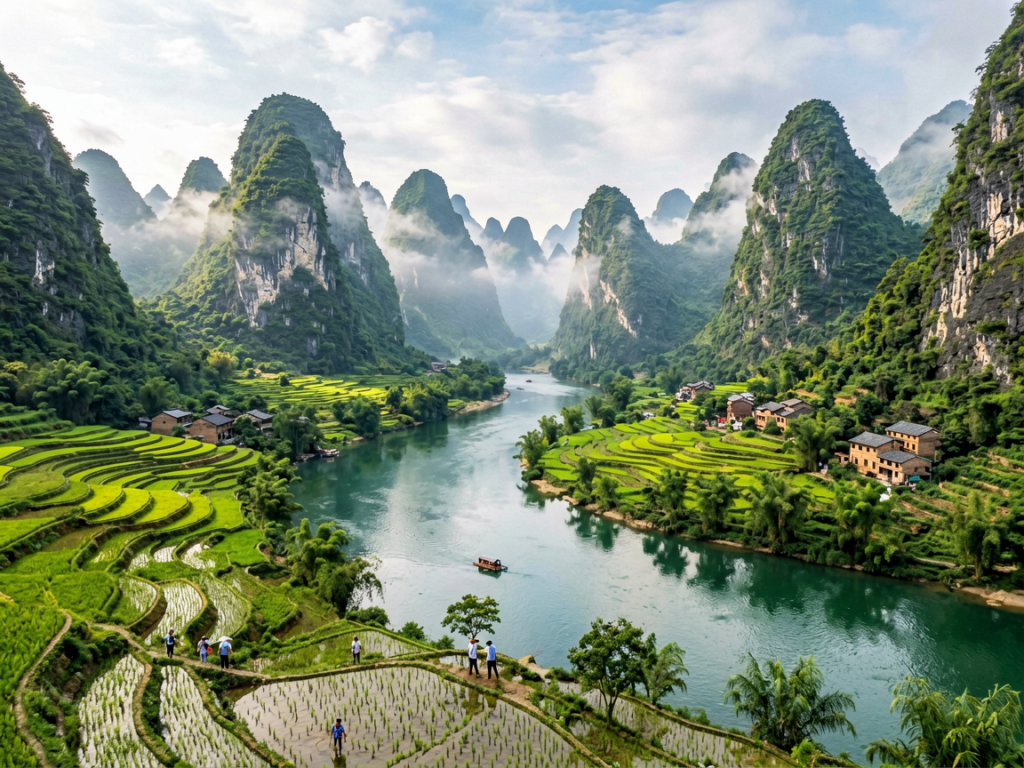
Guilin is the kind of place that ruins other landscapes for you. The limestone karst peaks, the Li River winding through valleys, the rice terraces carved into mountainsides — it looks like a Chinese painting come to life. And the best part? It’s not overrun with tourists the way Beijing and Shanghai can be.
Getting to Guilin
Fly into Guilin Liangjiang International Airport. Direct flights are available from Beijing, Shanghai, Guangzhou, and most major Chinese cities. High-speed trains connect Guilin to Guangzhou (2.5 hours), Changsha (3 hours), and Guiyang (2 hours). The train station is in the city center, which makes it more convenient than the airport.
Li River Cruise (漓江)
The Li River cruise from Guilin to Yangshuo is the highlight of any trip. The 4-hour journey takes you through the most iconic scenery in China — limestone peaks rising straight out of the water, water buffalo grazing on riverbanks, fishermen on bamboo rafts. The section near Xingping is the scene printed on the 20 yuan note. Bring your camera and sit on the top deck for the best views.
Book the cruise through your hotel rather than a street agent — you’ll pay a bit more but avoid the scams. Morning departures are best because the river mist creates a dreamlike atmosphere. Afternoon cruises are hotter and more crowded.
Yangshuo (阳朔)
The town at the end of the Li River cruise. Yangshuo is more relaxed than Guilin, with better nightlife, more international food options, and the best access to outdoor activities. Rent a bicycle or scooter and explore the countryside — the roads through the karst valleys are some of the most scenic in China.
Don’t miss: West Street (Xijie) at night, though it’s touristy. The real magic is the countryside — take a bike ride to Moon Hill, climb it (1,000 steps, worth it), and look out over the valley. The view has been described as “looking at the set of Avatar” because the floating mountains in the movie were inspired by Guilin’s karsts.
Longji Rice Terraces (龙脊梯田)
About 2 hours from Guilin, the Longji (Dragon’s Backbone) Rice Terraces are man-made landscapes that have been farmed for over 700 years. The terraces follow the contours of the mountains like giant staircases. The best time to visit is May-June (water-filled, reflecting the sky) or September-October (golden before harvest).
Stay overnight in a local guesthouse in Ping’an or Dazhai village. The Zhuang and Yao ethnic minorities who built these terraces still live here. The hospitality is genuine, and waking up to the mist rising over the terraces is a memory that stays with you.
Reed Flute Cave (芦笛岩)
A limestone cave filled with stalactites, stalagmites, and colored lighting that makes everything look surreal. It’s touristy but impressive — the scale of the cave is bigger than you expect. Visit on a rainy day when outdoor activities aren’t possible.
Practical Tips
Spring and autumn are the best seasons. Summer is hot and humid, winter is cold and damp. The rain can come suddenly — carry a small umbrella. Street food in Guilin is excellent, especially Guilin rice noodles (桂林米粉) — eat them for breakfast like the locals do. Avoid the tourist restaurants on West Street in Yangshuo; the ones a block away are cheaper and better.