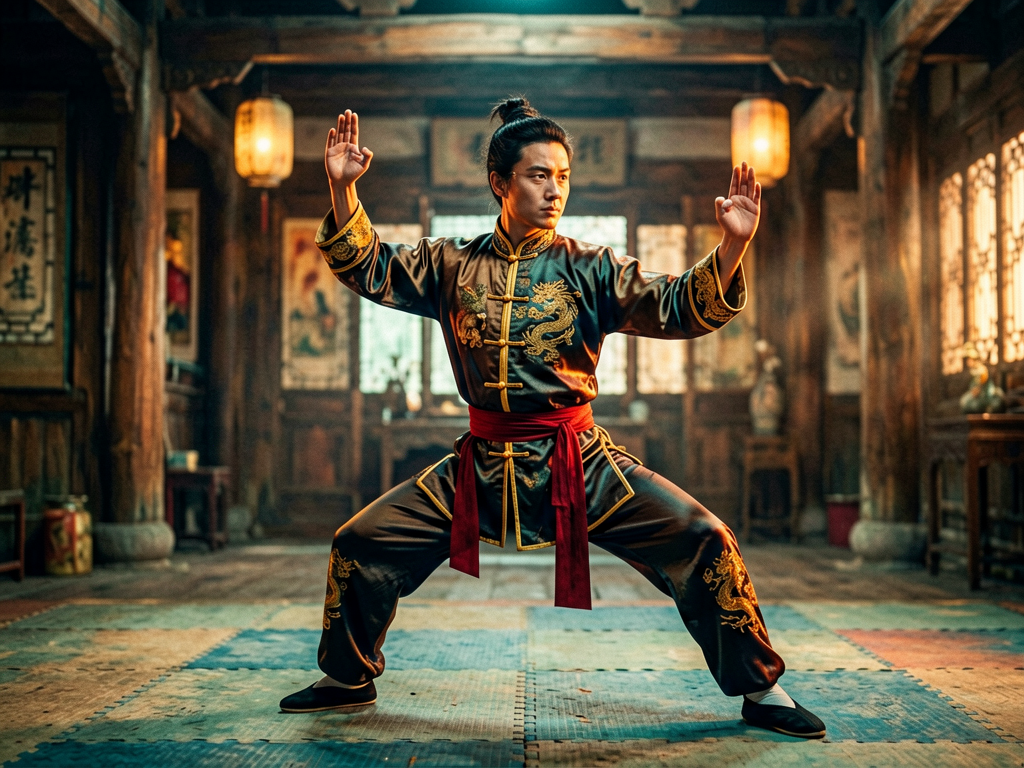
Kung Fu Movies That Changed Cinema Forever
I’ll be honest, Let me be honest — I didn’t get into kung fu movies through some deep appreciation of cinema. It started simpler than that. I was maybe twelve, flipping through channels, and landed on a movie where a guy in a white robe was fighting about twenty people on a set that looked like a pagoda made of cardboard. Honestly incredible.
It was ridiculous. It was glorious. And I was hooked.
Turns out, I’m not alone. Kung fu movies have been surprising audiences for decades — not just with the fighting, but with what the fighting means. Honestly incredible.
Enter the Dragon (1973) — The One That Started It All
You can’t talk about kung fu cinema without starting here. Bruce Lee’s Enter the Dragon wasn’t the first martial arts movie, but it was the one that broke through to the West. The premise is simple: a martial artist goes undercover on a private island tournament. The execution is electric.
I’ve learned this the hard way.
I’ve learned this the hard way.
What made it different? Bruce Lee moved like nobody had seen before. His speed, his precision, the little sound he made when he struck — it all felt real in a way that Hollywood fight scenes didn’t. The movie grossed over $400 million worldwide (adjusted for inflation) and basically created the template for every martial arts film that followed.
Watch it for the history. Stay for the scene where Bruce fights the guy with claws.
Crouching Tiger, Hidden Dragon (2000) — The Artistic Revolution
For years, kung fu movies were considered lowbrow entertainment in the West. Fun, but not art. Then Ang Lee came along and changed the conversation.
Sounds interesting, right?
Sounds interesting, right?
Crouching Tiger, Hidden Dragon took the gravity-defying wuxia tradition and turned it into something that could win Oscars. The fight scenes aren’t just fights — they’re conversations. Characters express jealousy, longing, and regret through swordplay. The bamboo forest fight isn’t about who wins, it’s about two people dancing around something they can’t say to each other.
It’s also the reason you started seeing “wire-fu” in Hollywood movies afterward. The Matrix borrowed from it. Kill Bill borrowed from it. Even Avatar has traces of it.
Ip Man (2008) — The Biopic Reinvention
By the 2000s, kung fu movies were struggling. The formulas felt tired. Then Donnie Yen stepped in and showed everyone how it’s done.
Ip Man tells the story of Bruce Lee’s teacher — a Wing Chun master living through the Japanese occupation of Foshan. What makes it special isn’t the choreography (which is incredible), but the emotional weight. Ip Man isn’t fighting for glory. He’s fighting to feed his family, to protect his neighborhood, to hold onto dignity in a world that’s falling apart.
The scene where he takes on ten Japanese fighters at once is one of the most cathartic moments in modern cinema. It’s not just a fight — it’s every moment of frustration and humiliation boiling over into something that feels like justice.
The Raid (2011) — The Brutal Realism
Indonesian, not Chinese — I know. But The Raid deserves a mention because it changed what audiences expect from fight choreography. No wires. No slow motion. Just a camera following a guy as he fights his way through a building floor by floor.
The fighting style is Pencak Silat, but the influence rippled right back into Chinese martial arts cinema. After The Raid, audiences wanted their fight scenes grittier, faster, and more grounded. Movies like Flash Point (Donnie Yen) and SPL shifted to more realistic, MMA-influenced styles.
Why Kung Fu Movies Still Matter
Here’s the thing — kung fu movies aren’t really about fighting. They never were. They’re about something simpler: a person facing impossible odds and refusing to back down. That’s a story that works in any language.
The best ones, from Enter the Dragon to Ip Man, all share the same DNA. A hero with a code. A challenge that seems insurmountable. A final confrontation where everything comes down to skill, will, and heart.
I’ve watched a lot of kung fu movies since that first accidental discovery. Some are masterpieces, some are terrible, and some are so bad they circle back around to brilliant. But I’ve never regretted pressing play on one. There’s something honest about a genre that puts a person’s character to the test in the most direct way possible.
And yeah, I still try the moves in my living room. I’m not very good. But that’s not really the point, is it.
To be honest, I was skeptical at first.