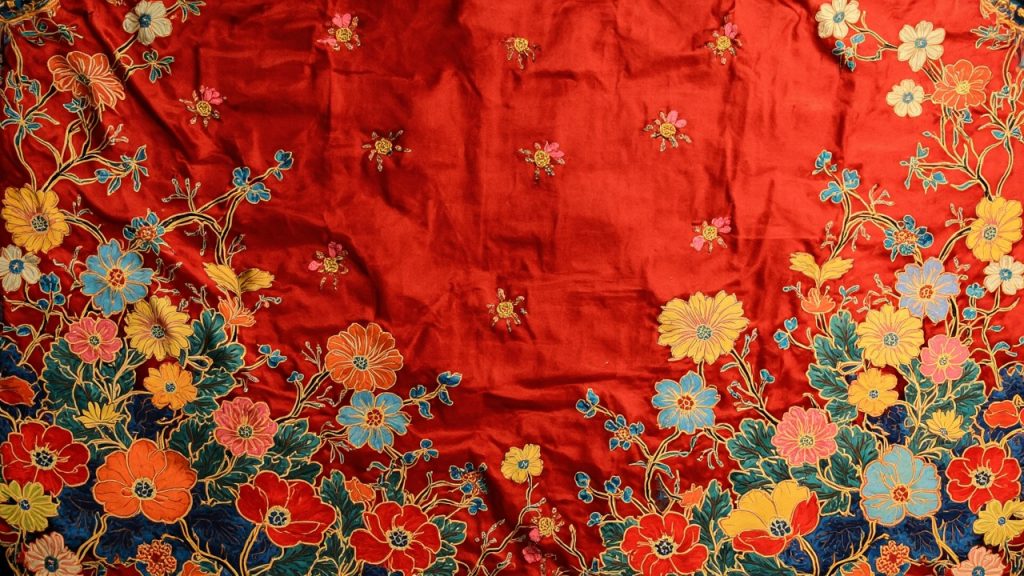
Chinese silk is one of the most important and luxurious fabrics in human history, with a production tradition spanning over 5,000 years. The discovery of silk production was one of ancient China’s most significant achievements, and silk became a cornerstone of Chinese economy, culture, and international trade. The Silk Road, the ancient network of trade routes connecting China to the Mediterranean, was named for the precious fabric that was China’s most important export for over 2,000 years.

According to Chinese legend, silk was discovered by Empress Leizu, wife of the Yellow Emperor, around 2700 BCE. While drinking tea in her garden, a silkworm cocoon fell into her cup, and when she tried to remove it, she noticed a fine thread unwinding from the cocoon. She realized that the thread could be woven into fabric, and thus silk production was born. Whether historically accurate or not, this legend reflects the importance of silk in Chinese culture and the reverence for the empress who is credited with its discovery.
The Silk Production Process
Silk production, known as sericulture, is a complex process that requires skill, patience, and careful attention to detail. The process begins with silkworm eggs, which are kept at controlled temperatures until they hatch. The newly hatched silkworms are fed fresh mulberry leaves, their only food source, for about 35 days until they have grown to full size. During this period, the silkworms increase their body weight over 10,000 times and require constant care to ensure their health and the quality of the silk they will produce. When the silkworms are ready to spin their cocoons, they secrete a protein fiber from their salivary glands that hardens upon contact with air, forming a continuous thread about one kilometer long per cocoon. The cocoons are harvested before the moths emerge, which would break the continuous fiber, and are steamed or boiled to kill the pupae inside while preserving the silk thread. The silk fibers from multiple cocoons are combined and unwound onto reels, then twisted together to create the raw silk thread that can be woven into fabric.
The Silk Road
The Silk Road was not a single road but a network of trade routes spanning over 6,000 kilometers connecting China to Central Asia, the Middle East, and Europe. The route was established during the Han Dynasty around 130 BCE when Emperor Wu sent Zhang Qian on a diplomatic mission to Central Asia. Zhang Qian expeditions opened trade relationships that would continue for over 1,500 years, with Chinese silk being the most valuable commodity traded westward. In exchange for silk, China received horses, glassware, woolen textiles, and exotic foods from Central Asia and the Mediterranean. The Silk Road was not only a trade route but also a conduit for cultural exchange, spreading Buddhism from India to China and transmitting Chinese technologies like papermaking and gunpowder westward. The Silk Road declined during the Ming Dynasty when maritime trade routes offered more efficient transportation, but its legacy continues to fascinate historians and travelers.
Types of Chinese Silk
Chinese silk comes in several varieties, each with distinct characteristics and production methods. The most common type is cultivated silk, produced from domesticated silkworms that feed on mulberry leaves, which accounts for over 90 percent of global silk production. This silk is prized for its luster, strength, and uniformity. Wild silk, produced by silkworms that feed on oak leaves, has a coarser texture and more irregular color that some designers prefer for its natural appearance. Tussar silk from northeastern China has a distinctive golden color and is often used for home furnishings and traditional costumes. Silk satin, created by a specific weaving technique that produces a glossy surface and matte back, is the most luxurious silk fabric and is used for high-end clothing and bedding. Silk brocade incorporates colored threads into the weaving process to create intricate patterns and designs, representing the highest achievement of silk weaving technology.
Silk in Chinese Culture
Silk holds deep cultural significance in Chinese society beyond its material value. In ancient China, silk was used as currency, with officials being paid in rolls of silk for their services. The color and pattern of silk clothing indicated social status, with yellow silk reserved for the emperor and specific colors designating different ranks of officials. Silk was essential for religious and ceremonial purposes, used for ritual garments, temple decorations, and offerings to ancestors and deities. Silk paintings represent one of the highest forms of Chinese art, with the earliest surviving Chinese paintings being executed on silk. The art of silk embroidery, particularly the four famous embroidery styles of Suzhou, Hunan, Sichuan, and Guangdong, transforms plain silk fabric into intricate works of art that can take months or years to complete.
Conclusion
Chinese silk represents a remarkable achievement of human ingenuity and craftsmanship that has shaped world history through its influence on trade, culture, and technology. The techniques of silk production, perfected over thousands of years, continue to produce fabric of extraordinary beauty and quality that remains highly valued worldwide. Understanding the history and significance of silk enriches appreciation of this remarkable material and its role in Chinese civilization.