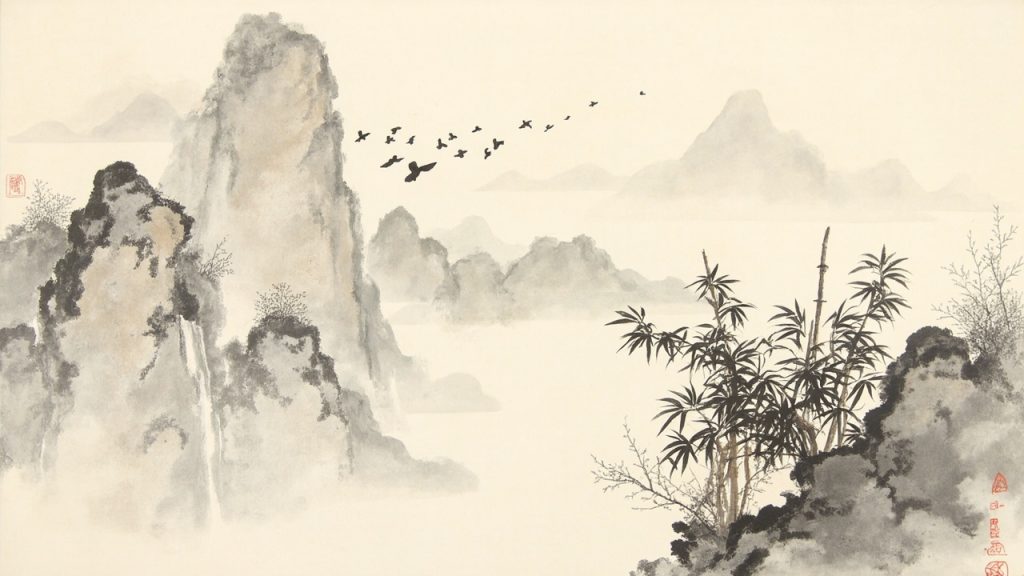
Chinese painting, known as guohua, is one of the world’s oldest continuous artistic traditions, with a history spanning over 2,000 years. Unlike Western painting, which emphasizes realistic representation, perspective, and the play of light and shadow, Chinese painting focuses on capturing the spirit or essence of its subject through expressive brushwork that is closely related to calligraphy. The integration of painting, poetry, and calligraphy in a single work creates a unified artistic expression that is unique to Chinese culture.
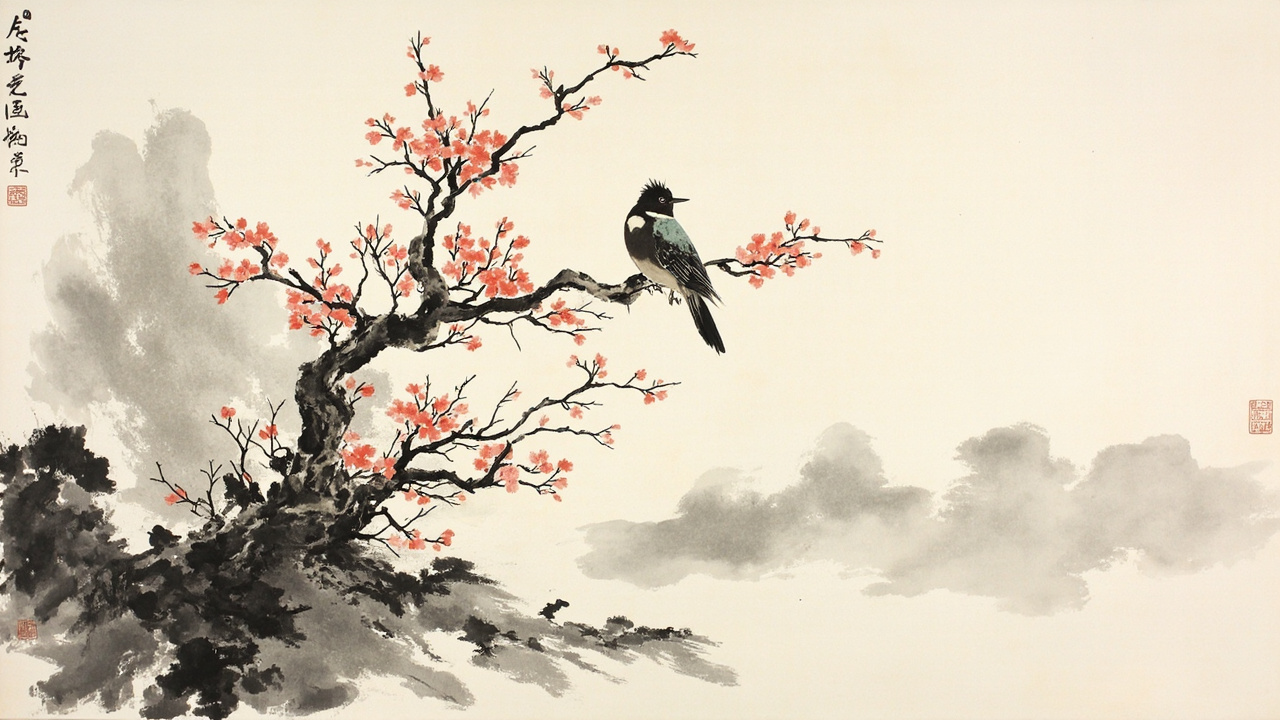
The development of Chinese painting was deeply influenced by philosophical and religious traditions, particularly Taoism, Confucianism, and Chan Buddhism. Taoist concepts of harmony with nature and spontaneity shaped landscape painting, which became the highest form of Chinese painting. Confucian values of moral cultivation influenced figure painting, which often depicted historical exemplars of virtue. Chan Buddhist emphasis on intuitive understanding and direct experience shaped the spontaneous, expressive style of ink painting. These philosophical foundations gave Chinese painting its distinctive character and elevated it from mere decoration to a form of spiritual practice.
Major Genres of Chinese Painting
Chinese painting developed several major genres that have been refined over centuries. Landscape painting is considered the highest form, reflecting the Taoist belief that nature reveals the fundamental principles of the universe. Landscape paintings are not meant to depict specific places realistically but to capture the essence of nature and evoke the same feelings that the natural scene would inspire. Figure painting, the oldest genre, depicts historical figures, legends, and daily life, often with moral or instructive purposes. Flower and bird painting, a specialized genre that emerged during the Tang Dynasty, uses natural subjects to express emotions and convey symbolic meanings, with each flower and bird carrying specific associations. The meticulous style, gongbi, uses fine, detailed brushwork and rich colors, while the free style, xieyi, uses bold, expressive brushstrokes to capture the essence of the subject with minimal detail.
Tools and Materials
Chinese painting uses the same tools as calligraphy, emphasizing the connection between writing and painting. The brush, made from animal hair mounted on a bamboo handle, comes in various sizes and types for different techniques. The ink, made from soot and animal glue, is ground on an inkstone with water to achieve the desired consistency. The paper, typically xuan paper known for its absorbency and durability, allows the ink to spread and create subtle gradations of tone that are essential to Chinese painting effects. Silk, the traditional painting support before paper became widely available, provides a smoother surface that suits meticulous painting styles. The quality of these materials significantly affects the finished work, and artists are as particular about their tools as they are about their techniques.
Brushwork Techniques
The brushwork in Chinese painting is the most important element, with each stroke expected to demonstrate the artist’s skill, training, and emotional state. The concept of brush strength refers to the energy and control transmitted through the brush into the stroke, creating lines that are alive with movement. Different strokes create different effects, with variations in pressure, speed, and direction producing infinite possibilities. The texture stroke method uses specific brush techniques to represent the textures of rocks, mountains, trees, and other natural elements. The dot method uses dots of ink to represent foliage, moss, and distant elements. Ink wash technique, which uses varying dilutions of ink to create gradations from deep black to pale gray, is considered the most challenging and expressive technique in Chinese painting. Mastery of brushwork requires years of practice and is considered a measure of the artist’s cultivation and character.
Famous Chinese Painters
Chinese painting history produced many legendary masters whose works continue to influence artists today. Gu Kaizhi, who lived in the 4th century, is considered the founder of Chinese painting, known for his figure paintings that captured the spirit of his subjects. Zhang Zeduan masterpiece Along the River During the Qingming Festival, created in the 12th century, is one of the most famous Chinese paintings, depicting daily life in the Song Dynasty capital with extraordinary detail and scope. Ni Zan, a Yuan Dynasty painter, developed a distinctive style of landscape painting characterized by sparse compositions and dry brushwork that expressed his personal aesthetic. Qi Baishi, one of the most famous modern Chinese painters, combined meticulous and free styles to create works that celebrated everyday subjects with freshness and vitality. Xu Beihong, who studied in Europe, introduced Western techniques into Chinese painting, creating a new synthesis that influenced generations of artists.
Conclusion
Chinese painting offers a unique artistic tradition that combines technical mastery with philosophical depth and personal expression. The integration of painting, poetry, and calligraphy creates works that engage the mind, eye, and spirit simultaneously. Understanding the principles of Chinese painting enhances appreciation of this rich tradition and provides insight into the aesthetic values that have shaped Chinese culture for over 2,000 years.