Authentic Kung Pao Chicken Recipe: Step-by-Step Guide
Introduction
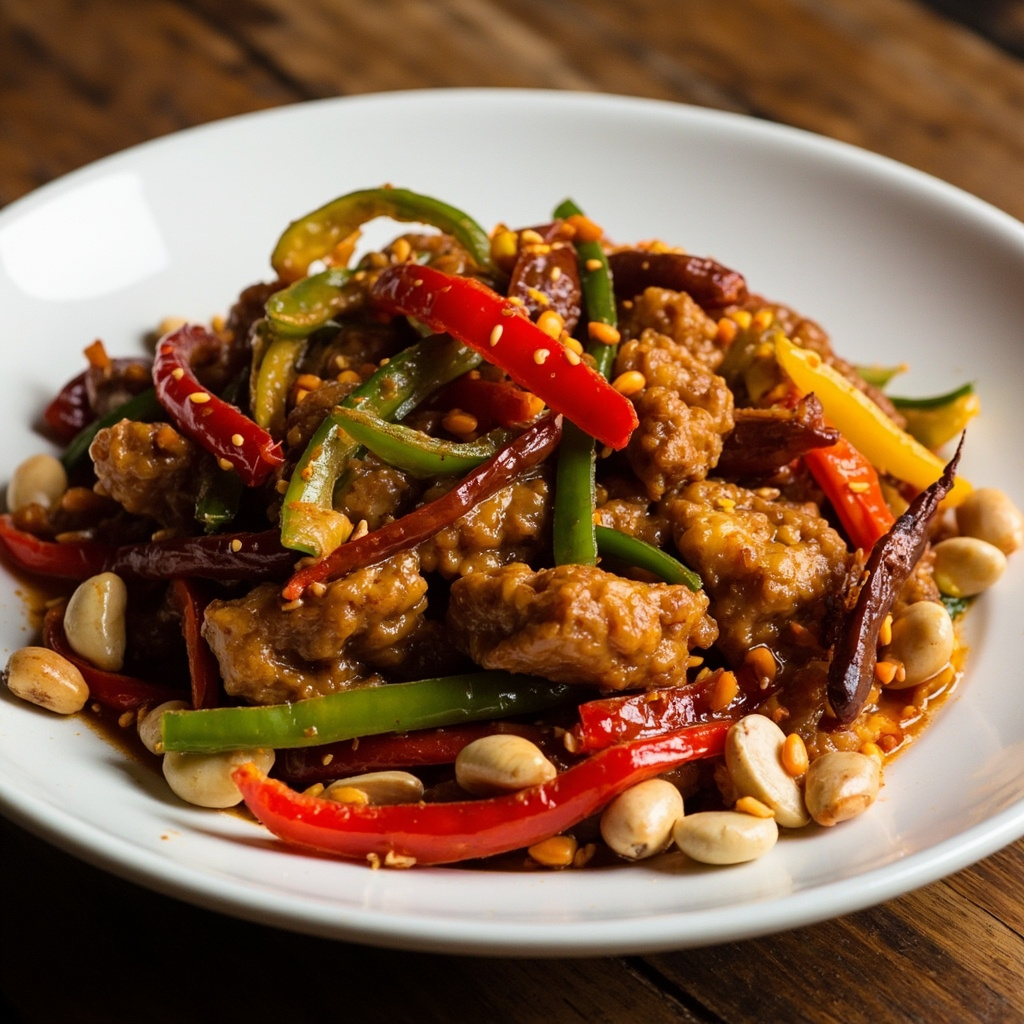
Kung Pao Chicken (宫保鸡丁) is one of the most popular dishes in Sichuan cuisine, beloved worldwide for its perfect balance of spicy, sweet, and tangy flavors. Named after Ding Baozhen (a Qing Dynasty official whose title was “Gongbao”), this dish combines tender chicken, crunchy peanuts, and dried chilies in a symphony of flavors that dance on your palate.
Unlike many Westernized versions you might find in takeout restaurants, authentic Kung Pao Chicken has a more subtle, complex flavor profile. It’s not just “spicy” — it’s numbing, sweet, sour, and savory all at once, thanks to the magic of Sichuan peppercorns and a perfectly balanced sauce.
In this comprehensive guide, you’ll learn not just the recipe, but the techniques behind making restaurant-quality Kung Pao Chicken in your own kitchen. Whether you’re a beginner or an experienced home cook, mastering this dish will elevate your Chinese cooking game.
What is Kung Pao Chicken?
Kung Pao Chicken originated in Sichuan Province and is now a staple of Chinese cuisine worldwide. The dish typically consists of:
- Diced chicken thigh meat (more flavorful than breast)
- Dried red chilies (providing aroma and gentle heat)
- Sichuan peppercorns (creating the famous “mà” numbing sensation)
- Roasted peanuts (adding crunch and nuttiness)
- A savory-sweet-tangy sauce (soy sauce, vinegar, sugar, and cornstarch)
The dish is stir-fried quickly over high heat, preserving the tenderness of the chicken while infusing it with the complex flavors of the aromatics.
Ingredients (Serves 2-3)
For the Chicken Marinade:
- 500g (1 lb) chicken thighs, diced into 1-inch cubes
- 1 tablespoon soy sauce
- 1 tablespoon Shaoxing wine (or dry sherry)
- 1 teaspoon cornstarch
- 1/2 teaspoon sesame oil
For the Sauce (mix in advance):
- 1.5 tablespoons soy sauce
- 1 tablespoon black vinegar (Chinkiang vinegar preferred)
- 1 tablespoon sugar
- 1 teaspoon cornstarch
- 2 tablespoons water
- (Optional) 1/2 teaspoon dark soy sauce for color
For Stir-Frying:
- 3-4 dried red chilies, cut into segments (seeds removed for less heat)
- 1 tablespoon Sichuan peppercorns
- 3 cloves garlic, minced
- 1-inch piece ginger, minced
- 4 green onions, cut into 1-inch sections (separate white and green parts)
- 1/3 cup roasted peanuts (unsalted)
- 2 tablespoons vegetable oil (for cooking)
Equipment Needed
- Wok or large skillet (carbon steel wok preferred)
- Spatula or ladle (wok spatula is ideal)
- Small bowls (for prep and sauce)
- Strainer (for removing chicken if deep-frying)
Step-by-Step Cooking Instructions
Step 1: Marinate the Chicken (15-30 minutes ahead)
- Dice the chicken thighs into roughly 1-inch cubes. Thigh meat is more forgiving than breast meat — it stays tender even if slightly overcooked.
- In a bowl, mix the chicken with soy sauce, Shaoxing wine, cornstarch, and sesame oil.
- Let it marinate for at least 15 minutes (up to 2 hours in the fridge). The cornstarch creates a protective layer that keeps the chicken juicy.
Step 2: Prepare the Sauce (do this before heating the wok)
In a small bowl, whisk together:
- 1.5 tablespoons soy sauce
- 1 tablespoon black vinegar
- 1 tablespoon sugar
- 1 teaspoon cornstarch
- 2 tablespoons water
- (Optional) 1/2 teaspoon dark soy sauce
Set aside. Having the sauce ready is CRUCIAL — stir-frying happens fast!
Step 3: Heat the Wok (high heat is key)
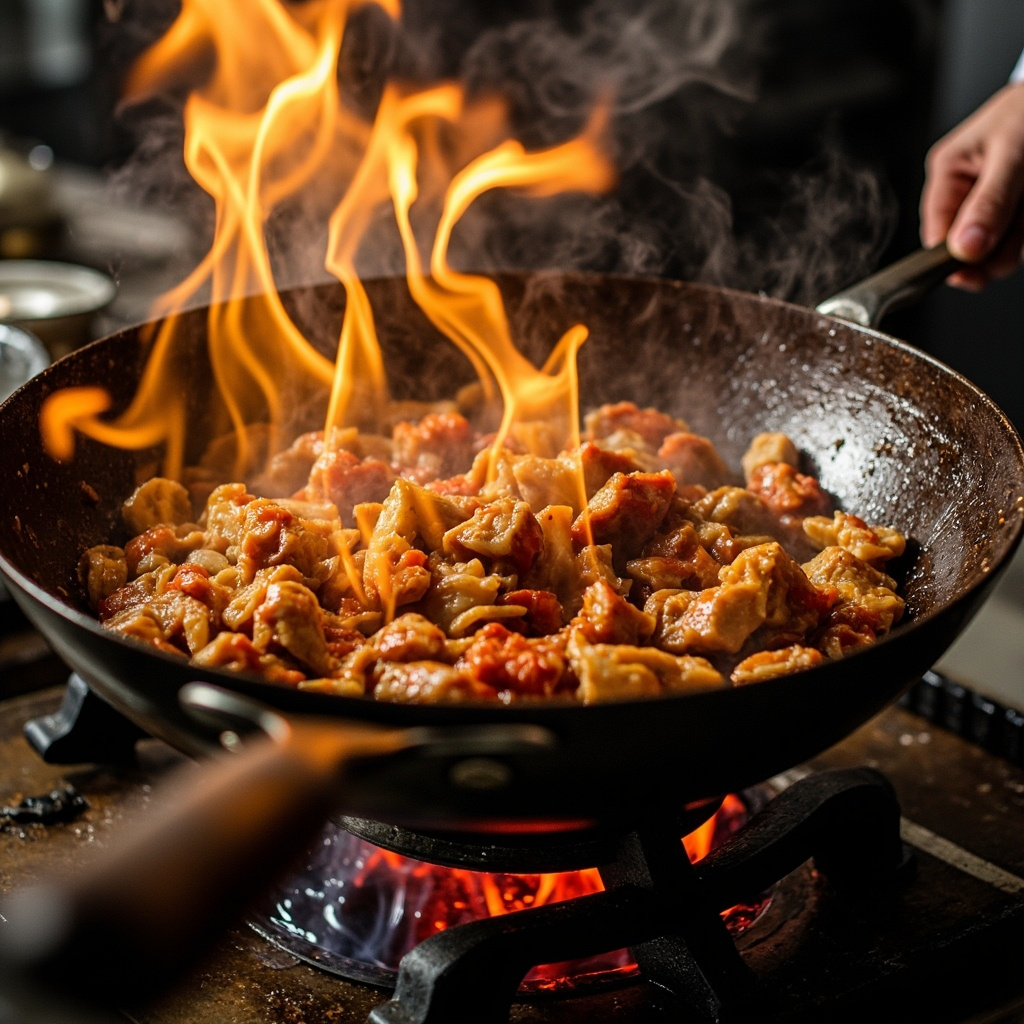
- Place your wok or large skillet over high heat.
- Add 2 tablespoons of vegetable oil. Swirl to coat the surface.
- When the oil is shimmering (almost smoking), you’re ready.
Step 4: Sear the Chicken
- Add the marinated chicken to the wok. Don’t stir immediately — let it sear for 30-45 seconds to develop browning.
- Then stir-fry for 2-3 minutes until the chicken is 80% cooked (still slightly pink inside).
- Remove chicken from wok and set aside on a plate.
Step 5: Toast the Aromatics (the secret step!)
- In the same wok (add a bit more oil if needed), add:
- Toast them over medium-high heat for 30-45 seconds until fragrant. You’ll smell the distinctive aroma — that’s when you know it’s ready.
- Be careful not to burn them (bitter flavor).
– Dried red chilies (segments)
– Sichuan peppercorns
Step 6: Add Garlic, Ginger, and White Green Onions
- Push the chilies and peppercorns to the side.
- Add minced garlic, ginger, and the white parts of the green onions.
- Stir-fry for 15-30 seconds until fragrant.
Step 7: Return Chicken and Add Sauce
- Add the partially cooked chicken back to the wok.
- Give the sauce a quick stir (cornstarch settles) and pour it over the chicken.
- Toss rapidly for 1-2 minutes. The sauce will thicken and coat the chicken in a glossy glaze.
Step 8: Add Peanuts and Green Onion Tops
- Toss in the roasted peanuts.
- Add the green parts of the green onions.
- Stir-fry for another 30 seconds.
Step 9: Taste and Adjust
Taste a piece of chicken. Adjust if needed:
- Too mild? Add a pinch of salt or more soy sauce.
- Not enough heat? Add a dash of chili oil or more chilies next time.
- Too tangy? Add a pinch of sugar.
Step 10: Serve
Transfer to a serving plate. Garnish with extra green onions if desired. Serve immediately with steamed rice.
Tips for Perfect Kung Pao Chicken
1. Use Thigh Meat, Not Breast
Thigh meat has more fat and connective tissue, which means:
- More flavor
- More tender texture
- Less likely to overcook
If you must use breast meat, be extra careful not to overcook it.
2. Toast the Chilies and Sichuan Peppercorns
This step releases the essential oils and creates the signature aroma. Don’t skip it!
3. High Heat is Your Friend
Stir-frying is a high-heat cooking method. If your heat is too low:
- The chicken will steam instead of sear
- The vegetables will release water and get soggy
- You’ll miss out on “wok hei” (breath of the wok)
4. Prep EVERYTHING Before Starting
Stir-frying moves fast. Have all ingredients prepped and within arm’s reach before heating the wok.
5. Don’t Overcrowd the Wok
If cooking for more than 3 people, cook the chicken in batches. Overcrowding lowers the temperature and prevents proper searing.
Common Mistakes to Avoid
Mistake #1: Using Too Much Chili
Authentic Kung Pao Chicken is NOT “burn your mouth” spicy. The chilies are mostly for aroma. Remove the seeds if you’re sensitive to heat.
Mistake #2: Skipping the Cornstarch
The cornstarch in the marinade AND the sauce is what creates that glossy, restaurant-style coating. Don’t skip it!
Mistake #3: Overcooking the Chicken
Chicken thighs are forgiving, but they can still get tough if overcooked. Aim for just done (internal temp 165°F/74°C).
Mistake #4: Using the Wrong Vinegar
Black vinegar (Chinkiang) has a deep, malty flavor that’s essential to authentic Kung Pao Chicken. Substitutions (balsamic, rice vinegar) will taste different.
Variations and Substitutions
Vegetarian Kung Pao
Replace chicken with:
- Diced firm tofu (press out excess water first)
- Cauliflower florets
- Diced seitan
Low-Carb/Keto Version
- Replace sugar with erythritol or monk fruit sweetener
- Serve with cauliflower rice instead of white rice
- Ensure your soy sauce is low-carb (or use coconut aminos)
Nut Allergy?
Replace peanuts with:
- Cashews
- Almonds
- Sunflower seeds (for crunch without nuts)
Nutritional Information (Per Serving, approx.)
| Nutrient | Amount |
|———-|——–|
| Calories | ~380 kcal |
| Protein | 32g |
| Fat | 22g |
| Carbohydrates | 14g |
| Sodium | ~980mg |
*Note: Values vary based on specific ingredients used.*
Pairing Suggestions
What to Serve with Kung Pao Chicken:
- Steamed jasmine rice (classic)
- Fried rice (for a full meal)
- Stir-fried bok choy (for balance)
- Egg drop soup (light starter)
Drinks:
- Jasmine tea (palate cleanser)
- Tsingtao beer (classic pairing)
- Riesling or Gewürztraminer (off-dry white wines that handle spice well)
Storing and Reheating
Storage:
- Refrigerate in an airtight container for up to 3 days.
- The flavors actually IMPROVE the next day (the sauce penetrates the chicken more).
Reheating:
- Stovetop (recommended): Heat a skillet with 1 tablespoon oil, add the chicken, and stir-fry for 2-3 minutes until heated through.
- Microwave (convenience): Cover and heat in 30-second intervals, stirring in between.
*Note: The peanuts will lose their crunch upon reheating. Add fresh roasted peanuts when serving leftovers.*
Frequently Asked Questions
Q: Can I make it less spicy?
A: Absolutely! Remove the seeds from the dried chilies (that’s where most of the heat resides). You can also reduce the number of chilies or omit the Sichuan peppercorns if you’re sensitive to numbness.
Q: Where can I buy Sichuan peppercorns?
A: Asian grocery stores, specialty spice shops, or online (Amazon, The Mala Market). Look for “hony ma jiao” (red Sichuan peppercorns) for the most authentic flavor.
Q: Can I use chicken breast instead of thighs?
A: You can, but the texture will be drier. If using breast, be extra careful not to overcook it. Consider brining the breast meat for 30 minutes before marinating.
Q: What can I substitute for Shaoxing wine?
A: Dry sherry, dry white wine, or even apple juice (in a pinch). The alcohol helps remove any gamey taste from the meat.
Q: My sauce is too thin/thick. How to fix?
A:
- Too thin: Mix 1/2 teaspoon cornstarch with 1 tablespoon water, add to the wok, and stir-fry for 30 seconds.
- Too thick: Add 1-2 tablespoons water or chicken broth to loosen the sauce.
Conclusion
Mastering Authentic Kung Pao Chicken is a journey worth taking. Yes, it requires some specialty ingredients (Sichuan peppercorns, black vinegar), but once you have them in your pantry, you’ll find yourself making this dish again and again.
The beauty of Kung Pao Chicken lies in its balance — it’s not just “spicy food”, it’s a carefully calibrated mix of sensations that come together in harmony. And the best part? Once you’ve made it a few times, you’ll be able to whip it up in under 20 minutes for a quick weeknight dinner.
So grab your wok, toast those chilies, and get ready for a flavor explosion. Your taste buds will thank you!
Happy cooking! 祝你做出美味的宫保鸡丁!
—
Additional Resources
- Video tutorial: Search “authentic kung pao chicken recipe” on YouTube for visual learners
- Ingredients shopping guide: Check out “The Mala Market” or “The Woks of Life” for where to buy authent ic Sichuan ingredients online
- Wok care tips: Season your carbon steel wok properly to prevent rust and create a natural non-stick surface
*Disclaimer: This recipe is a traditional home-cooking version. Restaurant versions may vary significantly in ingredient ratios and cooking techniques.*