
Xi’an, the capital of Shaanxi province, is one of China’s most historically significant cities, serving as the nation’s capital for 13 dynasties spanning over 1,100 years. As the starting point of the Silk Road and the home of the Terracotta Army, Xi’an offers visitors an unparalleled concentration of historical sites that tell the story of China’s imperial past. The city’s ancient walls, which enclose the old city center, create a unique urban environment where history is visible at every turn.
Xi’an’s historical importance cannot be overstated. The city served as China’s capital during the Qin, Han, and Tang dynasties, three of the most significant periods in Chinese history. The Qin Dynasty unified China for the first time, the Han Dynasty established the cultural and political patterns that would define Chinese civilization for 2,000 years, and the Tang Dynasty represented the golden age of Chinese culture. This concentration of historical significance means that Xi’an contains archaeological treasures found nowhere else in China, from the tomb of the first emperor to the city walls that have protected the city for 600 years.
The Terracotta Army
The Terracotta Army is Xi’an’s most famous attraction and one of the most significant archaeological discoveries of the 20th century. Discovered in 1974 by farmers digging a well, the army consists of thousands of life-sized terracotta warriors, horses, and chariots buried with China’s first emperor, Qin Shi Huang, to protect him in the afterlife. Each warrior is unique, with individual facial features, hairstyles, and armor that reflect the diversity of the actual Qin army. The warriors were originally painted in bright colors, most of which have faded or flaked off after exposure to air. The excavation site has been transformed into a museum covering three pits, with Pit One being the largest and most impressive, containing the main army formation of over 6,000 warriors. The museum also displays bronze chariots, weapons, and other artifacts that provide insight into the technological achievements of the Qin Dynasty. Visiting the Terracotta Army requires at least half a day, with the site located about an hour outside Xi’an city center.
Xi’an City Wall
The Xi’an City Wall is the best-preserved city wall in China and one of the largest ancient military defense systems in the world. The wall, built during the Ming Dynasty, stretches over 13 kilometers in a rectangular circuit around the old city. The wall stands 12 meters tall and is 15 meters wide at the base, wide enough for military vehicles to travel along the top. Visitors can walk or cycle the entire length of the wall, enjoying views of both the ancient city inside and the modern city outside. Cycling the wall takes about two hours at a leisurely pace and provides the best orientation to the city’s layout. The wall is illuminated at night, creating a beautiful sight that defines Xi’an’s nighttime skyline. Four main gates provide access to the wall, with the South Gate being the most impressive and the site of the daily opening ceremony.
Muslim Quarter and Food Scene
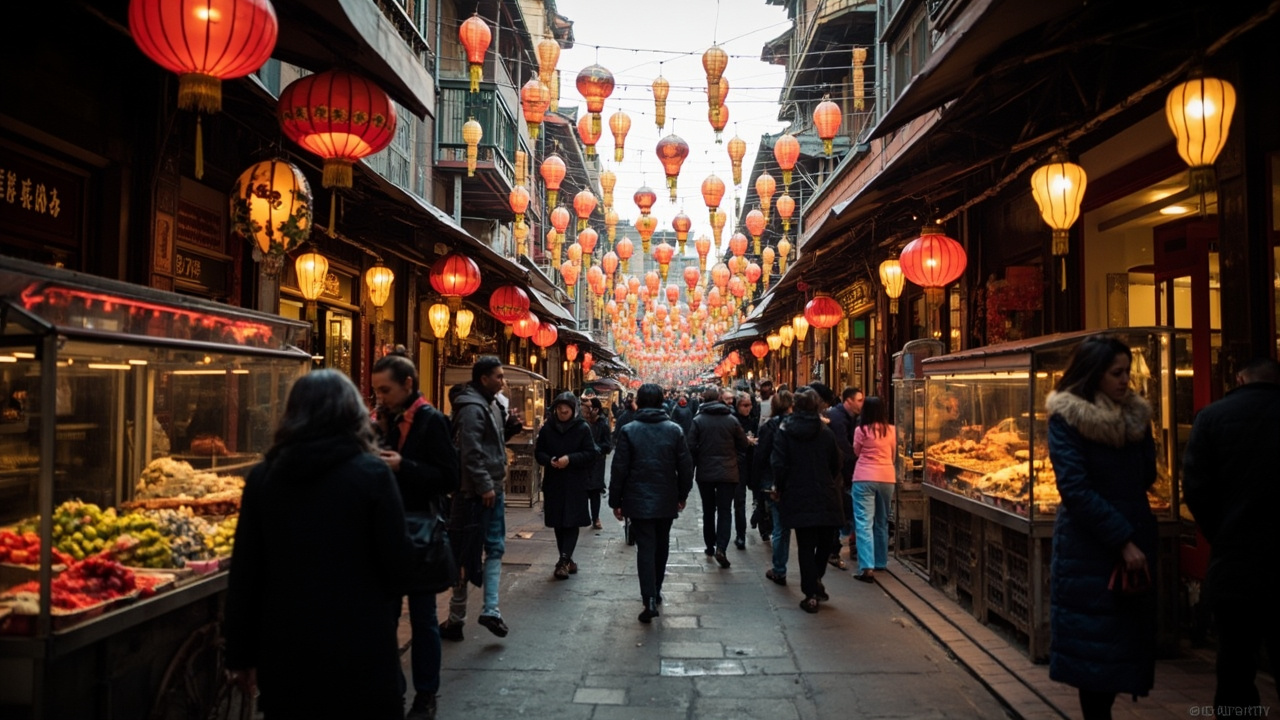
The Muslim Quarter, centered around the Great Mosque of Xi’an, is one of the city’s most vibrant neighborhoods and a testament to Xi’an’s role as the Silk Road’s eastern terminus. The area is home to Xi’an’s Hui Muslim community, descendants of Silk Road traders who settled in Xi’an centuries ago. The narrow streets of the Muslim Quarter are filled with food stalls, restaurants, and shops that reflect the unique fusion of Chinese and Islamic cultures. The food scene in the Muslim Quarter is legendary, with specialties including yangrou paomo, a lamb soup with bread that diners crumble into their bowl; liangpi, cold noodles with chili oil; and countless varieties of grilled skewers. The Great Mosque, built in the 8th century, combines Chinese architectural forms with Islamic functions, creating a unique religious building that reflects the cultural fusion of the Silk Road.
Shaanxi History Museum
The Shaanxi History Museum is one of China’s finest museums, housing a collection that spans over a million years of history in Shaanxi province. The museum’s exhibits are organized chronologically, with artifacts from the prehistoric period through the Zhou, Qin, Han, Tang, and Ming dynasties. Highlights include Zhou Dynasty bronze vessels, Qin Dynasty terracotta fragments, Tang Dynasty gold and silver objects, and Ming Dynasty porcelain. The museum’s collection is so extensive that only a fraction is displayed at any time, with rotating exhibits ensuring that returning visitors always see something new. Admission is free but requires advance booking, and English audio guides are available.
Conclusion
Xi’an offers an unparalleled journey through Chinese history, from the first emperor’s terracotta army to the bustling markets of the Muslim Quarter. The city’s unique character, shaped by its role as the Silk Road’s starting point and its history as China’s ancient capital, creates a travel experience that is both educational and memorable. Allow at least three days for a comprehensive visit.
Xi’an’s Silk Road Heritage
Xi’an’s identity as the eastern terminus of the Silk Road has left a lasting legacy visible throughout the city. The Great Mosque of Xi’an, built in the 8th century, represents the fusion of Chinese and Islamic cultures that occurred through Silk Road trade. The mosque’s architecture combines traditional Chinese building forms with Islamic functions, creating a unique religious building. The Muslim Quarter surrounding the mosque preserves the culture of Xi’an’s Hui Muslim community, descendants of Silk Road traders who settled in the city centuries ago. The Shaanxi History Museum’s collection includes numerous artifacts from Silk Road trade, including glassware from the Roman Empire, gold coins from Persia, and Buddhist sculptures from India. The Tang Paradise theme park recreates the cosmopolitan atmosphere of Tang Dynasty Chang’an, when Xi’an was the largest and most international city in the world. Xi’an’s Silk Road heritage is an essential part of its identity and a fascinating aspect of its history for visitors to explore.
Xi’an’s Ancient City Wall Cycling
Cycling the Xi’an City Wall is one of the most memorable experiences the city offers, providing a unique perspective on the ancient capital. Bicycles can be rented at several points along the wall, with both single and tandem bikes available. The full circuit is about 14 kilometers and takes approximately two hours at a leisurely cycling pace. The wall surface is generally smooth and well-maintained, though some sections have slight inclines at the gate towers. The wall offers continuous views of both the old city inside the walls and the modern city outside, creating a visual contrast that illustrates Xi’an’s dual character. The wall is particularly beautiful at sunset, when the golden light illuminates the ancient architecture and the city below begins to light up for evening. Night cycling, when the wall is illuminated and the city lights sparkle below, offers a completely different but equally memorable experience.
Xi Noodles Local Foods
Xian is famous for noodle culture with the Muslim Quarter being the best place to sample local varieties. Biangbiang noodles are wide belt-like noodles served with chili oil and garlic. Liangpi cold noodles provide refreshing meals during hot weather. Yangrou paomo lamb soup with bread is the signature dish of Xian. The Muslim Quarter also offers grilled skewers and traditional sweets.