
Wing Chun is one of the most practical and efficient Chinese martial arts, known for its close-range combat techniques, economy of movement, and emphasis on sensitivity and timing over brute strength. Made famous worldwide by the late Bruce Lee, who trained in Wing Chun before developing his own martial philosophy, and more recently by the popular Ip Man film series, Wing Chun has attracted millions of practitioners who appreciate its direct approach to self-defense and its deep philosophical principles.
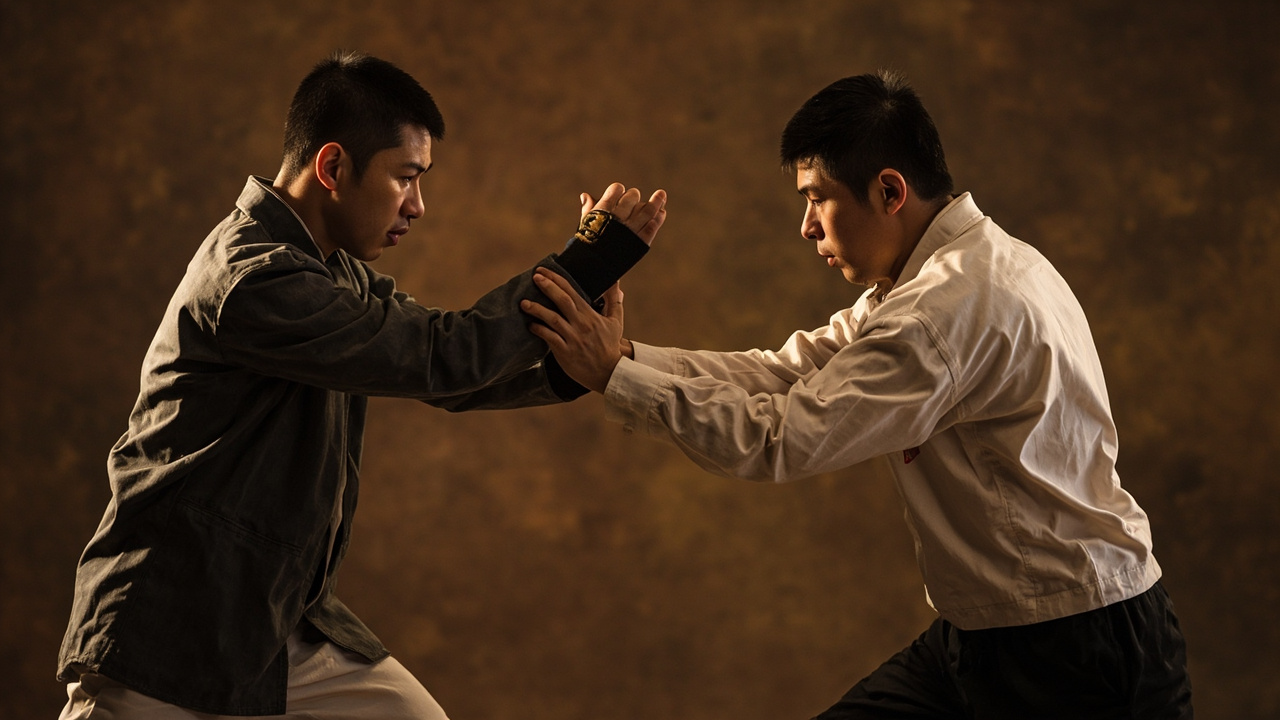
Wing Chun traces its origins to the Qing Dynasty, when according to legend, a young woman named Yim Wing Chun learned martial arts from a Buddhist nun to defend herself against forced marriage. The system she developed emphasized using an opponent’s strength against them through principles of centerline control, simultaneous attack and defense, and relaxed efficiency. The art was passed down through generations, refined by each master, and eventually systematized by Grandmaster Ip Man in Hong Kong during the 20th century, who opened the school that would train Bruce Lee and countless other students.
Core Principles of Wing Chun
Wing Chun is built upon several fundamental principles that distinguish it from other martial arts. The centerline theory is the most important concept, teaching practitioners to control the center of the opponent’s body while protecting their own centerline. The centerline is an imaginary vertical line running through the body, and controlling it provides the most direct path for attacks and the most efficient defensive position. Simultaneous attack and defense means that each movement is designed to both block an incoming attack and launch a counterattack at the same time, eliminating wasted motion. Economy of movement emphasizes the shortest, most direct path to the target, with no unnecessary motions or flourishes. Relaxation is essential for generating power, with tension reducing speed and efficiency. Sensitivity, developed through chi sao sticky hands training, allows practitioners to feel an opponent’s intentions and respond without relying on sight.
The Six Forms of Wing Chun
Wing Chun training is organized into several forms that progressively develop skills and understanding. Siu Nim Tao, or Little Idea, is the first form, containing the fundamental concepts and techniques of Wing Chun. This form is practiced slowly to develop proper structure, relaxation, and the basic hand movements. Cham Kiu, or Seeking the Bridge, introduces footwork, turning, and more complex combinations that bridge the gap between static practice and mobile application. Biu Jee, or Thrusting Fingers, contains advanced techniques for emergency situations where the practitioner has lost their structural advantage. The Wooden Dummy form uses a training apparatus with arms and legs to practice techniques against a simulated opponent, developing angles, distance, and impact. The Six and a Half Point Pole and the Butterfly Knives are weapons forms that extend Wing Chun principles to armed combat. Each form builds upon the previous one, creating a complete system that develops progressively deeper understanding.
Chi Sao Training
Chi Sao, or sticky hands, is the most distinctive training method in Wing Chun, developing the sensitivity and reflexes that make the art effective. In chi Sao practice, two practitioners maintain light arm contact while attempting to find openings and apply techniques against each other. The practice develops tactile sensitivity, allowing practitioners to feel changes in the opponent’s position and intention before they can see them. Chi Sao trains the ability to respond instantly and appropriately to changing conditions, developing the spontaneous reaction that is essential for real combat. The practice also develops relaxation under pressure, as tension interferes with sensitivity and slows reactions. Advanced chi Sao practice involves increasingly complex movements, multiple attackers, and integration with footwork. The skills developed through chi Sao are considered the heart of Wing Chun and distinguish it from martial arts that rely primarily on visual reactions.
Wing Chun for Self-Defense
Wing Chun practical approach and emphasis on efficiency make it particularly well-suited for self-defense situations. The system was developed specifically for defending against larger, stronger attackers, with techniques that use leverage, timing, and structure rather than strength. The close-range fighting emphasis is realistic for real confrontations, which typically occur at close quarters. The simultaneous attack and defense principle ensures that practitioners do not waste time blocking without countering. The straight punches of Wing Chun, delivered from the centerline, are powerful and difficult to defend against. The low kicks target the legs and knees, destabilizing attackers without requiring high flexibility. The trapping and controlling techniques allow practitioners to neutralize an attacker weapons or second arm. Wing Chun training also develops the mental qualities necessary for self-defense: calmness under pressure, awareness of surroundings, and the ability to make quick decisions.
Learning Wing Chun
Finding a qualified Wing Chun instructor is essential for proper development. Authentic Wing Chun schools should emphasize chi Sao training, basic forms practice, and realistic application drills. Students should be wary of schools that focus excessively on forms without developing practical application skills. Regular practice is essential, with daily training of even 30 minutes producing better results than weekly sessions of several hours. Beginners should expect to spend several months developing basic structure and hand positions before progressing to more complex techniques. The journey of learning Wing Chun is long and rewarding, with each level of understanding revealing new depths of the art and new insights into its principles.
Conclusion
Wing Chun offers a practical, efficient, and philosophically rich martial art that is accessible to practitioners of all ages and physical abilities. The emphasis on technique over strength makes it particularly suitable for those who may not have natural athletic advantages. The principles of Wing Chun extend beyond combat to provide guidance for approaching challenges in daily life with efficiency, economy, and calm awareness.
Wing Chun Training Equipment
Wing Chun training traditionally uses several specialized pieces of equipment that develop specific skills. The wooden dummy, or mook yan jong, is the most famous training tool, used to practice techniques against a simulated opponent. The dummy has three arms and one leg that represent different types of attacks and require the practitioner to use correct angles and positioning. The wall bag, a canvas bag filled with beans or sand mounted on a wall, develops punching power and proper fist alignment. The wing chun rings, two rings connected by a chain, are used to develop arm strength and correct punching motion. The rice paper target, a sheet of rice paper suspended from the ceiling, develops precision and the ability to stop punches at the exact moment of contact. Each training tool develops specific aspects of Wing Chun technique and is introduced at appropriate stages of the student’s development. Traditional equipment remains important in Wing Chun training despite the availability of modern training devices.
Wing Chun Philosophy and Daily Life
The principles of Wing Chun extend beyond combat to provide guidance for approaching daily challenges. The centerline theory, which teaches controlling the most direct path, can be applied to focusing on essential tasks rather than getting distracted by peripheral concerns. The principle of economy of movement, eliminating unnecessary motions, translates to efficiency in work and daily routines. The concept of simultaneous attack and defense, addressing threats while advancing goals, applies to problem-solving where challenges are met with proactive solutions rather than defensive reactions. The emphasis on relaxation over tension teaches maintaining calm under pressure, a skill valuable in stressful situations. The sensitivity developed through chi Sao training cultivates awareness of subtle cues in interpersonal interactions. Many Wing Chun practitioners find that their training principles gradually transform how they approach all aspects of life, not just combat situations.