Guilin, with its extraordinary karst landscape of limestone peaks, crystal-clear rivers, and lush rice paddies, is one of China’s most scenically beautiful cities and a destination that has captivated travelers for centuries. The city and its surrounding countryside have inspired generations of Chinese painters and poets, and the famous saying “Guilin’s scenery is the finest under heaven” rings true for everyone who visits this remarkable corner of China.

Understanding Guilin: Geography, Climate, and Getting Around
Guilin is located in the northeastern part of Guangxi Zhuang Autonomous Region, approximately 430 kilometers northwest of Nanning, the regional capital. The city gets its name from the cassia trees (gui) that once grew abundantly in the area and the Lin River that flows through the city. The surrounding karst landscape, formed over millions of years by the dissolution of limestone by rainwater, creates one of the most distinctive and beautiful landscapes on Earth.
The Guilin climate is subtropical, characterized by hot, humid summers and mild, pleasant winters. The best times to visit are during spring (April to June) and autumn (September to November) when the weather is comfortable and the river and countryside are at their most beautiful. Summer is hot and humid but also when the rice paddies are at their most green and vibrant.
Getting around Guilin is convenient thanks to the city’s compact size and well-developed tourism infrastructure. The city center can easily be explored on foot or by bicycle. Long-distance bus and rail connections link Guilin to major cities across China, and Liangjiang International Airport offers flights to Beijing, Shanghai, Guangzhou, and other major hubs.
The Li River: One of the World’s Most Scenic Waterways
The Li River, flowing for approximately 164 kilometers from Guilin to Yangshuo, is one of the world’s most scenic waterways. The journey by boat from Guilin to Yangshuo, taking approximately 4 to 5 hours, is one of China’s most popular travel experiences, offering extraordinary views of the karst peaks that rise dramatically from the river valley.
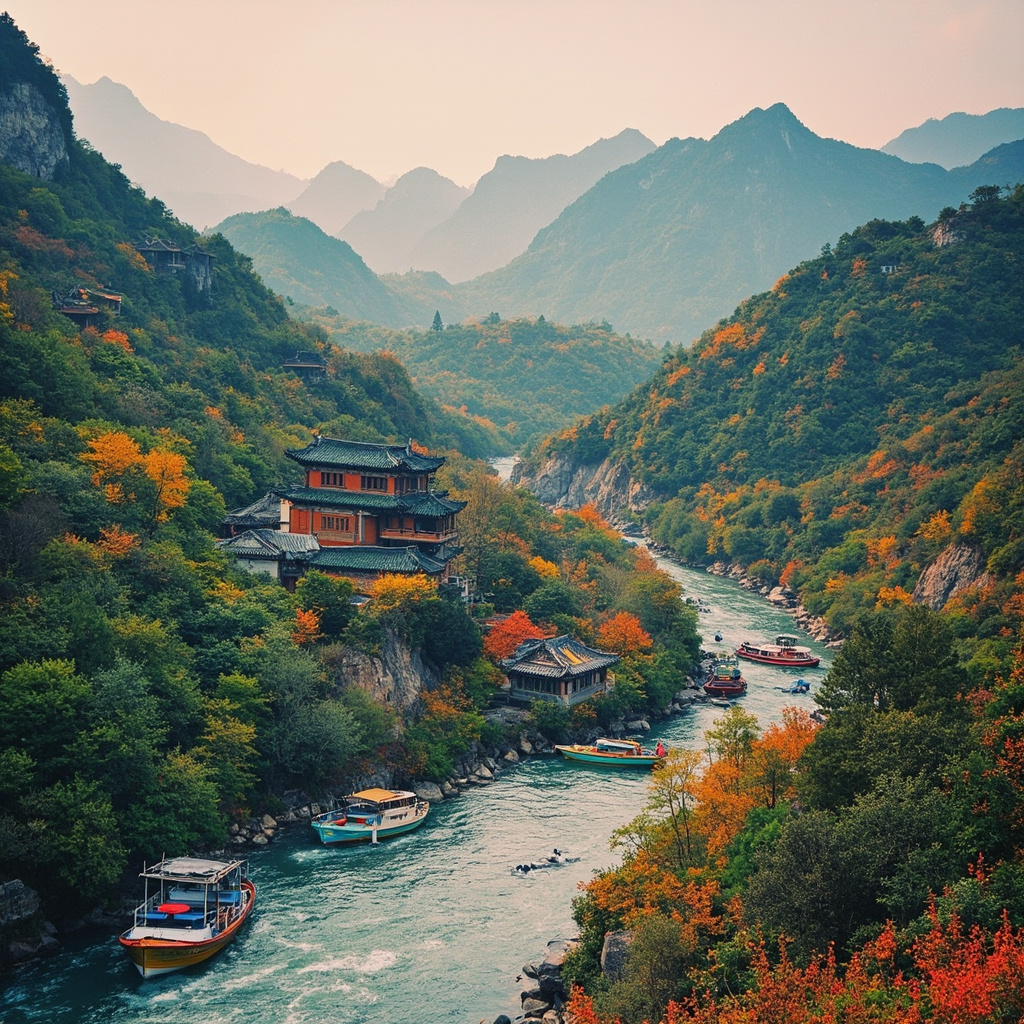
As your boat glides along the river, you will pass extraordinary limestone karst formations, each with its own distinctive shape and associated legend. The Nine-Horse Fresco, a painting on the cliff face that depicts nine horses in various poses, is one of the most photographed spots along the river. The Reed Flute Cave, located just outside the city center, is a magnificent underground cave system with elaborate stalactite and stalagmite formations that have been developing for millions of years.
Yangshuo: The Heart of Guilin’s Countryside
Yangshuo, the small town at the end of the Li River cruise, is one of China’s most popular backpacker destinations and an ideal base for exploring the surrounding countryside. The town has a lively atmosphere, with bars, restaurants, and cafes catering to international visitors, and the surrounding rice paddies and karst peaks offer some of China’s most beautiful cycling and hiking.
The Cycling routes through the countryside offer extraordinary views of the karst landscape, passing through traditional Zhuang villages, across rice paddies, and along river valleys. The most popular route is the 50-kilometer loop around Yangshuo, which can be completed in a day by bicycle and offers an unforgettable introduction to the beauty of the Guilin landscape.
Guilin’s Cultural Heritage
Beyond its natural beauty, Guilin has a rich cultural heritage shaped by its location at the crossroads of different ethnic groups and trade routes. The nearby Longsheng Rice Terraces, inhabited by the Yao and Zhuang ethnic minorities, offer a fascinating window into the traditional cultures of southern China’s ethnic minorities.
The Elephant Trunk Hill, the most recognized landmark in Guilin, is a limestone hill shaped like an elephant drinking water from the river. The hill is located at the confluence of the Li River and the Taohua River and has been a source of artistic inspiration for over a thousand years. The caves surrounding the hill and the surrounding park offer an excellent introduction to Guilin’s natural and cultural heritage.
Conclusion
Guilin is a destination that appeals to the heart as much as to the eye. Whether you come for the extraordinary karst landscapes, the peaceful river cruises, the vibrant market towns, or the warm hospitality of the local people, Guilin promises an experience that will stay with you long after you have returned home. Its unique combination of natural beauty, cultural depth, and authentic Chinese character makes it one of China’s most rewarding and memorable destinations.