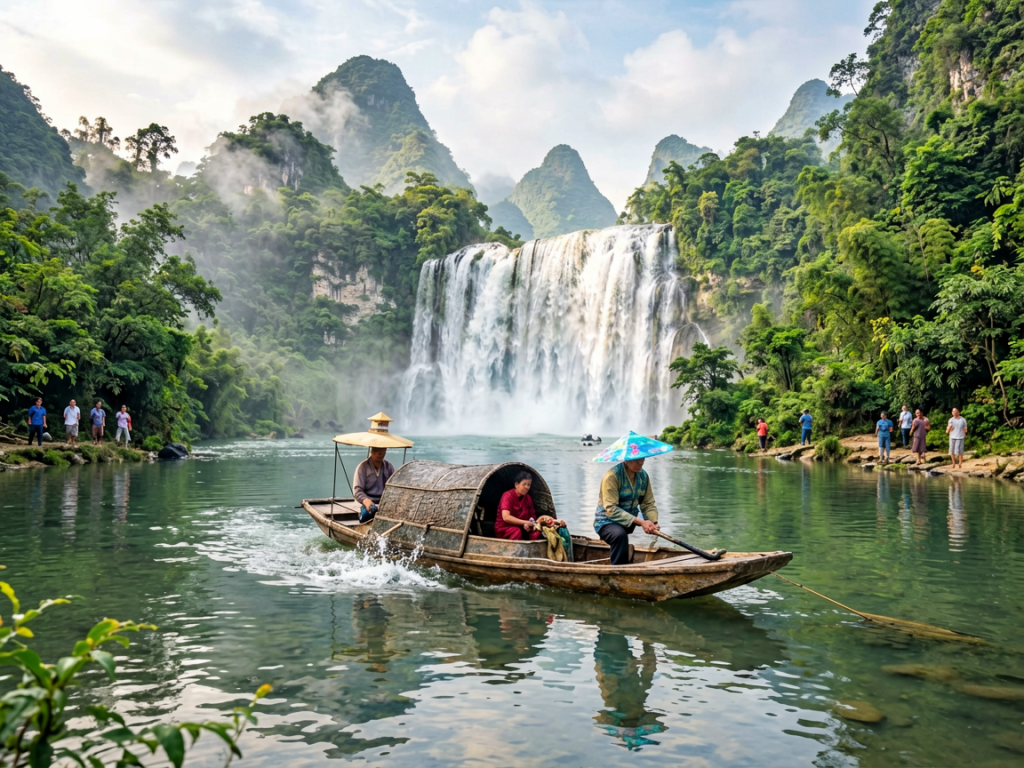
I’ll be honest, I used to skip Nanning like it was just another layover flight. Guilin stole my attention years ago with those limestone karsts rising straight out of misty water. Tour buses lined up outside the West Dragon Tower like clockwork. I thought southern China only had one face.
Then I spent a week in Nanning and everything shifted. The air hits you first, thick with orchids and frying garlic. You step off the train at Nanning East and suddenly you’re walking through a living postcard nobody bothered to photograph. The pace here doesn’t rush. Locals sip bitter melon tea under banyan trees while scooters weave past vendors selling steaming rice noodles.
Sound interesting? Grab a seat. You’re about to miss out on the real south if you keep booking flights to Yangshuo.
Forget the Li River Postcards
Guilin gets all the headlines because the landscape looks like a traditional ink painting come to life. That part’s true enough. But reality doesn’t stay quiet forever.
I watched a family of four argue over which bamboo raft to board last summer. They paid eighty yuan just to sit in the sun while a guide played folk songs on a tinny speaker. The river felt more like a theme park ride than a natural wonder by noon. Crowds press against every viewing platform. Photography becomes a struggle instead of a joy.
Nanning offers something quieter. The subtropical climate shapes everything here. Parks spill into sidewalks. Ferns grow from cracks in the pavement. You can hike Qingxiu Mountain and actually hear birds without shouting over tour groups. The scenery still surprises you, but it feels earned rather than manufactured.
Travelers chasing authenticity usually end up frustrated in Guilin’s old town. Every alleyway sells identical lotus root chips and cheap silk scarves. Nanning keeps its commercial spots separate from daily life. You stumble onto a neighborhood market by accident and suddenly you’re watching aunties pick through heaps of lemongrass and tangerine peel. That’s where the south actually lives.
The Street Food Scene You Won’t Find on Tourist Maps
Food makes or breaks a trip for me. I’ve eaten at fancy restaurants across southern China and still rank street stalls higher every single time.
Head to Xixiangtang Night Market around seven p.m. and watch the chaos unfold. The smell of charred pork fat hits you before you even see the stalls. I ordered a bowl of cross-bridge rice noodles for twelve yuan. The broth simmered for hours with chicken bones, ginger, and a splash of fermented black beans. It tasted clean, salty, and deeply comforting.
Most tourists skip these places because they don’t speak Mandarin. I don’t either, so I just point and smile. It works better than you’d expect. The vendor hands you a plate of grilled squid brushed with chili oil and cumin. You burn your fingers, laugh, and eat faster.
Guilin’s famous rice noodles get all the praise, but they rarely match what I found in Nanning. The local versions carry a heavier fermentation note from dried radish and sour bamboo shoots. Prices stay reasonable too. You can fill up for twenty yuan while Guilin charges thirty for half the portion. Money stretches further here, especially when you eat where locals eat.
I tried a dessert stall selling mango sticky rice drizzled with palm sugar. The coconut milk tasted fresh, not canned. Sweet but never cloying. I went back twice that week. Right?
Zhuang Culture Lives Here, Not in a Museum
China treats ethnic minorities as cultural exhibits sometimes. You walk into a government-run heritage village and pay forty yuan to watch dancers perform on plastic stages. It feels staged. Nanning refuses that trap.
The Zhuang people make up the largest minority group in the country, and their heartbeat pulses through this city. I attended a wedding invitation from a colleague last month and finally understood why. Red envelopes filled the room. Brass gongs rang in the courtyard. Women wore indigo-dyed jackets embroidered with phoenix patterns passed down through generations.
You don’t need a special pass to catch glimpses of this tradition. Walk through Jianzheng Park on a weekend morning and listen to the singing. Elderly men trade verses in the Zhuang language while others play moon lutes. The melodies sound haunting but warm. I stood there for nearly an hour before anyone noticed I was filming.
Guilin pushes Mulao and Dong villages nearby, but they often feel disconnected from the city proper. Nanning keeps Zhuang identity woven into everyday routines. Street signs switch between Chinese and Zhuang scripts. Bus drivers announce stops in both languages. That kind of normalization matters more than any festival.
I bought handmade silver jewelry from a market vendor near the People’s Park metro station. She told me her grandmother crafted each piece using methods older than the Han dynasty. The price felt fair. The craftsmanship didn’t scream souvenir factory. To be fair, I’m not fluent in Zhuang history, but the respect I witnessed on those streets convinced me this place holds something real.
The Green City That Actually Breathes
They call Nanning the Forest City for a reason. I know a lot of urban planners love throwing labels around, but this one sticks.
Tree canopies block most of the summer sun. You walk down Erqi Road and suddenly you’re under a tunnel of banyan roots and wisteria vines. Air conditioning units hum from apartment balconies above. Street cats nap on stone benches. The whole place feels like nature reclaimed concrete instead of the other way around.
Guilin struggles with overtourism during peak seasons. Trash piles up near popular viewpoints. Hotel prices triple overnight. Nanning handles visitors differently. The infrastructure expands gradually without overwhelming residential zones. You can rent a bicycle for five yuan and coast along the Yong River without dodging tour buses.
I spent an afternoon at the Guangxi Science and Technology Museum just to read the cool air. The building itself blends glass and steel with curved roofs inspired by traditional Zhuang architecture. Inside, interactive displays explain mineral mining, tea processing, and bamboo weaving. Kids pressed their hands against screens to watch virtual rice fields grow. It felt educational without being stiff.
Weather plays a huge role in how cities behave. Subtropical heat means heavy afternoon rains. You step outside with a light jacket and watch clouds roll in within twenty minutes. The storms wash dust off buildings and leave the streets smelling like wet earth. Most travelers hate rain, but I’ve grown to love how it resets the atmosphere here.
How to Get There and What to Pack
Reaching Nanning takes less effort than you might think. High-speed trains connect directly from Guangzhou, Guilin, and even Kunming. The trip from Guangzhou South runs about two hours and fifty minutes. Tickets cost roughly hundred twenty yuan second class. You board, grab a window seat, and watch sugarcane fields replace urban sprawl.
Flights arrive at Nanning Wuxu Airport, which sits about twenty kilometers from downtown. Airport shuttles drop you at major hotels for thirty yuan. Taxis run slightly higher but still beat Beijing or Shanghai rates. Getting around internally relies mostly on the metro system and electric scooters. Both work reliably.
Packing requires simple adjustments. Moisture-wicking clothes matter more than fashionable layers. A compact umbrella saves your phone from sudden downpours. Comfortable walking shoes handle uneven sidewalk tiles without complaint. I learned that lesson the hard way after twisting an ankle near Shisanhang Old Street.
Language barriers shrink faster than expected. Younger residents scroll through English videos and recognize basic phrases. Older shopkeepers appreciate when you attempt simple greetings in Mandarin. Nanning dialect shares roots with Cantonese, so some words sound familiar if you’ve traveled farther west.
Hotels cluster near Wuming District and Qixing Square. Budget options start at one hundred eighty yuan per night. Mid-range chains offer clean rooms with breakfast buffets featuring local congee and fried dough sticks. I stayed in a small boutique guesthouse near the botanical garden and paid exactly three hundred yuan. The owner baked ginger cookies daily. You can’t put a price on hospitality like that.
I could keep writing about southern China, but I’ll stop here. Guilin has its place. I’ll admit it drew me in initially. But Nanning taught me how to slow down. It showed me that cultural richness doesn’t require velvet ropes or guided audio tours. You just need to wander, eat where the steam rises, and talk to people who’ve lived here their whole lives.
Book the ticket. Leave the itinerary flexible. Trust me, your future self will thank you when you’re sitting on a plastic stool, sweating through a linen shirt, and laughing over a bowl of soup that tastes like home.