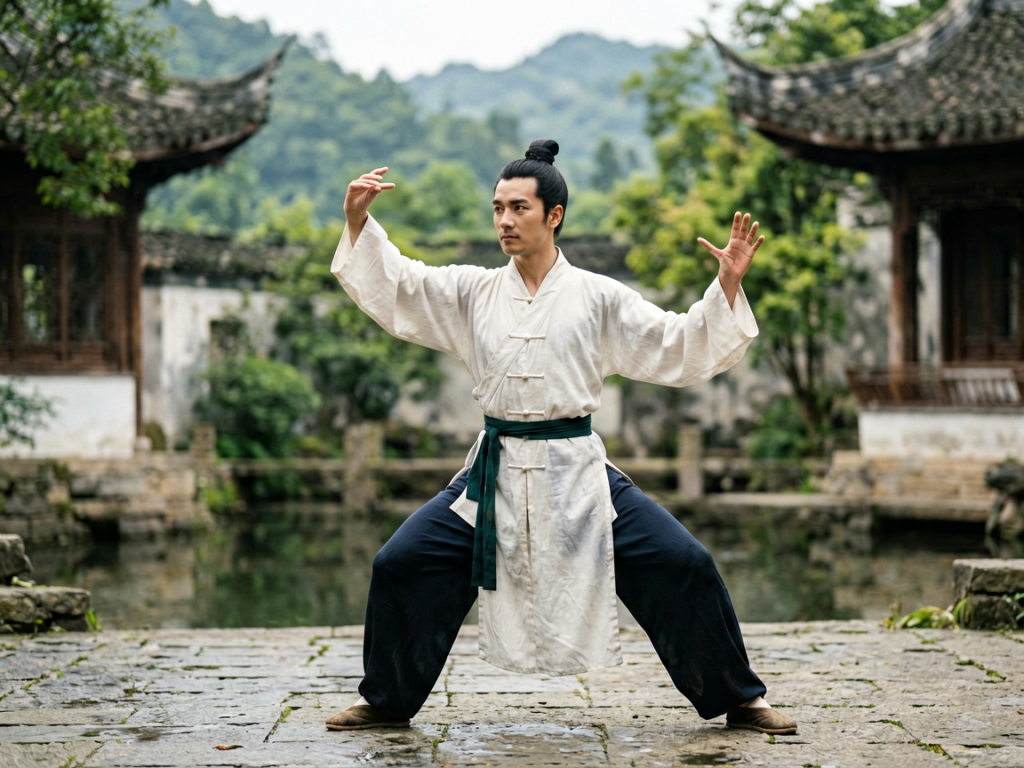
The air in that Shijiazhuang park was thick enough to chew on. It was early November, and the pines were holding their breath. I watched an old man in a faded tracksuit stand perfectly still. He looked like he was waiting for a bus. Then his foot shifted, his shoulders dropped, and his fist snapped forward. The sound wasn’t loud. It was more like a heavy book closing. My instructor called it a single point of force. I called it magic. I didn’t know then that Xing Yi Quan would quietly unravel everything I thought I knew about strength.
Here’s the thing about martial arts in China. Most folks picture spinning kicks and flashy acrobatics. They watch the televised routines and assume power comes from speed. But after eight years of living here, I’ve learned that the real fight happens elsewhere. It starts in your bones. It lives in your breath. And if you’re willing to stand still long enough to feel it, it’ll change how you move through the world.
Why Everything Feels Wrong Until It Isn’t
I’ll be honest. My first week training Xing Yi felt completely backward. We didn’t throw a single punch. Instead, we stood in what they call San Ti Shi. It’s a three-stage bear posture that looks suspiciously like you’re hugging a giant tree. Your front knee bends slightly. Your back leg locks into place. Your arms cradle an invisible ball. That’s it. Nothing else.
Sound interesting? I nearly walked out the door. I’d been doing kickboxing and bag work for years. I wanted to sweat. I wanted to move fast. But my sifu, Old Chen, just shook his head when I fidgeted. He told me I was trying to use my arms to fight. Arms are too small, he said. They’re just levers. You need the whole frame.
I could be wrong, but I think that’s where most beginners fail. We chase complexity before we master stillness. Standing in that pose felt like torture at first. My quads burned. My lower back cramped. I sweated through two shirts in twenty minutes. But then something weird happened. My breathing slowed down. The noise in my head quieted. I stopped trying to muscle through it and just let gravity do the work.
That’s when I realized this isn’t about building muscle. It’s about wiring your nervous system. You’re teaching your body to drop its tension on command. Once you learn how to relax into a stance, every movement afterwards gets cheaper. Less energy spent. More force delivered. I started comparing it to driving a manual transmission. You either ride the clutch or you grind the gears. This art forces you to find the bite point.
The Five Elements You Can Actually Feel
After a month of standing around looking ridiculous, Old Chen finally let us move. That’s when the famous Five Elements came into play. They’re not some mystical philosophy here. They’re practical body mechanics disguised as classical names. You’ve got Pi, which is the splitting strike. Pao is the cannon fist. Zheng is the direct thrust. Zuan is the drilling explosion. Pian Chui is the slanting hammer. Each one maps directly to how your hips rotate and your weight transfers.
I remember my first time throwing a proper Pi strike. I focused on my shoulder like a normal person would. Old Chen tapped my elbow with his riding crop and sighed. He told me to imagine my hand pushing against a brick wall while my feet planted into the dirt. Suddenly, my arm didn’t feel like it belonged to me anymore. It felt connected to my heel. I drove forward again, this time moving from the ground up. The crack echoed off the gym walls. Even Old Chen nodded.
To be fair, learning these patterns takes patience. You drill them until your muscles forget how to isolate themselves. We spent weeks working the cycle, chaining one element into the next like a simple sequence. Pi into Pao, Pao into Zheng, Zheng into Zuan, Zuan back to Pi. It’s basically a physical conversation between your joints. Your tendons stretch. Your fascia learns to fire in waves instead of jerks. You stop punching with your biceps and start throwing with your skeleton.
Right? Most people overcomplicate striking. They think about knuckles and targets. Xing Yi flips the script. You align your spine, sink your weight, and let the distance collapse under your momentum. It’s easier than you’d expect once you stop fighting your own balance. I still catch myself doing it wrong when I get tired. But the correction is always the same. Drop your shoulders. Step through. Let the ground push back.
Six Harmonies and the Myth of Isolated Muscle
There’s another piece to this puzzle that Western gyms rarely talk about. It’s called the Six Harmonies. It sounds like a math problem, but it’s really just a checklist for total body coordination. You harmonize the mind with intention. The intention with breath. The breath with force. The feet with the hips. The hips with the waist. The shoulders with the hands. Get one link loose and the whole chain falls apart.
I tried to explain this to a friend who does CrossFit back home. He laughed. He said strength comes from hypertrophy and protein shakes. I didn’t argue. I just showed him what happens when you train differently. We paired up for light partner drills. He threw a straight jab. I didn’t block it. I just stepped inside his reach, rotated my hips, and tapped his chest with an open palm. He stumbled back. Not because I pushed hard, but because I caught him mid-structure. His weight was already gone. Mine wasn’t.
That’s the secret nobody wants to admit. Internal arts aren’t soft. They’re just efficient. You’re not relying on fast-twitch fibers alone. You’re recruiting everything at once. Your core stabilizes. Your legs drive. Your back expands. Your arms extend. It’s all happening in the same heartbeat. I love how it feels when you finally sync up. It’s like stepping into a strong current. You don’t fight the water. You ride it.
We also spent a lot of time on zhan zhuang, or standing meditation. People hear “meditation” and picture sitting cross-legged chanting mantras. In Xing Yi, it’s purely structural. You hold the posture while watching your own thoughts drift away. Your joints stack. Your breath sinks to your Dan Tian. I started noticing changes outside the dojo too. Carrying groceries upstairs stopped killing my knees. I stopped slouching over my laptop. Even my grip strength improved without touching a single dumbbell. Weird, right?
Your body remembers how to hold itself together when you give it permission. I’ve watched students quit because they want instant feedback. They want to see numbers on a scale or photos of their abs. This path gives you something quieter. It gives you a nervous system that stops panicking under pressure. You learn to stay soft while staying ready. That’s a rare skill in a culture that glorifies constant hustle.
What This Actually Does for Your Everyday Life
Look, I’m no expert on ancient Chinese philosophy. I’m just a guy who moved here to escape burnout and accidentally found a better way to live. But practicing Xing Yi Quan bleeds into everything. You walk differently. You carry yourself with a quiet weight. You stop bracing for impact before it even arrives. That kind of presence is hard to fake. You either cultivate it through repetition or you don’t.
I’ve seen this play out in real life. There’s a night market near my apartment where vendors haggle until midnight. Loud voices, sharp gestures, constant motion. I used to tense up when the arguments got heated. Now I just breathe, drop my center, and step sideways. The tension passes through me like wind through a screen door. It’s not passive. It’s deliberate. You learn to absorb shock without transmitting it. That’s useful whether you’re dodging a swinging umbrella in a Beijing rainstorm or navigating a crowded subway platform.
Trust me, you won’t find this in a typical fitness app. It requires a teacher who will correct your alignment until you hate them. You’ll get frustrated. You’ll want to quit. I almost did. But then you have one of those rare moments where your body finally clicks. Your strike lands clean. Your stance feels rooted. Your mind goes quiet. You realize you’ve been carrying unnecessary tension for decades. That’s when you stick around.
I started treating my daily routine like a training ground. I pay attention to how I lift my coffee mug. I notice how I shift my weight when I wait in line. I catch myself hiking my shoulders and consciously drop them. Small adjustments compound fast. Within a few months, I wasn’t just moving better. I was thinking clearer. My anxiety lost its grip. I stopped rushing to finish conversations. I just listened. The art teaches you that control comes from release, not force.
The Cost of Getting Good at Stillness
You’re probably wondering how much this actually costs to practice properly. I’ll tell you straight. A monthly pass at a legit traditional school runs about four hundred to six hundred yuan. It’s cheaper than a single month of gym membership in most Western cities, and you get actual coaching instead of open floor access. Some places throw in group classes for qigong or tai chi. Others keep it strictly Xing Yi. I’ve paid extra for private correction sessions because bad habits creep in faster than you think.
I could be wrong, but I think most people skip this path because it doesn’t promise quick wins. You won’t look shredded in six weeks. You won’t drop a weight class overnight. But you will move like someone who knows exactly where their center is. That’s worth more than any six-pack. I’ve watched tourists try to mimic the stances on TikTok and laugh at how top-heavy they look. Strength isn’t about how wide you can spread your arms. It’s about how compact you can become.
Food plays a role too. The old masters swear by bone broth and simple steamed buns. I tried the heavy post-workout meals at first. I felt sluggish. Switching to lighter fare actually helped my recovery. I stopped craving sugary snacks. My digestion steadied. I guess when you train your connective tissue, you start treating your gut with the same respect. It’s all connected. You can’t out-train a junk diet, no matter how solid your stance feels.
Last winter, I sat with Old Chen outside his tiny tea shop in the old quarter. He poured us both a cup of aged pu’er and asked how my training was going. I told him my knees hurt less when it rains. I told him I sleep deeper. I told him I finally understand why my grandfather used to say, “Hard work breaks you down. Soft work puts you back together.” Chen smiled, tapped his cup, and said nothing. Sometimes that’s enough.
I’m still nowhere near good. I trip over my own feet sometimes. I forget to breathe during drills. But I’ve stopped running from the slow part. I’ve learned to trust the friction. If you want to build a body that works as one unit, stop chasing fancy techniques. Stand still. Listen to your joints. Let the ground teach you how to strike. You’ll be surprised what happens when you finally stop fighting yourself.