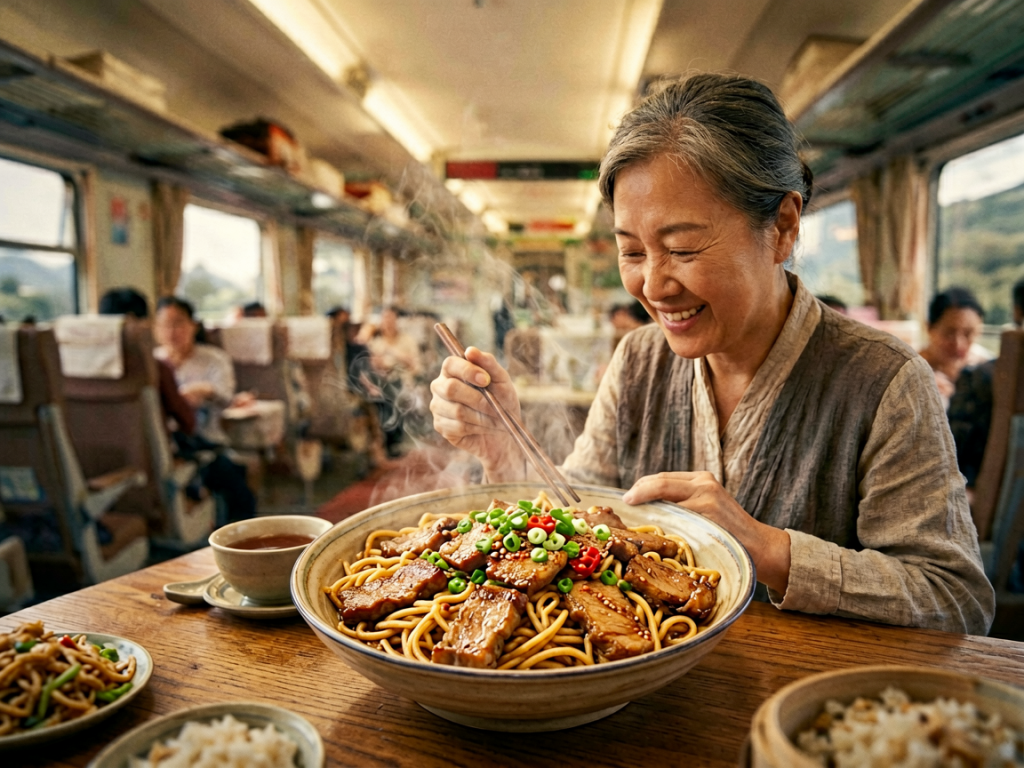
I still remember the exact moment my stomach gave up on the old train food era. I was twenty-four, crammed into a hard-seat car somewhere between Xi’an and Lanzhou, staring at a plastic lid that hadn’t been opened since morning. The rice was dry. The pork felt like it had been cured in a factory somewhere in the nineties. And yet, I ate it.
That’s the thing about long-distance rail travel in China. You don’t just ride the train. You survive it. And survival always comes down to food.
If you’ve never hopped on a multi-hour sleeper or a cross-country G-series run, you might think the meal situation is still stuck in that grim decade. It isn’t. Not anymore. Let me tell you what Chinese travelers actually eat these days, and why the whole 火车盒饭 culture quietly underwent a massive overhaul by 2026.
Sound interesting? Grab your headphones. We’re going back to the rails.
The Golden Age of Regrettable Plastic Trays
I’m not gonna sugarcoat it. The old system absolutely deserved its bad reputation. Back in the day, buying a meal onboard cost around fifteen to twenty yuan, and you got exactly what you paid for. Stale steamed buns. Mushy vegetables. Meat that questioned its own existence.
Travelers learned to work around it. That’s when instant noodles became the national currency of train hunger. Every single compartment had that familiar soup bowl. You could smell the chicken powder drifting through the aisles like a ghost. Some folks packed thermoses of soy milk and boiled eggs. Others stopped at station platforms to grab fried dough sticks, spicy gluten strips, and vacuum-sealed beef jerky.
I remember a trip to Kunming in 2014 where I watched a whole family unpack a makeshift feast from canvas bags. Dried mango, lotus seeds, pickled mustard greens, and enough fruit to feed a small army. The attendant just smiled and kept pushing his cart down the hall. Nobody cared about the official lunch box. They cared about flavor, freshness, and sanity.
To be fair, the railway companies tried. They launched online pre-order apps around 2017. They upgraded the warming ovens on the newer cars. But the supply chain was still clunky. Regional kitchens couldn’t keep up with peak travel seasons. Spring Festival alone could break half the onboard catering network.
So yeah, train food got a bad rap. And honestly? It earned it.
How 2026 Fixed the Whole Supply Chain Mess
Here’s what actually changed. The railways stopped trying to cook everything in a few central hubs and started partnering with local culinary brands across provinces. By 2026, they’d built over four hundred regional food preparation centers. Each one specializes in what that region does best.
Want authentic Sichuan mapo tofu? It gets prepared in Chengdu, flash-chilled, vacuum-sealed, and loaded onto trains before they even leave the depot. Same goes for Cantonese clay pot rice, Liaoning dumplings, or Yunnan mushroom stir-fries. The tech behind it isn’t magic. It’s just better cold-chain logistics and stricter temperature monitoring from factory to seat.
I tried the new system on a Shanghai-to-Guangzhou run last winter. I scanned a QR code near my window, picked a boxed meal with braised eggplant and wok-fried bok choy, and paid thirty-two yuan. When the attendant handed it over, it was actually hot. Not scalding, but properly warmed through. The rice wasn’t dried out. The vegetables still had a little bite.
Surprised? I was too. Especially at that price point.
The railway bureau also cracked down on inflated pricing during holidays. They standardized portion sizes so you actually get a full meal instead of three bites of meat and a mountain of cabbage. And they introduced dietary filters. Vegetarian, low-sodium, halal, gluten-free options finally show up in the app menu without forcing you to read tiny print on a plastic wrapper.
It’s not perfect. You’ll still find mediocre spots. But the baseline jumped higher than almost anyone expected.
What People Actually Order When They’re Hungry
If you want to know what Chinese travelers really eat on long rides, just watch what people grab at the station kiosks before boarding. The smart ones skip the train cart entirely and head straight for the pre-order kiosk.
Rice bowls dominate. Specifically, those with a proper protein base. Braised beef, sweet and sour pork, stir-fried chicken with wood ear mushrooms. I love how they balance flavors now. The sauces are richer without being cloying. They use real ginger, garlic, and scallion oil instead of whatever flavor packets used to float around.
Noodle boxes have made a quiet comeback too. The railway partners with local noodle shops to ship dry-prepped portions that just need hot water or microwave reheating. Hand-pulled wheat noodles, rice vermicelli with chili oil, even proper Cantonese braised pork rice bowls that actually taste like dinner instead of a concession stand compromise.
And don’t sleep on the snack aisles. The new convenience carts carry things like salted duck eggs, fermented bean curd cups, roasted seaweed wraps, and those little pouches of spicy lotus root. They’re cheap. They travel well. And they keep you fed without making your entire carriage smell like a dumpster.
Right? You can smell a train compartment after someone microwaves instant ramen for forty minutes straight. It lingers. The new meal boxes don’t do that. Which says more about ingredient quality than most people realize.
Eating Regional Without Stepping Off the Platform
One thing I genuinely appreciate about the 2026 rollout is how much it leans into local identity. Chinese rail networks aren’t just moving people anymore. They’re moving cuisine across thousands of kilometers.
I took a late-night K-series train from Wuhan to Changsha last month. Instead of grabbing the generic corporate lunch box, I ordered a local breakfast-style meal that arrived pre-warmed. Steamed rice cakes filled with black sesame and red bean paste, a side of pickled radish, and a small cup of ginger milk curd. It sounded weird on paper. Tasted like home.
That’s the shift. The railways stopped treating long-haul dining as an afterthought and started treating it as a cultural extension of the route itself. They hire regional chefs to design rotating seasonal menus. They adjust spice levels based on departure city. They even print tiny cards explaining the dish’s origin next to each box.
Trust me, it changes how you experience the journey. You’re not just burning time between coordinates. You’re tasting the places you’re leaving and the places you’re approaching.
I’ve seen business travelers swap stories over shared trays. I’ve seen students split a couple of boxed meals to save money. I’ve seen elderly couples pull out homemade pickles and dip them into freshly heated congee like it’s a five-star restaurant. The culture around train food isn’t about luxury. It’s about routine. Comfort. A little piece of normalcy when you’re six hours off the ground or fifty feet above it.
Why This Upgrade Matters More Than You Think
Let’s step back for a second. Most outsiders only notice the shiny new trains or the lightning-fast station architecture. They rarely pause to consider what happens inside those cars once the doors close.
But food is the quiet heartbeat of any long journey. When you spend eight hours, twelve hours, sometimes twenty sitting in a metal tube watching landscapes blur past, your relationship with what you eat changes. Hunger makes you honest. Fatigue makes you picky. And a decent meal can completely reset your mood.
I’ll be honest, I used to dread boarding overnight runs. Now I actually look forward to scanning that menu screen. I check departure times against local specialties. I plan my routes around what kind of food I can get at my destination station versus what’s already waiting on the train.
It’s a small thing. But it’s also proof that Chinese infrastructure stopped prioritizing speed alone and started caring about the human rhythm underneath it. The high-speed network moved millions of people across provinces in record time. The 2026 catering overhaul finally matched that ambition with everyday dignity.
You won’t find Michelin stars on a rolling steel chassis. But you will find properly seasoned vegetables, tender proteins, and a system that doesn’t treat passengers like an inconvenience. That’s worth noticing.
Next time you’re stuck on a long ride, skip the instant noodles. Ask the attendant which regional box just loaded. Take a bite. Listen to the tracks hum beneath you. You might just realize the journey tastes better than you expected.