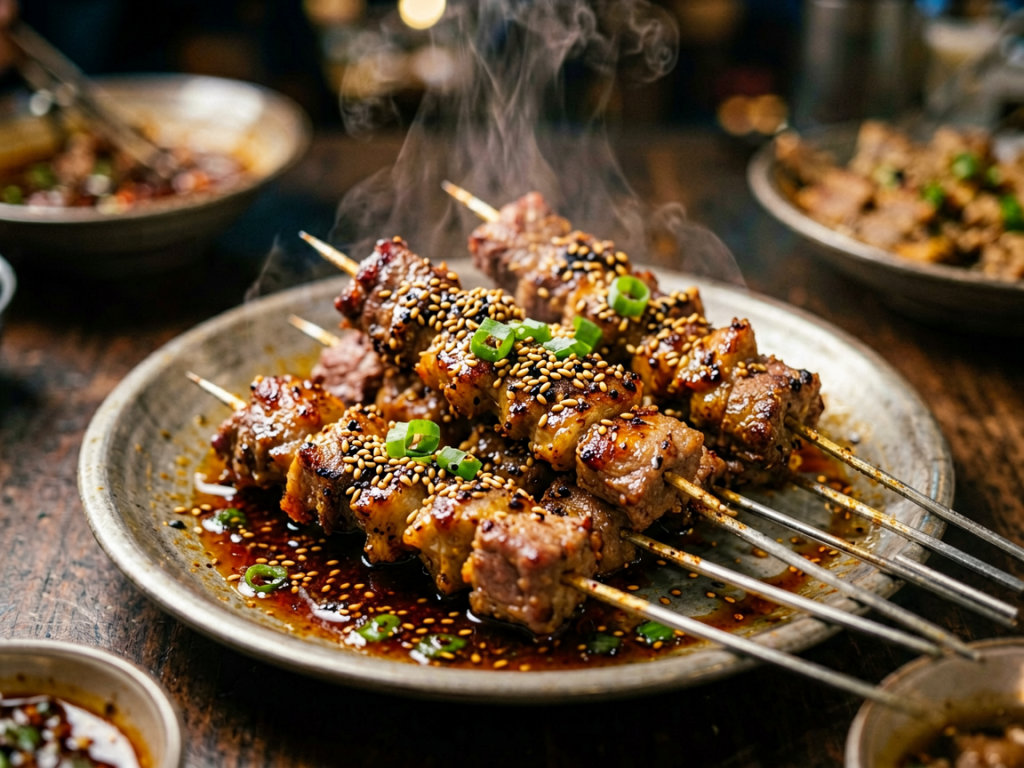
The air hits you before the lights do. It’s a thick, greasy cloud of toasted cumin, rendered pork fat, and scorched chili oil. You’re standing on cracked pavement in a narrow alley off Nanjing West Road. Your feet ache from cheap plastic stools. Someone next to you slams a frosty glass bottle on the table. Ice clinks against glass. The vendor flips a tray of lamb cubes over glowing charcoal. That’s when it actually starts. The real conversation. The real China.
The 10 PM Shift Is When China Actually Wakes Up
Here’s the thing about dinner in this country. You think you know how meals work. You picture families sitting down at seven, sharing rice and stir-fry under warm kitchen lights. That happens. But it stops being the main event by nine. By ten, the city finally exhales. The office workers spill out of glass towers. Students clock out of library carrels. Everyone converges on the same grid of folding tables and smoke-filled alleys. We’ve been told that healthy living means early nights. This street food culture happily ignores that advice.
I remember my first actual skewer run in Shanghai. My colleague dragged me out past midnight. I was dead on my feet. He promised me two things would fix everything: spicy lamb and cold beer. He wasn’t wrong. The moment those metal skewers hit the grill, the fatigue just melted away. People don’t eat this late because they’re starving. They eat because they’re finally free. The day belongs to bosses and deadlines. The night belongs to friends and fire.
You’ll notice a distinct shift in posture when the streetlights flicker on. Shoulders drop. Ties come loose. Voices get louder. I once watched a taxi driver park his cab, grab a stool, and order half a dozen chicken wings. He spent forty minutes debating municipal policy with a university professor across the table. Strangers become allies when the coals start smoking. Sound interesting?
More Than Just Meat On A Stick
Trust me, if you think it’s all just overpriced beef cubes, you’re missing the whole point. A proper stall runs on rhythm and variety. You’ll see trays stacked like art supplies. Skewers of lamb fat glistening like amber. Thin slices of beef marinated in soy and garlic. Whole baby eggplants split down the middle and stuffed with minced pork. Even tofu puffs that soak up juices like kitchen sponges. The magic isn’t in the protein alone. It’s in the spice rub.
Every region plays its own hand with heat and flavor. In Xi’an, the cumin hits harder. The meat tastes smoky and earthy. Head south to Changsha and the chili flakes turn up the dial. You’ll sweat through your shirt within twenty minutes. I tried a plate of wing tips covered in dried Sichuan peppercorns once. My tongue went numb. I still ordered another round the next week. To be fair, no single spice profile rules the country. That’s exactly what makes it so addictive. You keep walking from stall to stall just to find your favorite blend.
Watch the chef work. It’s pure theater. They lay the skewers parallel across the grate. A wire brush slathers oil in quick, practiced strokes. Then comes the sprinkle. Cumin seeds rain down like sand. Chili powder dusts the surface. Salt and MSG follow. The vendor rotates each stick exactly when the fat renders. If you miss that window, the meat turns dry. I’ve seen beginners ruin perfect cuts by rushing the flip. Patience pays off every time.
The Unspoken Rules of the Plastic Stool Table
Look, the seating situation alone would scare off half the tourists. Those little red stools are roughly six inches tall. Your knees press against your chest. Backs ache within an hour. Yet nobody moves. It’s not about comfort. It’s about proximity. When everyone sits low, conversations stay loud and intimate. You hear every joke. You catch every toast. Phones disappear pretty quickly too. The rule is simple. Eyes on the grill. Hands busy turning skewers. Pass the cumin shaker. Don’t scroll.
I watched a group of engineers from a tech firm last month. They sat shoulder to shoulder. Steam rose off their plates. They argued loudly about stock options and housing prices one minute. Then they started laughing over burnt garlic slices the next. It felt strangely grounding. We spend so much time curating our digital lives. This ritual forces you back into physical reality. The grease on your fingers. The salt on your lips. The shared silence when the chef tosses fresh coal onto the fire.
Pricing stays embarrassingly fair too. You pick up a bamboo basket. Point at whatever catches your eye. The vendor marks each stick with a tally line using grease-pencil on paper. You hand them cash or scan a code. A single lamb skewer costs about three yuan. Maybe four during peak season. You can easily fill that tiny table for less than the price of a single appetizer at a downtown restaurant. I could be wrong about future trends, but right now, this remains one of the most democratic dining systems I’ve ever seen.
There’s also a quiet etiquette around paying the tab. Nobody splits checks down to the penny. One person grabs the bill. Another orders the next round. It’s an unspoken loop of reciprocity. You trust the group to cover you later. That trust matters more than anything else at the table. Right?
Why Cold Beer and Spicy Skewers Are a Perfect Match
You can’t talk about late-night grilling without addressing the drinks. Water just won’t cut it. You need something cold, carbonated, and slightly bitter. Dialect beer takes the crown everywhere. I usually grab the frosty green bottles of Tsingtao or the crisp blue cans of Snow. Some places serve local craft brews in mason jars. They all share one trait. They chill the burn.
There’s a weird alchemy happening when you pair heavy spices with light lagers. The carbonation scrubs your palate clean between bites. The alcohol softens the edge of dried chilies. I remember sitting by a riverbank in Wuhan during summer. The humidity felt like a wet blanket. We ordered twenty skewers of lamb intestines and three crates of beer. By midnight, we were sweating, shouting, and completely content. Easier than you’d expect to lose track of time here. The night stretches out until the coals turn gray.
Health nut? Good luck explaining your worries to anyone at these tables. Sure, the oil drips directly onto hot coals. The smoke rises straight into your lungs. The sodium levels probably violate several medical guidelines. I’m no expert but I’ve seen plenty of regulars who swear by this nightly routine. They claim it clears their sinuses. They say it relaxes their joints. Whether that’s science or placebo doesn’t really matter. The mood shift is undeniable. People walk out lighter. Shoulders drop. Voices soften. You leave feeling fed in a way that takes more than calories.
What Makes This Feel Like Home Away From Home
Honestly, I still get emotional about these alleyways. Eight years ago I landed in Guangzhou with zero Mandarin skills and a suitcase full of expectations. I thought I knew Asian street food. I was wrong. This specific brand of nighttime grilling carries a different weight. It’s not just quick fuel. It’s a social contract. You show up. You share space. You tolerate the noise and the smell and the sticky floors. In return, you get warmth. Real warmth. Not the kind measured in degrees. The kind that comes from strangers becoming neighbors over a shared plate of garlic bread.
I’ll never forget the owner of a hole-in-the-wall spot near my old apartment in Nanjing. He recognized my face after three months. Started saving the best cuts of lamb for me. Asked about my job. Told me stories about his son studying engineering. We never spoke fluent Mandarin. We communicated in nods, smile lines, and pointed fingers at spice levels. That stall became my living room. The neon sign flickered. The chairs wobbled. But the connection felt solid.
Other countries have their own late-night staples. Brits grab fish and chips. Mexicans grab tacos. Americans grab pizza. None of them carry quite the same midnight energy. Skewers force you to slow down even while rushing. You hold the metal stick. You blow on the hot meat. You wait for the ash to cool. That pacing changes how you digest your day. It breaks the cycle of hurry and stress. It gives you permission to linger.
Surprised by how much psychology hides behind a simple metal rod? I wasn’t. This culture thrives on simplicity. It doesn’t need menus written in French. It doesn’t require white tablecloths. It just needs fire, patience, and people willing to sit close together. I still chase those plastic stools whenever I visit. I still listen for the hiss of rendering fat. I still love the chaotic rhythm of it all.
If you ever find yourself wandering a Chinese city past midnight, follow the smoke. Sit on the lowest chair. Order the spiciest lamb. You’ll understand why this messy, beautiful tradition holds the real heart of the place. Trust me, your stomach will thank you tomorrow. And your soul might just catch up too.