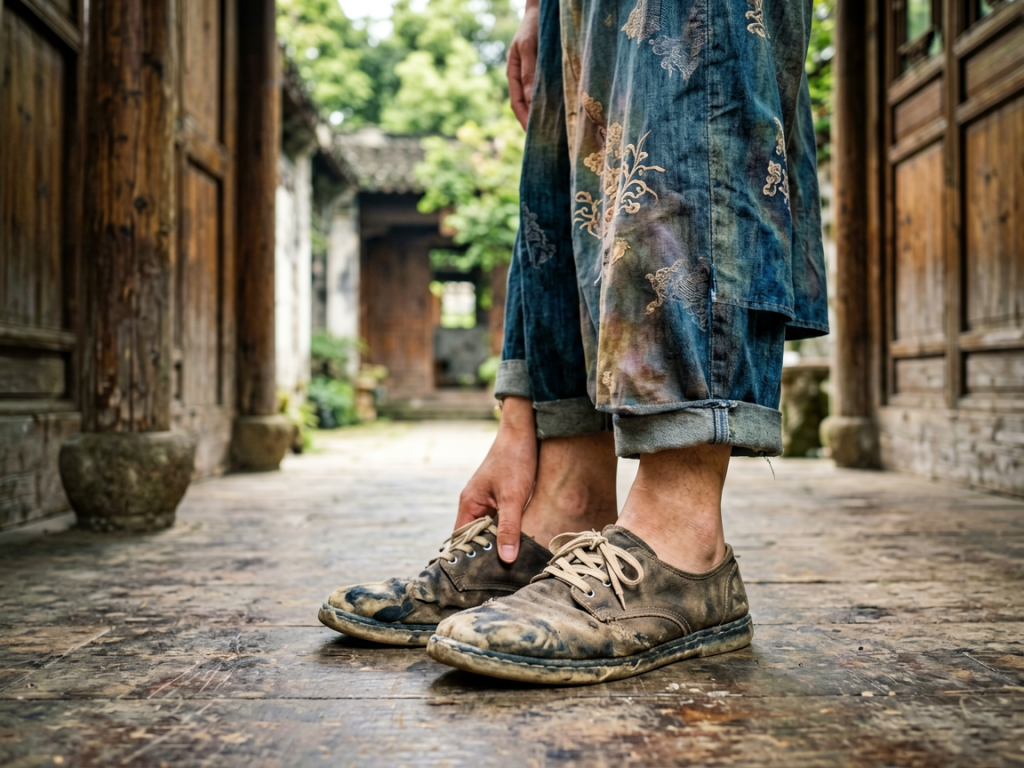
I still remember my first time visiting a friend’s apartment in Chengdu. I’d just hiked through the humid summer streets, my sneakers caked with red clay and dust. My host smiled warmly, pointed to a neat row of footwear lining the entryway, and handed me a pair of fluffy pink slippers. I slipped them on without a second thought. That was the exact moment I realized I wasn’t just visiting a house. I was stepping into a completely different way of living.
People come to China expecting spicy food, crowded subways, and ancient temples. They rarely prepare for the shoe ritual. It happens everywhere. From tiny shikumen lanes in Shanghai to sleek high-rises in Shenzhen, the rule never changes. You take them off. Right there at the threshold. Always.
Here’s the thing. I spent eight years living across three different cities, and I’ve never met a single Chinese person who finds this weird. To the outside world, it might seem like an odd hygiene obsession. But dig a little deeper, and you’ll find a beautiful mix of practicality, history, and quiet respect. I’m no historian, but I’ve picked up enough to know this habit didn’t just appear overnight. It’s woven into how Chinese families manage space, treat guests, and keep their homes tidy.
It All Starts at the Doorway
The doorway isn’t just a transition zone. It’s a cultural checkpoint. In most Western homes, you might scuff past a welcome mat and head straight to the living room. Not here. The moment your foot crosses that threshold, the outside world gets left behind. I used to trip over myself trying to remember which slipper was mine. My landlord, Auntie Lin, finally just bought matching pairs for every guest room so nobody would feel awkward.
This boundary draws a clear line between public and private. Dust, rain, street grime, and all those unknown germs stay out. Inside, it’s a controlled environment. I’ve seen families sweep the entrance area twice a day. Sometimes they even use damp mops right near the entry door. It’s not paranoia. It’s just smart housekeeping.
Sounds simple, right? But the logic runs deeper than just keeping floors clean. Think about traditional Chinese architecture. Courtyard homes, wooden floors, intricate tile work. Those surfaces weren’t meant for outdoor boots. They needed protection. That instinct never really faded. It just adapted to concrete apartments and polished marble.
I’ve noticed how many older neighborhoods still preserve that physical divide. A raised step separates the hallway from the living room. It forces you to slow down. You physically acknowledge you’re entering someone’s personal space. I love that gesture. It turns an everyday action into a moment of mindfulness.
Clean Floors Mean Clean Living
I’ll be honest. When I first moved to Beijing, I struggled with the whole indoor shoe concept. I kept forgetting to change. My socks would slide around inside my sneakers. It felt unstable. Then I tried proper indoor slippers with rubber grips. Everything changed. Suddenly walking across cold tile felt normal again. I even started buying them for myself instead of constantly borrowing guest pairs.
Floor maintenance takes a serious shift when you walk barefoot or in soft footwear. I’ve watched families spend hours scrubbing baseboards and vacuuming under low furniture. In many Western apartments, rugs hide the mess. You can kick dirt under the couch and call it a day. Here, you see everything. That visibility pushes people toward regular cleaning routines. I love that part. It keeps spaces feeling fresh without needing expensive air purifiers.
Hygiene isn’t just about visible dirt either. Temperature plays a huge role. Northern winters get brutally cold. Walking outside in thin socks would freeze your feet solid. Indoor slippers trap heat. Southern summers bring relentless humidity. Breathable cloth slippers let your skin breathe. The footwear shifts with the seasons. I keep a small shelf of woven sandals for July and thick fleece pairs for January. It’s surprisingly thoughtful design.
You might wonder if this practice costs extra. It doesn’t. A decent pair of household slippers runs about twenty to fifty yuan at any local market. You buy them once. Sometimes you replace them when the soles wear thin, but that’s it. Compared to buying multiple seasonal shoes or hiring help to deep clean carpets, it’s actually cheaper. Right?
The Slipper Hierarchy You Won’t Find Online
There’s an unspoken order to guest slippers that tourists never notice until someone politely gestures toward the correct pair. I learned this the hard way during a dinner party in Hangzhou. I grabbed the wrong slippers. The host gently redirected me to a slightly stiffer pair lined up near the kitchen. Later, he explained those were for family members who walked around more. The softest ones went to elders and honored visitors.
It’s a quiet system of care. No rules book. Just everyday awareness. I’ve noticed higher-end homes often keep a dedicated shoe rack separate from daily wear. Some even label compartments by size or season. One neighbor in Guangzhou had a little sign that read “Guests: Please Use Blue Pairs.” It made me laugh, but it also showed how much effort goes into making visitors feel comfortable.
This hierarchy extends beyond slippers too. I’ve stayed in houses where the bedroom floor had its own dedicated cloth slippers. Kitchen areas used waterproof ones. Balconies required non-slip rubber. It sounds extreme until you realize how many hours people actually spend walking around their homes. Treating each zone properly just makes daily life smoother.
To be fair, not everyone follows this perfectly. Younger urbanites sometimes keep cheap indoor slides near the entryway for quick bathroom trips. That’s fine. The core idea stays the same. Keep street dirt away from living spaces. Adapt as needed. I don’t judge the shortcuts. I just appreciate the underlying intent.
Respect shows up in small ways. Leaving shoes neatly aligned tells everyone you value their space. It’s a silent apology for bringing the outside in. I’ve noticed Japanese and Korean neighbors doing similar things. There’s definitely cross-cultural resonance in East Asia. But China’s version feels especially grounded in daily family life. Multi-generational homes rely on clear boundaries to keep peace.
Modern Apartments Still Play by Old Rules
I used to think this tradition would fade with modernization. High-speed elevators, central heating, robot vacuums. Surely technology would change things. I was wrong. New developments still build those raised thresholds right into the floor plan. Architects leave space for shoe storage even in luxury towers that charge twenty thousand yuan per square meter. Why bother saving square footage if you don’t value the rule?
Construction crews still install entryway tiles specifically designed to catch moisture. Property management companies post reminders about maintaining clean lobbies and hallways. Even shared building entrances often feature small racks for temporary storage. The infrastructure literally supports the habit. It’s baked into the design.
Generations blend together in these buildings too. Grandparents who grew up in traditional courtyard houses live alongside millennials who work in tech hubs. The shoe ritual bridges that gap. It’s one of those quiet traditions that doesn’t require explanation. Everyone just does it. I’ve hosted international friends who came from Europe and North America. Most adapted within five minutes. A few took longer, but nobody complained.
I could be wrong about some regional exceptions, but the pattern holds nationwide. Even in heavily commercialized zones like Shenzhen’s Futian district, you’ll see office buildings with strict shoe removal policies in certain residential floors. Corporate managers respect it too. They understand that personal space and professional boundaries often overlap in Chinese culture. Taking off shoes signals you’re entering a protected zone.
Digital age or not, this habit survives because it works. I’ve watched delivery drivers pause at the entryway to wipe their soles before handing over packages. I’ve seen college students living in shared dorms keep a tiny mat right outside their doors. The cultural logic isn’t tied to old buildings. It’s tied to how people actually want to live. Clean floors reduce stress. Clear boundaries build trust.
Why This Habit Actually Makes Sense
Let’s step back for a second. What’s the real benefit here? It isn’t just about aesthetics or tradition. It’s about efficiency. I’ve found it easier to maintain a spotless home when I don’t track outdoor debris inside. My cleaning routine cut in half once I stopped worrying about sweeping entryways before meals. That’s not hyperbole. I timed it.
Health considerations matter too. Studies consistently link indoor allergens to respiratory issues. Dust mites thrive in fabrics and carpet fibers. Hardwood or tile floors with regular wiping remove those triggers faster. Families with young kids or elderly relatives lean into this naturally. I’ve helped neighbors swap out thick rugs for easy-clean vinyl after their toddlers started coughing. It worked wonders.
Don’t get me wrong. Some visitors find it inconvenient at first. Carrying around guest slippers while hosting can feel tedious. I’ve been there. But the trade-off is worth it. You end up with cleaner rooms, less stress about spills, and guests who actually feel welcomed rather than judged for their muddy boots. It builds trust quickly.
I’m genuinely surprised more travel guides don’t explain this better. Visitors focus on great walls and night markets. They miss the quiet wisdom hiding in plain sight. Taking off your shoes isn’t a rigid rule. It’s a daily reminder that home belongs to the people inside. Treat it with care, and it treats you well.
Next time you visit China, embrace the threshold. Watch how others arrange their footwear. Notice the small plastic mats catching grit. Feel how much calmer the space becomes once you leave the noise outside. You might just find yourself packing a pair of lightweight slippers in your suitcase next trip. I know I will.