I still remember the exact moment my knees started shaking. I was standing outside a fourth-floor walk-up in Chengdu, clutching a cardboard box of pastries that had already gone flat in the humidity. My partner, Lin, knocked twice on the red wooden door and stepped back. That was my cue. The door swung open, and I immediately locked eyes with Auntie Wang. She didn’t smile right away. She just took in my shoes, my jacket, and the slightly squashed pastry box in my hands.
Six years later, I’ve walked through those doors three more times. Each visit taught me something new about Chinese family dynamics. You want to know the secret to surviving the first meeting? There isn’t one. But there are definitely rules that will keep you from accidentally insulting a sixty-year-old woman who thinks feeding you is a love language.
Here’s the thing. The whole experience isn’t really about impressing them with your resume or your accent. It’s about showing respect, demonstrating stability, and proving you understand the weight of 家庭 (jiātíng). That means family. And trust me, they take it seriously.
The Gift Trap and How to Actually Get It Right
Walking into a Chinese home empty-handed isn’t just rude. It signals that you don’t care about 面子 (miànzi), or face. I learned that lesson the hard way after a disastrous date night in 2016. I showed up with a bottle of Bordeaux and zero ideas about local preferences. The host poured the wine into a teacup just to be polite, then never mentioned it again.
So I switched tactics. Now I always bring something substantial, properly wrapped, and clearly chosen with care. Red packaging is non-negotiable for holidays, but for a regular visit, gold, purple, or deep blue works fine. Avoid white or black wrapping paper at all costs. Those colors belong to funerals, not family dinners.
Food and drinks are usually the safest bet. High-quality tea works wonders, especially if you know their region. A nice tin of Anji White Tea or aged Pu’er costs around three hundred RMB, which hits that sweet spot between generous and respectful. If you’re visiting someone from Shandong, bring a jar of premium sea cucumber or dried scallops. For families in Sichuan or Yunnan, I just grab their favorite local specialty from a trusted market.
You’ll probably notice them refusing the gift the moment you hand it over. Do not be fooled by that initial hesitation. That’s just the ritual. Aunties will push it back toward you three or four times while saying things like “哎呀,你人来就好了” (Oh, you shouldn’t have brought anything). Smile, shake your head gently, and insist. Hand it over with both hands, bow your head slightly, and watch their shoulders drop two inches. They’re already calculating whether you’re a keeper.
I used to think the refusal dance was weird. Now I see it as a test of your patience and humility. If you get flustered or try to shove the bag back at them, you fail the vibe check. If you handle it gracefully, you pass.
Surviving the First Meal and the Art of the Refusal
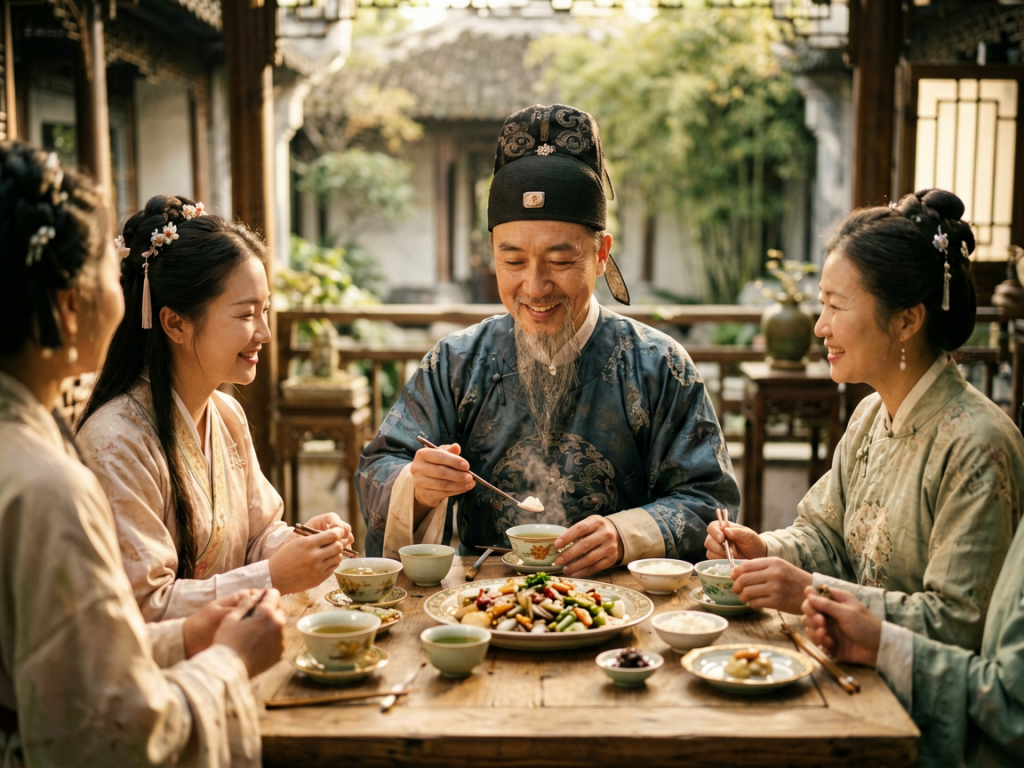
The dinner table in China is basically a battlefield of affection. I sat through a three-hour meal in Nanjing where Auntie Li piled braised pork belly onto my rice bowl so aggressively that my spoon literally couldn’t find room. Every time I scraped mine clean, another mountain appeared. Sound familiar?
You cannot finish everything on your plate. Not even a little bit. Leaving exactly one bite shows you’re full but still polite. Scraping the bowl clean tells them you’re still hungry, which means they feel obligated to cook more. That cycle goes on until your belt pops. I’ve done it. I regret it. Learn from my bloated stomach.
Another weird habit for foreigners is the constant refilling of your tea or water glass. Before you even realize your cup is empty, someone’s topped it off. This is huge in Chinese culture because an empty cup symbolizes an empty relationship. They’re literally pouring hospitality into you. Sip slowly, say thank you, and never complain about the temperature. Even if it’s scalding hot, drink it down. Complaining about the water quality or the spice level gets treated like a personal rejection.
To be fair, the food spreads can be intimidating. We’re talking eight dishes minimum for a standard gathering. Cold cuts, stir-fried greens, fish, dumplings, soup, and whatever seasonal vegetable is at its peak. The host will proudly announce each dish as she places it on the lazy Susan. Nod, smile, and praise the cooking. “真好吃” (Really delicious) goes a long way. You don’t need to sound like a food critic. Just sound sincere.
One time, I accidentally used chopsticks to spear a meatball and stab it into my mouth. The entire table went quiet for a solid second. I mumbled an apology and switched to scooping. Lesson learned. Never stab, never spear, never rest your chopsticks vertically in a bowl of rice. That looks like incense at a grave. Keep them on the rest, or balance them across your bowl. Simple mistakes stick in people’s minds longer than big ones.
The Tea Ceremony and What They’re Really Testing
If you’ve seen Chinese dramas, you’ve probably watched the formal tea ceremony. Young couples kneel on floor cushions, bow deeply, and serve matching cups to elders while addressing them with new titles. I was genuinely skeptical about doing this when Lin mentioned it. I figured it was too dramatic for a casual Tuesday night visit. I couldn’t have been more wrong.
When the parents actually ask for it, they want tradition. They want to see if you’re willing to step into the rhythm of their world. I brought a small set of purple clay teapots from Yixing, and we sat at the low dining table instead of the couch. It felt awkward at first, but then Lin’s dad handed me two red envelopes and called me “好孩子” (good child). That shifted something in the room entirely.
The tea itself matters less than the gesture. Use a gaiwan or simple ceramic cups. Pour it until it’s about ninety percent full, because a full cup represents complete respect. When you hand it over, use both hands. Keep your eyes down slightly, then look up when they take a sip. It’s not about perfect technique. It’s about showing you understand the hierarchy and the weight of the moment.
Here’s the part nobody warns you about: the questions that come right after the tea. Once everyone relaxes, the parents pivot straight to logistics. Where do you work? Is your salary stable? Do you own property? Are you planning to stay in China long-term? It feels like an interrogation, but it’s really just due diligence. They’re checking your foundation before they let you build a roof over their child’s head.
I used to freeze up when they asked about my visa status. Now I just answer honestly and bridge it back to commitment. “I’m focused on building a career here. My company just renewed my contract for another two years, and I’m saving to buy a place near where we met.” Specificity beats vagueness every single time. They want to see a plan, not a dream.
Reading the Room Without Losing Your Authentic Self
Foreigners often make the mistake of trying too hard to impress. You’ll catch yourself bragging about your startup or name-dropping your boss like it’s a personality trait. Stop. Chinese parents value quiet reliability over loud ambition. Talk about your work, yes, but frame it around responsibility and long-term growth. Mention your hobbies only if they involve discipline, like playing guzheng or hiking mountains.
Another trap is dismissing family obligations. If you casually mention that you rarely talk to your own parents or that you value extreme independence, you’ll raise eyebrows. Filial piety is woven into the culture. You don’t have to adopt it fully, but acknowledging its importance shows emotional maturity. I just tell them I call my mom every Sunday and send her care packages. That tiny detail smooths over a lot of cultural friction.
Watch how your partner handles their parents. They’ll give you subtle signals. A light kick under the table means back off that topic. A raised eyebrow means rephrase. Lean into those cues. You’re not just meeting two individuals. You’re stepping into a living ecosystem that has shaped your partner for decades. Respect the ecosystem, and it will eventually welcome you.
I’ll be honest, some visits still leave me drained. The pace of conversation moves faster than my Mandarin can keep up. The unspoken expectations pile up in my chest. But then something shifts. Maybe it’s the uncle telling a terrible joke about fishing. Maybe it’s the aunt secretly slipping you extra dumplings when she thinks no one’s watching. Maybe it’s just the realization that they’ve stopped treating you like a guest and started treating you like family.
That transition happens quietly. You don’t get a certificate. You just notice they stop asking “where are you from” and start asking “when are you coming back.” You notice they order your favorite snack at the supermarket without you mentioning it. You notice the tea ceremony stops feeling like a performance and starts feeling like a routine. That’s the real goal.
If you approach these meetings with curiosity instead of fear, everything becomes easier than you’d expect. Bring good packaging. Leave a bite of food. Serve tea with both hands. Answer questions calmly. Listen more than you speak. And for heaven’s sake, practice your chopstick scooping before you show up.
I love watching how quickly a tense dining table turns into a warm, chaotic mess of laughter and overlapping conversations. That’s the hidden magic of Chinese family gatherings. They’ll challenge you, test you, and occasionally confuse you with their indirect communication. But they’ll also share their life, their history, and their hopes for your future. It’s messy, deeply human, and absolutely worth the nerves. You’ll survive the dinner, the gifts will arrive safely, and you might just find yourself knocking on that same red door next month.