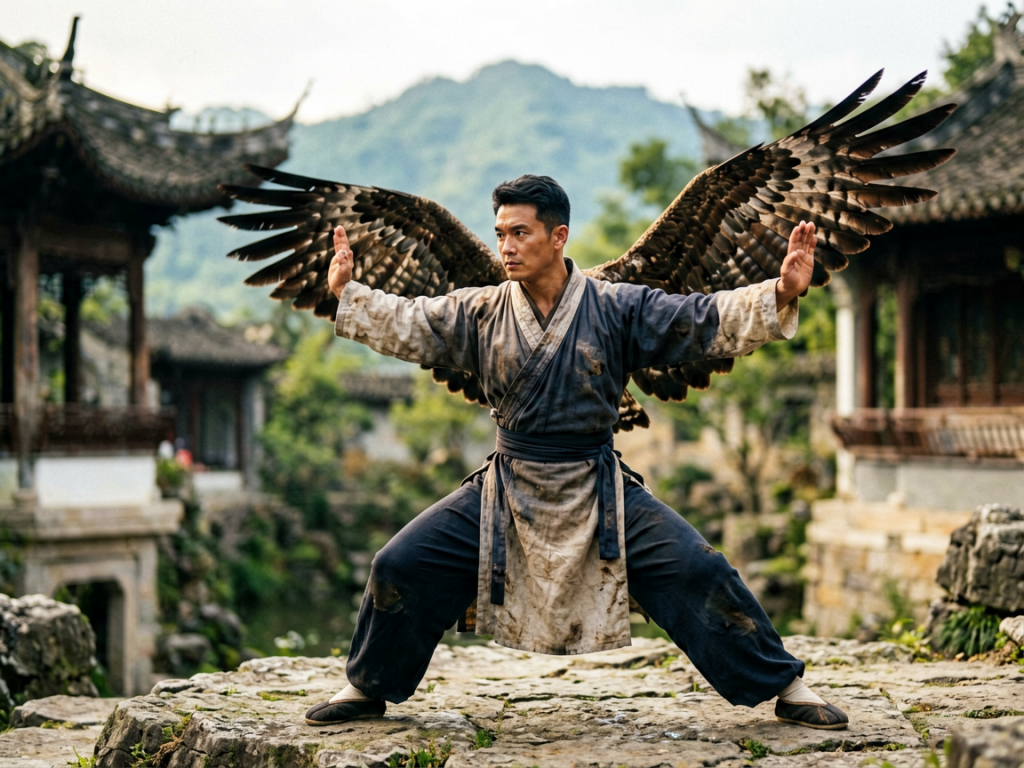
I remember sitting on a cracked wooden bench in a Mong Kok training hall, watching a guy my size get slammed onto the concrete floor. The sound was wet. He didn’t even scream. He just tapped the mat twice and rolled to his feet. That was my first real taste of Eagle Claw Kung Fu. It wasn’t flashy. It wasn’t about high kicks or spinning back fists. It was pure, brutal mechanics.
You grab a wrist. You twist an elbow. You control the center of gravity. Simple. Effective. Terrifying. Most people think of Chinese martial arts as something out of a wuxia novel. Long robes. Floating steps. Qi blasts. Reality is much heavier. Eagle Claw sits right in that gritty space between street survival and disciplined sport. It relies on hooks, grips, and joint manipulation. It feels more like wrestling than boxing.
I tried it after years of kicking and punching, and honestly, it changed how I moved. You stop chasing strikes. You start controlling limbs. I’ll be honest, I almost walked away after my first class. My arms ached from holding hooks. My shoulders burned from maintaining tension. The instructor called it the ten-finger claw technique. Sounds poetic until you feel it tearing through your own guard.
The Grapple Behind the Fists
You don’t punch your way out of these matches. You pull, you redirect, you collapse their structure. The style traces back to the Qing dynasty. Legends say it came from a hunter who watched eagles snatch prey mid-air. I’m no expert, but the biomechanics make sense. Eagles grip hard. They fly low. They strike fast. Eagle Claw adapts that into human joints.
Palm strikes replace talons. Finger hooks replace beaks. Joint locks replace wings. It’s not magic. It’s physics wrapped in tradition. What really blew me away was the pressure point work. We spent an afternoon drilling nerve clusters along the forearms. One precise jab, and your opponent’s hand goes numb. No drama. Just dead weight.
I tested it on my training partner, Mark. He dropped his water bottle before he even realized his fingers had locked up. Surprised? Good. That’s the point. You don’t need brute strength when you hit the right spot. Training halls in Hong Kong still run like they did fifty years ago. Concrete floors. Wooden dummies. Old men sipping bitter tea while watching kids fall over.
Prices stay reasonable too. I pay around 600 yuan a month for unlimited classes. That’s cheaper than a single personal training session anywhere else. You get the same access to masters who’ve spent decades refining these movements. It’s easier than you’d expect to commit, once you stop overthinking it. Sound interesting? It gets better.
People love to talk about Jeet Kune Do. They quote his books. They analyze his footwork. But few mention the grappling foundation he quietly absorbed. Bruce trained under Ip Man. Ip Man taught Wing Chun. Wing Chun teaches chain punches and centerline theory. But Bruce also hung around guys who knew Eagle Claw. He watched them drill. He asked questions. He took what fit and left the rest.
How Bruce Actually Used It
I read a transcript from an interview where he actually mentioned studying traditional styles for close-quarter control. He wasn’t interested in performance. He wanted efficiency. Eagle Claw’s hooks and redirects aligned perfectly with his philosophy. You intercept. You grab. You break balance. You finish. It’s clean. It’s direct. It doesn’t waste motion.
To be fair, Bruce didn’t copy the style wholesale. He stripped it down. He merged the hooks with his own straight punches. He kept the joint traps but made them faster. That’s how he built his hybrid approach. I could be wrong, but I think many modern fighters miss this connection. They focus on the strikes and forget the groundwork that actually sets them up.
I remember watching old sparring footage from a Hong Kong gym in 1972. Bruce was moving differently than usual. Lower stance. Hands closer. More clinch work. His assistant later said he’d been drilling limb control for weeks. You can almost see the Eagle Claw influence in those clips. It’s subtle. You have to know where to look. But it’s there.
History buffs always point to Li Shuwen when discussing this era. He popularized the ten-finger claw techniques across northern China. Bruce never traveled north, but the knowledge flowed south through teachers and sparring partners. Martial arts history isn’t a straight line. It’s a web. You trace one thread, and it connects to half a dozen others. Bruce understood that better than most.
He didn’t romanticize the past. He used it. He took what served him and left the rest. That’s exactly what happened here. The grappling focus works at any range. You don’t need a mat. You don’t need padding. You just need leverage and timing. I’ve seen it work against bigger guys. I’ve seen it work on slippery floors. It adapts.
Training Like a Traditionalist
If you step into a real school today, expect discipline. We start with stances. Horse stance. Bow stance. Single leg sit. Hold them until your legs shake. Then we move to the claw drills. Open and close the hands. Snap the wrists. Rotate the shoulders. It looks slow until you try it at full speed. Your tendons protest. Your grip fails.
You learn quickly that patience matters more than power. I spent three months just working the basic hooks. No sparring. No flashy techniques. Just repetition. My coach would tap my elbow if I opened up. He’d kick my feet if I shifted weight wrong. It felt tedious at first. But then something clicked. My hands started reading my opponent’s movement before I even saw it.
I stopped reacting. I started anticipating. The pressure point exercises take longer. We drill nerve strikes on mannequins first. Then on each other. Light contact only. Too hard and you bruise. Too soft and you miss. It’s a fine line. I still mess up sometimes. But the feedback is immediate. You hit right, they drop. You hit wrong, you reset.
There’s no arguing with physics. Food breaks are part of the ritual too. After class, we gather at a nearby stall for beef noodles. Cheap. Hearty. Perfect after an hour of pulling and twisting. I love how the culture treats training like daily bread. You show up. You work. You eat. You repeat. No ego. No flash. Just steady progress.
That’s what keeps students coming back. Comparing it to modern MMA, Eagle Claw feels slower. Less cardio-heavy. More technical. It’s better than most alternatives if you want joint control without relying on athleticism alone. You don’t need to be ripped. You need to be precise. I could be wrong, but I think that’s why older styles survive. They don’t demand superhuman conditioning. They demand smart movement.
Street fights don’t follow rules. They happen in parking lots. In alleyways. Over spilled drinks. Traditional Chinese martial arts often get dismissed as outdated. Eagle Claw proves otherwise. Its grappling focus works at any range. You don’t need a mat. You don’t need padding. You just need leverage and timing. I’ve seen it work against bigger guys. I’ve seen it work on slippery floors. It adapts.
Why It Still Matters Today
Modern self-defense classes teach you to run. That’s smart. But what if you can’t run? What if someone grabs you? Eagle Claw answers that directly. Claw the wrist. Step behind. Drive the elbow. Control the spine. It’s a chain reaction. One move leads to another. You don’t panic. You execute. I feel safer knowing I’ve practiced it. Not because I want to fight. Because I don’t want to freeze.
The community here still values lineage. Older masters pass techniques down through generations. I respect that. It grounds you. You’re not just learning a workout. You’re stepping into a conversation that started centuries ago. That weight means something. It keeps you humble. You can’t fake progress here. The mat doesn’t lie.
I’m no expert. I train two days a week. I still drop hooks. I still lose balance on the slides. But I’ve improved. My reflexes are sharper. My grip is stronger. I understand body mechanics better. It’s easier than you’d expect to stay consistent when you see real results. You don’t chase perfection. You chase competence.
Next time you watch a fight clip, look at the hands. Watch the grips. Notice how fighters trap arms and break posture before throwing strikes. That’s not new. That’s old. That’s Eagle Claw. You might not see the name on the poster. But you’ll see the result. I love that about this art. It hides in plain sight.
Once you learn to read it, you’ll never watch a fight the same way again. Trust me, it changes how you move through a room. You stop looking for openings. You start creating them. And that’s the quiet lesson Bruce Lee carried with him long after the cameras stopped rolling. Keep your hands light. Keep your mind sharp. And never underestimate the power of a good grip.