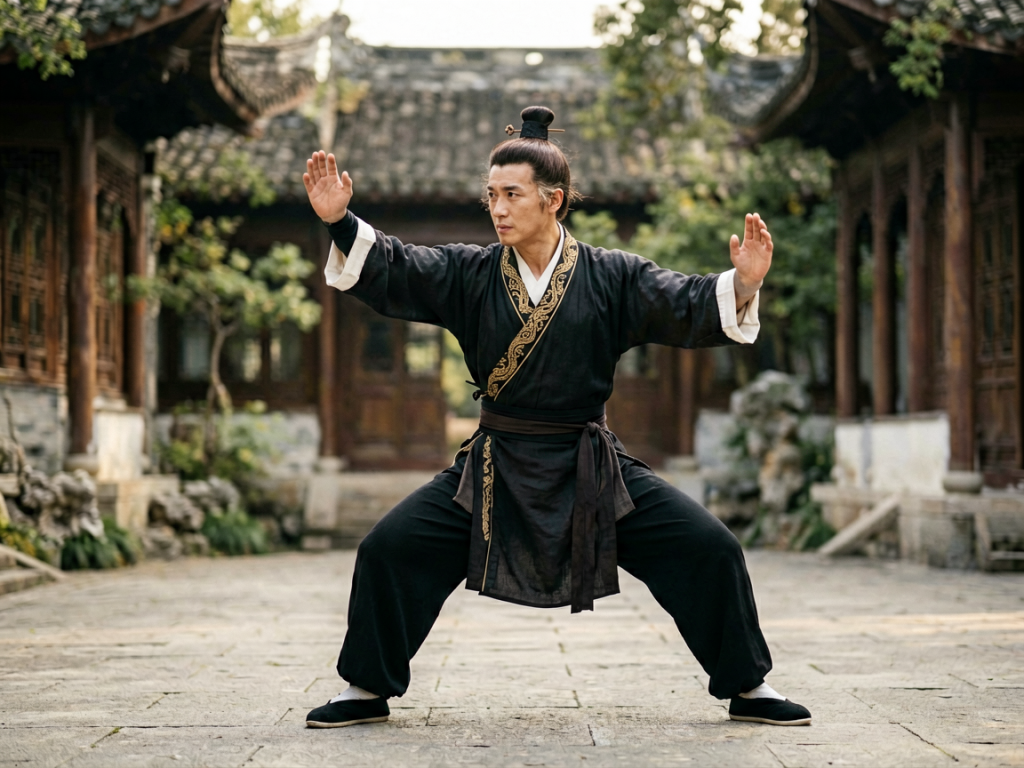
Honestly, I walked into that gym thinking I’d get a polite lesson in Tai Chi. You know the vibe. Slow movements, breathing exercises, maybe a bit of pushing hands. The owner had promised me a look at “traditional martial arts.” I was ready for incense and soft jabs.
Instead, I got hit in the ribs so hard I forgot my own name.
That was my first real encounter with Baji Quan. It wasn’t slow. It wasn’t polite. And it definitely wasn’t the kung fu you see in those cheesy action movies where heroes flip over ten guys without breaking a sweat. This was violent, efficient, and terrifyingly practical.
If you’ve ever wondered how Chinese bodyguards or security personnel actually train, forget the spinning kicks. They drill Baji. It’s the closest thing China has to modern Krav Maga, just wrapped in centuries of history. Let me show you why.
The Art of the Short Explosion
Baji Quan translates roughly to “Eight Extremities Boxing.” But don’t let the fancy name fool you. It’s all about close-quarters combat. We’re talking elbow-to-elbow, knee-to-knee range. When you get this close in a fight, there’s nowhere to run. You either break your opponent or they break you.
I spent a morning with Master Li, a grizzled instructor in his sixties who still moves like a coiled spring. He explained that Baji relies on two main principles: structure and explosion. Structure means your bones align perfectly to transfer force. Explosion means you release that force in a split second.
The signature move? The elbow strike. It’s not just a punch with your fist bent. It’s a devastating blow that uses your entire body weight behind a bone-shattering point of impact. Li showed me how to generate power from the ground up. It starts in your feet, travels through your hips, snaps through your torso, and finishes at your elbow.
“The body is a whip,” he told me, tapping his own shoulder. “But the end of the whip is a hammer. Sound interesting?”
I tried it. At first, I looked ridiculous. I was swinging my arm like a pendulum, missing the target entirely. Li corrected my stance in seconds. He grabbed my wrist and twisted it slightly, forcing my elbow into the right position. Then he demonstrated the technique on a heavy bag. *Crack.* The sound echoed off the concrete walls. It didn’t look like much from the outside, but the noise suggested serious power.
This isn’t just theory. This is physics applied to violence. And it’s exactly why private security firms in Beijing and Shanghai prefer it over traditional Shaolin styles. There’s no room for theatrics when you’re protecting a VIP in a crowded subway station.
Why Security Pros Love It
Let’s be real. Most people think martial arts are about discipline or self-defense against random attackers. But for professional bodyguards, the reality is different. They face trained threats, often in tight spaces like elevators, cars, or narrow hotel corridors.
I chatted with a guy named Jason who works for a private security firm in Shenzhen. He’s ex-military, built like a tank, and has seen some serious stuff. I asked him why he chose Baji over other styles. He laughed, which was a bit scary given his size.
“Because it works in an elevator,” he said. Simple as that. You can’t throw a roundhouse kick in a confined space. You can’t really do complex grappling if someone’s got a knife. But you can drive an elbow into someone’s throat or smash a knee into their groin while keeping your balance.
Baji also emphasizes simultaneous attack and defense. In traditional boxing, you block then punch. In Baji, you deflect and strike in the same motion. It’s faster. It’s more aggressive. It’s designed to end a threat immediately rather than engage in a prolonged brawl.
Jason showed me a drill where he stood against a wall. He had to simulate moving forward while defending against multiple angles. His elbows were flying, his knees snapping up. It looked less like a dance and more like a mechanical process. Efficient. Cold. Effective.
I’m no expert, but I could see why companies pay top dollar for this training. It’s not about winning a tournament. It’s about getting the job done and going home safe.
The Hidden Philosophy Behind the Violence
Here’s the part that surprises most outsiders. Baji isn’t just brute force. It’s deeply rooted in Chinese philosophy. Specifically, the concept of *Jin*–internal power. You might think internal power means being soft like Tai Chi, but in Baji, it’s different.
In Baji, *Jin* is stored energy. Think of it like a compressed spring. You hold tension in your muscles and joints, then release it instantly. It requires intense mental focus. If your mind wanders, the power dissipates. That’s why practice is so rigorous. It’s as much meditation as it is combat.
I tried to maintain focus during a long session of *Zhan Zhuang*, or standing post. It’s a deceptively simple stance. You stand still, arms wrapped around an imaginary tree, knees bent. On the surface, nothing is happening. Inside, your legs are screaming. Your core is shaking. You’re learning to hold tension without collapsing.
Master Li watched me struggle for twenty minutes before he finally nodded. “Good,” he said. “Now you understand. Power doesn’t come from muscles. It comes from stillness. From control.”
To be fair, I struggled to see the connection between standing still and throwing a punch. But after weeks of practice, it clicked. When you’re calm under pressure, your body reacts faster. When you’re panicked, you freeze. Baji trains you to stay cold-blooded even when someone is trying to hurt you.
This mindset is crucial. Whether you’re facing a mugger or just dealing with the chaos of daily life in China, staying calm is half the battle. The martial art teaches resilience. It teaches you to absorb shock and keep moving forward.
A Glimpse Into Daily Life With Baji
Living in China, I’ve noticed Baji popping up everywhere. Not just in schools, but in corporate wellness programs. I attended a seminar in Tianjin where a group of accountants took breaks to practice elbow strikes. They weren’t trying to fight each other. They were trying to loosen up their shoulders and reset their minds.
The community aspect is strong. Baji gyms feel like clubs. Older men share tea and stories after class. Younger students ask for advice. There’s a sense of respect that’s rare in modern life. You earn it by showing up, sweating, and listening.
I remember one evening watching a young woman, a software engineer by day, dismantle a wooden dummy with terrifying precision. She was tiny, maybe five feet tall, but when she struck, it felt like being hit by a car. Her neighbors watched in awe. She wasn’t trying to prove anything to them. She was just practicing her craft.
That’s the beauty of Baji. It doesn’t care about your age, gender, or job title. It only cares about your effort. If you put in the work, you’ll get stronger. Faster. Sharper.
Should You Learn It?
I’ll be honest. Baji is hard. It’s painful. You will bruise. You will doubt yourself. The techniques require a level of coordination that feels unnatural at first. But it’s also incredibly rewarding.
If you’re looking for a flashy style to impress people on TikTok, go elsewhere. But if you want to learn something real, something that connects you to a long lineage of warriors, Baji is worth it. Plus, it’s great for fitness. You’ll never have to worry about upper body strength again.
I’ve been practicing for about a year now. I’m still not fast, and I’m still not strong enough to break a brick with my elbow (yet). But I’ve noticed changes in my posture, my confidence, and my ability to handle stress. I stand taller. I move with purpose. I’m less likely to panic when things go wrong.
Is it easier than yoga? Definitely not. Is it better than most alternatives for self-defense? I think so. It’s direct. It’s honest. And it doesn’t waste time.
So next time you’re in China and you see a group of people doing weird elbow drills in a park, don’t laugh. Stop and watch. You might just see the future of close-quarters combat. Or at least, you’ll understand why I’m always smiling after class, despite the bruises.
Trust me, the pain is temporary. The skill lasts forever.