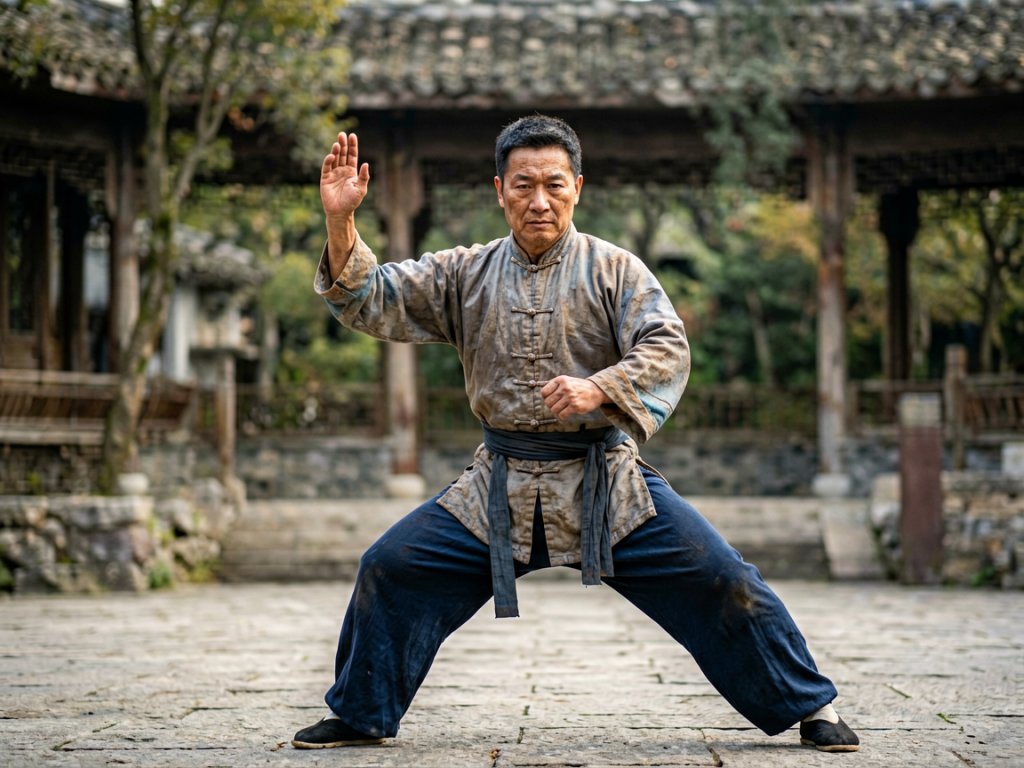
Honestly, I still have a scar on my left thumb. It’s from the second week I started training with Master Lin in a dusty community center in Guangzhou. I wasn’t fighting anyone. I wasn’t even punching. I was just gripping a smooth river stone until my fingers felt like they were going to snap off.
I remember thinking, “Why am I doing this? Can’t I just punch faster?”
Master Lin didn’t answer. He just tapped his own hand, which looked less like a hand and more like a set of wrought iron pincers. He said, “Speed breaks. Power holds.”
That moment changed how I see Chinese martial arts. We tend to focus on the flashy kicks or the fast punches. But down in the south, where Tiger Claw Kung Fu comes from, the fight starts before you even throw a punch. It starts with the grip.
The Hand That Doesn’t Let Go
Tiger Claw, or *Hu Zhang* in Cantonese, is one of the five animal styles of Southern Chinese martial arts. You’ve probably heard of the others. Crane for balance, Snake for precision, Dragon for power, Leopard for speed. Tiger? Tiger is all about crushing force.
I’ll be honest, when I first watched a demonstration, I thought it looked ridiculous. The practitioner’s hands were curled into claws, fingers rigid, knuckles white. They weren’t making fists. They were making hooks.
But here’s the thing about hooks. They catch.
In a street fight, or even in a serious sparring match, the person who controls the other person’s limbs usually wins. Tiger Claw teaches you to control. You grab the wrist. You trap the elbow. You pull them off balance while simultaneously striking their pressure points. It’s not pretty. It’s not graceful. It’s brutal.
I tried explaining this to a friend back in Chicago. He looked at me like I was crazy. He said, “Just punch them in the face.” I told him that if you’re smaller than your opponent, punching often just makes them angrier. Grabbing their arm and twisting it? That ends the conversation.
The grip in Tiger Claw isn’t just about strength. It’s about structure. Your fingers aren’t muscles alone; they’re connected to your tendons, which connect to your forearms, which connect to your shoulders. When you train correctly, the force doesn’t just come from your hand. It comes from your whole body. It’s a chain reaction of pain for whoever you’re holding.
Training Like a Beast, Not a Gym Rat
You won’t find Tiger Claw training manuals in your average commercial gym in Beijing or Shanghai. You won’t find it on TikTok either, unless someone’s trying to sell you a course on “Ancient Secrets for Quick Wins.” And trust me, there are no quick wins here.
The training is repetitive. It’s boring. And it hurts. But it works.
My favorite exercise involves rice buckets. Yes, really. You fill a large plastic bucket with uncooked white rice. Then, you stick your hands in there and move them around. You open and close your fingers. You make fists. You release. You rotate your wrists.
It sounds simple, right? Try it for ten minutes. Your forearms will burn within two minutes. The rice provides resistance in every direction. It’s harder than water. It’s softer than sand. It’s the perfect medium for building tendon strength without tearing muscle fibers.
I did this every morning for three months. At first, I couldn’t keep my fingers open after five minutes. By month three, I could rip a newspaper apart just by pinching the corner. That’s the kind of grip you get.
But rice is just the start. Advanced students move on to iron sand. You grind iron filings, herbs, and salt into a paste. You massage it into your hands after training. Then you practice grabbing heavy objects–stones, wooden poles, even metal bars coated in oil to make them slippery.
I saw a student try to grab a smooth stone pole yesterday. His hands were shaking. He managed to lift it about six inches before letting go. Master Lin just nodded. “Again,” he said. “Your mind gives up before your body does.”
That’s the philosophy. It’s not just about physical endurance. It’s about mental toughness. You have to want to hold on when every nerve ending is screaming at you to let go.
More Than Just Holding On
People assume Tiger Claw is just about grabbing. But it’s actually about attacking while you hold. Once you’ve got your opponent’s limb, you don’t just squeeze. You strike.
The fingers become daggers. You use the tips of your fingers to jab at pressure points. Eyes, throat, ribs, armpits. These are sensitive areas that shut down an attacker quickly. If you have the strength to crush a stone, you certainly have the strength to pierce flesh.
I learned this the hard way during a sparring session. My opponent was bigger than me. Much bigger. He threw a punch I couldn’t block. Instead of pulling back, I stepped in. I caught his wrist. I didn’t just hold it. I twisted. Then I drove my thumb into the inside of his elbow.
He dropped the punch. He dropped to his knees. He was shocked. I wasn’t trying to hurt him badly, just enough to stop him. But the shock was real. He looked at his arm like it had betrayed him.
“You caught me,” he wheezed.
“I held you,” I corrected. “There’s a difference.”
That’s the key. Catching is reactive. Holding is proactive. Tiger Claw turns defense into offense in a split second. It’s efficient. It’s practical. And it’s scary if you’re on the receiving end.
I’ve seen masters do things that defy physics. They’ll grab a heavy bag swinging toward them and stop it dead in mid-air. Not because they’re strong enough to move the weight, but because they’re strong enough to anchor themselves against the momentum. It’s like planting roots. The hand becomes part of the ground.
The Modern Relevance of Ancient Hands
So, why does this matter today? We live in a world of smartphones and touchscreens. We don’t punch people. We don’t need to grab them. So why learn Tiger Claw?
Well, for one, it’s great for self-defense. Even if you never use it, knowing you have the option changes how you carry yourself. Confidence matters. And there’s nothing quite like knowing your hands can crush walnuts to boost your ego.
But it’s also about health. Gripping strength is a major indicator of overall longevity. Studies show that weak grip correlates with higher risks of heart disease and stroke. By training Tiger Claw, you’re not just learning to fight. You’re learning to keep your body healthy.
I’m forty-five now. My joints ache sometimes. My back stiffens up. But my hands? My hands are still strong. I can open jars without help. I can carry groceries up four flights of stairs without dropping anything. I can play piano if I ever decide to pick it up again.
Plus, the mindfulness aspect is huge. When you’re focusing on your grip, you can’t think about your taxes or your ex-partner. You’re either present in the movement or you’re not. It’s a form of meditation, just with more sweating.
I’ve noticed my friends at work trying to mimic my exercises. They bring their own rice buckets to the office. One guy even bought a stress ball shaped like a tiger head. It’s funny, but it’s also nice to see interest growing. People are realizing that traditional skills still have value in a digital age.
Start Small, Dream Big
If you want to try Tiger Claw, don’t go buy iron sand and start grinding rocks immediately. You’ll hurt yourself. Start with the basics.
Buy a thick rubber band. Put it around your fingertips. Spread your fingers wide against the resistance. Hold it for five seconds. Release. Repeat twenty times. That’s it. That’s your warm-up.
Do that every day. In a month, you’ll notice a difference. Your hands will feel heavier. Stronger. More connected to your arms.
Then, try the rice bucket. Find an old container. Fill it with dry rice. Stick your hands in. Move them around. Get comfortable with the feeling of resistance.
Don’t rush. Martial arts are a marathon, not a sprint. I spent two years just doing static holds before I moved to dynamic movements. Two years of just sitting there, holding a pose, feeling my muscles tremble.
Was it worth it? Absolutely. The first time I successfully executed a Tiger Claw technique in a real scenario–even if it was just sparring–it felt like magic. It felt like power.
Power isn’t just about muscles. It’s about control. It’s about precision. It’s about knowing exactly what your body can do and trusting it to deliver.
I remember watching a documentary on Shaolin monks once. They were breaking concrete slabs with their bare hands. Everyone cheered. But I knew they’d been practicing that same grip on a tree trunk for ten years before they ever touched a slab of concrete. The slab was just the final test. The real work happened in the shadows, in the dirt, in the silence.
That’s the secret no one tells you. The glory is easy. The grind is hard. And the grind is where the transformation happens.
So, next time you pick up a coffee cup, pay attention. Feel the heat. Feel the weight. Notice how your fingers wrap around the handle. Are you gripping it tightly? Or loosely? Are you aware of the tension in your forearm?
Start noticing. Start caring. And if you ever find yourself in a situation where you need to hold on tight, you’ll be ready. Not because you trained to fight, but because you trained to endure.
That’s Tiger Claw. It’s not just a style. It’s a way of being. Strong. Resilient. Unbreakable.
I’m still working on my scar. It fades a little every year. But the strength behind it? That stays forever.