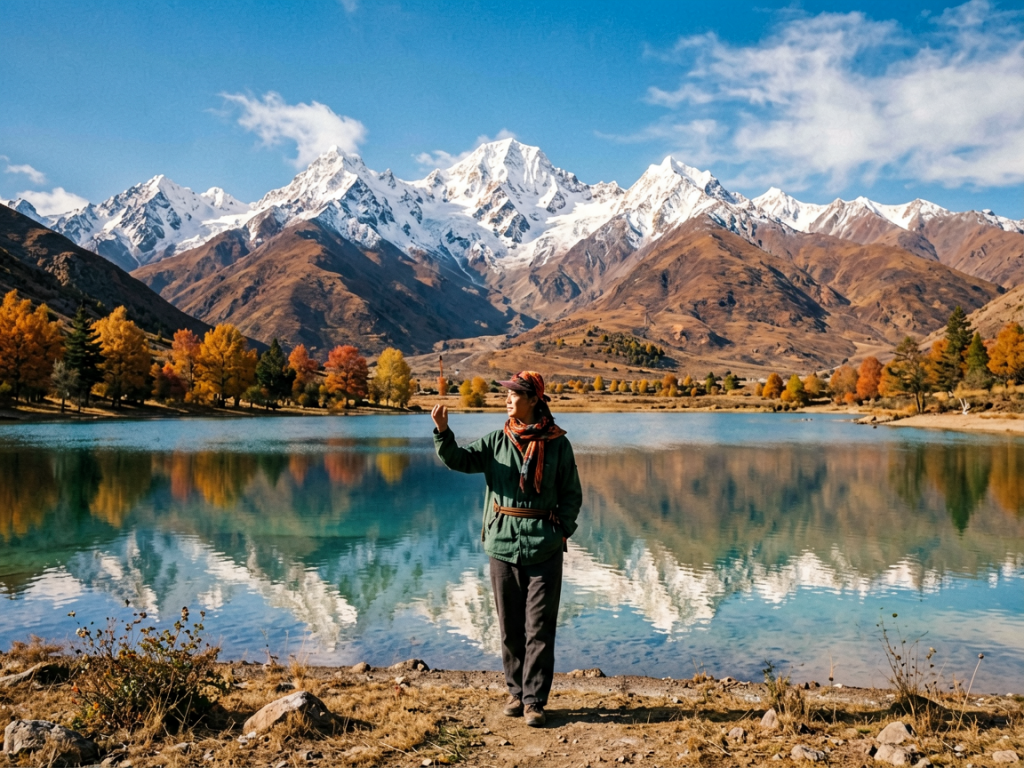
Honestly, I thought I’d seen it all after eight years in China. I’ve eaten my way through Chengdu’s spice markets, haggled over silk in Suzhou, and lost myself in the hutongs of Beijing. But nothing, and I mean nothing, prepared me for the first time I stood on the shore of Kanas Lake.
The air was so cold it felt like it had weight. It pressed against my lungs. The sky wasn’t just blue; it was a piercing, impossible azure that made the white snow-capped peaks look like jagged teeth biting into the horizon. And the water? It was the color of liquid turquoise glass, still enough to reflect the burning gold of the larch trees lining its banks.
If you’re looking for polished tourism infrastructure, go somewhere else. You won’t find it here. Kanas is rugged. It’s remote. It’s wild. But if you want to see the last pockets of traditional nomadic life in Northern Xinjiang before they vanish completely, this is your spot. Trust me, the drive there alone will change how you see China.
Getting There Is Half The Battle
Let’s get the logistics out of the way because people always ask me about this. Most folks fly into Urumqi, the capital of the Xinjiang Uyghur Autonomous Region. From there, you have two choices: drive or take a bus. I drove. It took us about nine hours, and my back still hurts thinking about the winding mountain roads.
But here’s the thing about driving. You get to see the landscape shift in real-time. You start in the dry, salty plains near the city, then suddenly you’re hitting the Tianshan Mountains. The air gets thinner. The vegetation changes from scrub to dense pine forests. By the time you reach Burqin County, which is your gateway to Kanas, you feel like you’ve left civilization behind entirely.
I rented a car from a local agency in Urumqi. It cost around 400 yuan a day, plus gas and tolls. Totally worth it. The driver’s license requirement is strict, so make sure yours is valid for an international rental. If you’re not comfortable driving on these narrow, switchbacked highways, there are direct buses from Urumqi, but they leave early and arrive late. You’ll miss the light.
Once you hit the Kanas Scenic Area entrance, you have to take a shuttle bus. Private cars aren’t allowed past the gate during peak season. It’s annoying, I know. But it keeps the lake pristine. The shuttle ride itself is scenic, passing through birch and larch forests that turn brilliant shades of orange and yellow in October.
The Golden Larches and The Blue Water
September is green. October is magic. November is dead. You need to time this right. I went in mid-October, and the larch trees were at their peak. These aren’t just any trees. They’re Siberian larches, which means they drop their needles in winter. So for three weeks a year, the entire valley turns into a cathedral of gold.
Walking along the trails beside the lake is surreal. The ground crunches under your boots with fallen needles. The wind carries the scent of pine resin and cold earth. I remember sitting on a rocky outcrop near the Third Bay, watching the mist rise off the water. It was quiet. Too quiet, actually. That’s part of the allure.
Kanas Lake is famous for its changing colors. Locals say it shifts from blue to green to black depending on the weather and angle of the sun. I saw it all in one day. Morning brought a deep, electric blue. Afternoon clouds turned it a murky grey-green. By dusk, under the moonlight, it looked almost black, reflecting the stars above.
Don’t skip the viewing platforms. There are several, each offering a different perspective. The first bay is accessible and flat. The second bay requires a bit of climbing. The third bay, where I spent most of my time, offers the classic panoramic view of the lake curving around the mountains. It’s crowded with tour groups, so go early. Like, sunrise early.
I woke up at 4 AM. My host family in the nearby village thought I was crazy. They offered me hot milk tea to keep me warm. It was sweet, salty, and perfect. We drove in their old Toyota Land Cruiser, bumping over dirt roads until we reached a secluded spot above the lake. Just me, the tea, and the darkness. Then, slowly, the sky lightened, and the gold trees caught fire. I nearly cried. It’s hard to explain the feeling of being the only human soul in a vast, ancient landscape.
Living With The Kazakh Herders
This is what really sets Kanas apart from other tourist spots in China. It’s not just the scenery. It’s the people. Specifically, the Kazakh nomads who still live in the valley.
You might have heard of yurts. They’re those round, felt-covered tents you see in movies. Well, live them. In autumn, some herders move their livestock down to the lower valleys before the heavy snows hit. You can visit their camps. Just be respectful. These aren’t theme parks. This is their home, their livelihood, their history.
I stayed with a family named the Sarsenbaevs. Their yurt was huge, heated by a central stove. The walls were hung with intricate carpets and photos of family members. The matriarch, Aylana, spoke no Chinese or English. She communicated through smiles and gestures. Every morning, she fed me laghman noodles. Hand-pulled, chewy, topped with lamb and peppers. Best meal I had all trip.
We spent an afternoon watching them milk the cows. It’s messy work. The calves are kept separate until the humans are done. I tried milking one. Let’s just say I got more milk on my shirt than in the bucket. The herder laughed, a deep, rumbling sound that echoed across the valley. He showed me how to hold the udder properly. It’s a skill passed down for generations.
These people have lived in harmony with this land for centuries. They know which grass grows best for their horses. They know when the snow will come. They know how to read the weather in the birds. In a world where everything is digital and instant, their slow, deliberate pace is refreshing. It’s humbling, too.
If you visit, buy something from them. Wool hats, embroidered bags, dried fruits. Don’t haggle aggressively. Fair price is a fair price. Your money supports their winter survival. It’s not charity. It’s trade. Treat it with dignity.
What To Pack And What To Expect
Listen, I need to be honest about the conditions. Autumn in Xinjiang is unpredictable. One minute it’s sunny and 15 degrees Celsius. The next, a blizzard hits and it drops to minus ten. I saw tourists in t-shirts shivering while locals bundled up in sheepskin coats.
You need layers. Lots of them. A thermal base layer is non-negotiable. A fleece mid-layer. A windproof outer shell. Good hiking boots with grip, because the trails get icy. Gloves and a hat. Even if it feels warm during the day, the sun goes down fast, and the cold bites hard.
Food options are limited inside the scenic area. There are basic canteens serving dumplings and noodles, but they’re pricey and bland. Bring snacks. Energy bars, chocolate, dried fruit. I carried a bag of jerky and nuts in my pocket every day. It kept my energy up when the hiking got tough.
Water is another issue. Tap water isn’t safe to drink directly. Buy bottled water or bring a filter. The local springs look clear, but you never know. I stuck to boiled tea provided by my host family. It tasted earthy, like woodsmoke, but it warmed me from the inside out.
And cash. Credit cards don’t work here. Not in the villages, not at the small shops, maybe not even at the main entrance gates if the system goes down. Bring enough yuan in small denominations. People love having exact change. It’s a sign of respect.
The Road Less Traveled
Why go to Kanas? Why deal with the long flights, the bumpy roads, the cold, the language barrier?
Because it’s real. Because it hasn’t been sanitized for mass tourism. Because you can stand on the edge of the world and feel small in the best possible way. In China’s major cities, you’re always surrounded by noise, lights, crowds. Here, silence is the dominant feature. It forces you to listen to yourself.
I left Kanas feeling different. Heavier, maybe. Or lighter. Hard to say. But I knew I couldn’t stay. The nomads have their duties. The lake needs its solitude. And I had a life back in Shanghai that needed living.
But I carry that gold and turquoise with me. I think about Aylana’s laugh. I taste the laghman noodles. I feel the cold air on my face. It’s a anchor point in my memory of China. A reminder that there are still places on this planet that haven’t been conquered, only experienced.
If you’re planning a trip, do it. Book the tickets early. Buy the warm clothes. Leave the ego at home. Come ready to be uncomfortable. Because that’s where the magic happens.
Just don’t tell anyone I told you. Some secrets are better kept. Let the larches fall. Let the lake freeze. Let the herders herd. We can visit next year. The cycle continues. And so should you.