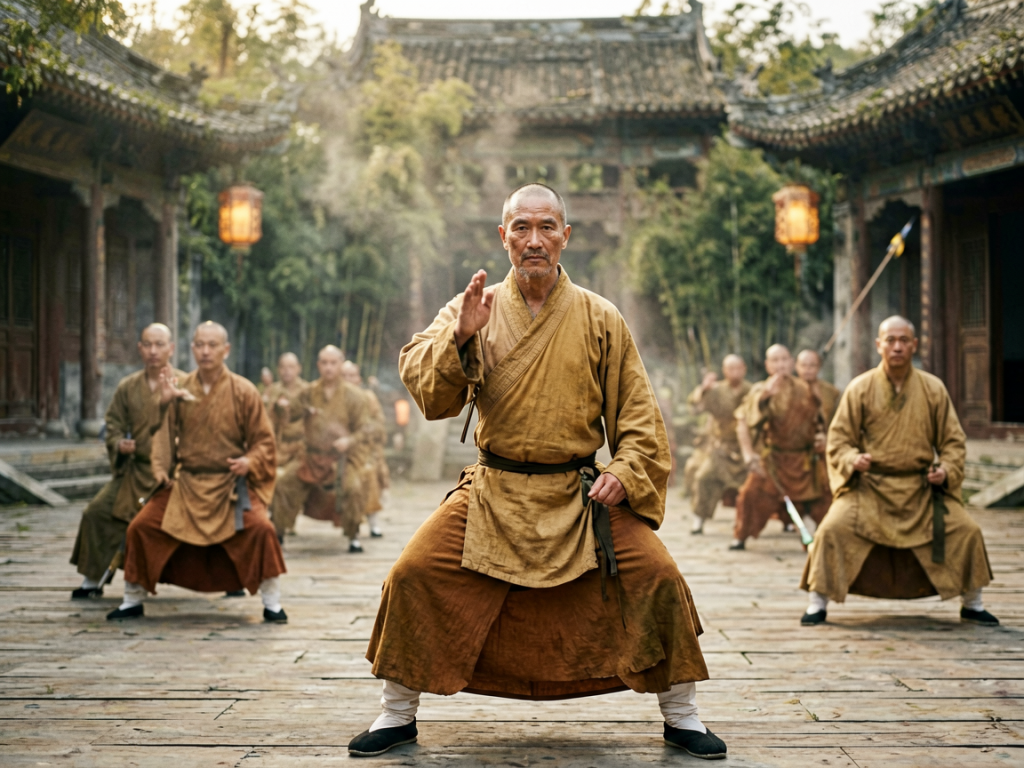
I’ll be honest. When I first heard the rumor that Shaolin monks survived on nothing but raw vegetables and rice, I believed it. I mean, that’s the image we’ve all been sold by decades of kung fu movies and tourist brochures. You picture these zen masters sitting cross-legged in a misty mountain temple, sipping green tea and nibbling on a single steamed bun while breaking through concrete blocks with their bare hands.
Then I went to Zhengzhou in early 2026. I spent ten days living among the disciples and junior monks at the Shaolin Temple complex. The goal was simple. I wanted to understand how they fuel those insane eight-hour-a-day training regimens without burning out or getting injured. What I found completely flipped my script.
The food isn’t mystical. It’s not magic powder or rare herbs from a fantasy novel. It’s loud, it’s communal, and it’s surprisingly heavy. If you think you know what a monk eats, you probably don’t. Let’s walk through the mess hall and see what’s actually on the plates.
The Morning Ritual: Waking Up the Metabolism
Most people assume the day starts with meditation and silence. And sure, there’s plenty of chanting at 5:30 AM. But right after that, it’s all about calories. Huge amounts of them. The morning meal, which happens before the first drop of sweat hits the floor, is strictly carb-loading.
I remember standing in line one crisp February morning. The steam rising from the massive industrial pots was thick enough to chew in. The staple here is always noodles. Not those delicate, thin ramen strands you get in trendy cafes. I’m talking thick, hand-pulled wheat noodles that have the texture of rope but taste like comfort food heaven.
They serve them in bowls the size of buckets. Each bowl gets doused in a savory sauce made from soy, garlic, and sometimes a hint of chili oil. The monks didn’t ask for spice level. They just wanted heat. I watched a young disciple named Brother Jian, who looks barely old enough to drive, demolish three of those bowls before 7 AM.
“Energy,” he told me, wiping his mouth with the back of his hand. “Noodles give you steady burn. Rice is too quick. Bread is too dry.” It sounds simplistic, but the logic holds up. You need slow-release energy for forms practice, and wheat delivers exactly that.
There’s also always a side of pickled vegetables. They’re bright green, salty, and crunch like celery. The monks say it wakes up your tongue. Honestly, after weeks of bland boiled greens, that crunch felt like a party in my mouth. It cuts the grease from the oil in the noodles perfectly.
Lunch: The Vegetarian Meat Myth
By noon, you’re hungry for real. This is where the “vegetarian” part of the diet gets interesting. In 2026, Shaolin kitchens have embraced modern plant-based technology, but they haven’t abandoned tradition entirely. If you’re expecting lab-grown meat substitutes that taste like plastic, you’re wrong.
The head chef, Master Wei, is an old-school guy. He believes in whole foods. So, instead of fake chicken nuggets, you get real mushrooms, really thick slices of lotus root, and hearty chunks of seitan. Seitan is wheat gluten. It’s chewy, dense, and absorbs flavor like a sponge.
I tried a dish called “Buddha Jumps Over the Wall” adapted for vegetarians. In the traditional version, it’s a broth packed with seafood and bird’s nest. Their version? A rich, dark broth simmered for six hours with dried lily flowers, bamboo shoots, and shiitake mushrooms. It smelled earthy and deep. The first spoonful hit me with umami so strong I almost closed my eyes.
It’s not about replicating meat. It’s about replicating satisfaction. The monks aren’t eating to deny themselves pleasure. They’re eating to fuel movement. And when you have a plate full of textured mushrooms and glazed tofu, it feels like a treat, not a punishment.
One thing surprised me though. The portions of protein are massive. I’m talking pounds of beans and lentils. Black beans are a staple. They boil them until they’re soft, then mash them into patties. These patties are fried lightly and served with a sweet and sour glaze. I had four of them in one sitting. My stomach hurt, but in a good way. I felt powerful.
To be fair, I’ve never trained eight hours a day. So maybe my metabolism is just jealous. But watching them eat made me realize that “light eating” is a lie. These guys are chowing down. Hard.
Dinner: The Wind Down and Recovery
After the evening session, which usually involves heavy bag work or sparring, the body screams for recovery. Dinner is lighter than lunch but still substantial. The kitchen shifts focus to digestion and sleep quality.
Rice returns to the table, but this time it’s often mixed with millet or brown rice for added fiber. The dishes change too. Instead of heavy stews, you get stir-fried leafy greens and light soups. Winter melon soup is a regular fixture. It’s watery, slightly sweet, and incredibly hydrating.
I sat with Brother Li, a senior disciple who’s been training for twelve years. He explained that hydration is key. During the day, they drink water constantly. No sugary drinks. No soda. Just tap water filtered through charcoal and heated to room temperature. Some older monks drink barley tea. It’s nutty and calming.
“Water cleanses the meridians,” Li said, tapping his chest. It’s a traditional concept, but practically speaking, it’s just about keeping your joints lubricated. After hours of jumping and kicking, your knees and ankles need that extra TLC. And water helps flush out the lactic acid buildup.
We also ate a lot of fermented foods. Kimchi-style cabbage, though less spicy than the Korean version, and yogurt. The monks buy local yogurt in bulk. It’s plain, thick, and poured over honey. Honey is the only real luxury item allowed in the canteen. It’s considered medicine, not candy.
I couldn’t believe how much honey they used. They’d drizzle it over everything. The sweetness seemed to satisfy the craving for sugar without the crash. It’s a smart hack. Instead of fighting your body’s desire for glucose, you feed it slowly through natural sources.
The Snacks Between Sessions
You might think monks only eat three times a day. That’s not true. There’s a constant stream of small snacks throughout the day. Think of it as grazing, but intentional.
Between the morning forms and the lunch break, there’s a snack hour. This is usually fruit or nuts. Apples are huge. They’re crisp, sweet, and easy to eat on the go. The monks will walk around the courtyard, peeling oranges or cracking walnuts with their teeth.
Walnuts are specifically prized for brain health. The theory is that mental focus requires physical nutrition. It’s a holistic approach. You can’t separate the mind from the gut. If your stomach is empty, your mind wanders. And in martial arts, a wandering mind gets you punched in the face.
I tried to join in. I grabbed a handful of roasted peanuts and started chewing while watching a sparring match. It felt weird at first, snacking while observing violence. But soon, it became part of the rhythm. The crunch of the peanut matched the thud of the gloves. It grounded me.
Another common snack is dates. Dried jujube dates. They’re sticky, sweet, and dense. One date provides immediate energy boost. It’s nature’s energy bar. I bought a bag at the temple gift shop later, and now I keep them in my desk at home. They help during long writing sessions too.
What It All Means for Us
So, what’s the takeaway here? Is it possible for us normal folks to adopt the Shaolin diet? Probably not entirely. We don’t burn 5,000 calories a day practicing martial arts. But we can learn from their principles.
First, prioritize whole foods. The monks eat ingredients that haven’t been processed into oblivion. Noodles are handmade. Vegetables are fresh. Even the tofu is made on-site. There’s no hidden salt or preservatives. That alone makes a huge difference in how you feel after eating.
Second, listen to your hunger. The monks eat when they’re hungry and stop when they’re full. There’s no diet culture shaming here. If you train hard, you eat big. If you rest, you eat light. It’s intuitive eating taken to the extreme.
Third, don’t fear carbs. In the West, we’ve been taught to avoid wheat and rice. But for active people, carbs are fuel. The Shaolin monks don’t shame carbohydrates. They respect them as the foundation of strength. I tried cutting carbs for a month last year. I felt weak and irritable. Then I went back to eating noodles, and suddenly I had energy again.
Finally, community matters. Eating together is sacred. In the mess hall, everyone eats from the same large pots. There’s no private dining. It fosters a sense of unity. You’re not just filling your belly; you’re bonding with your brothers. That emotional connection aids digestion. Science says stress ruins digestion. So laughter and camaraderie must help heal.
I walked away from Zhengzhou with a new appreciation for simple food. It wasn’t fancy. It wasn’t gourmet. But it was honest. Every bite had a purpose. And that’s the real secret of the Shaolin diet in 2026. It’s not about restriction. It’s about intention.
Next time you sit down to eat, ask yourself: Does this fuel my goals? Does it make me feel strong? Or is it just empty calories? You don’t need to live in a temple to find the answer. Sometimes, it’s just as simple as eating a bowl of hot noodles and being grateful for the warmth.