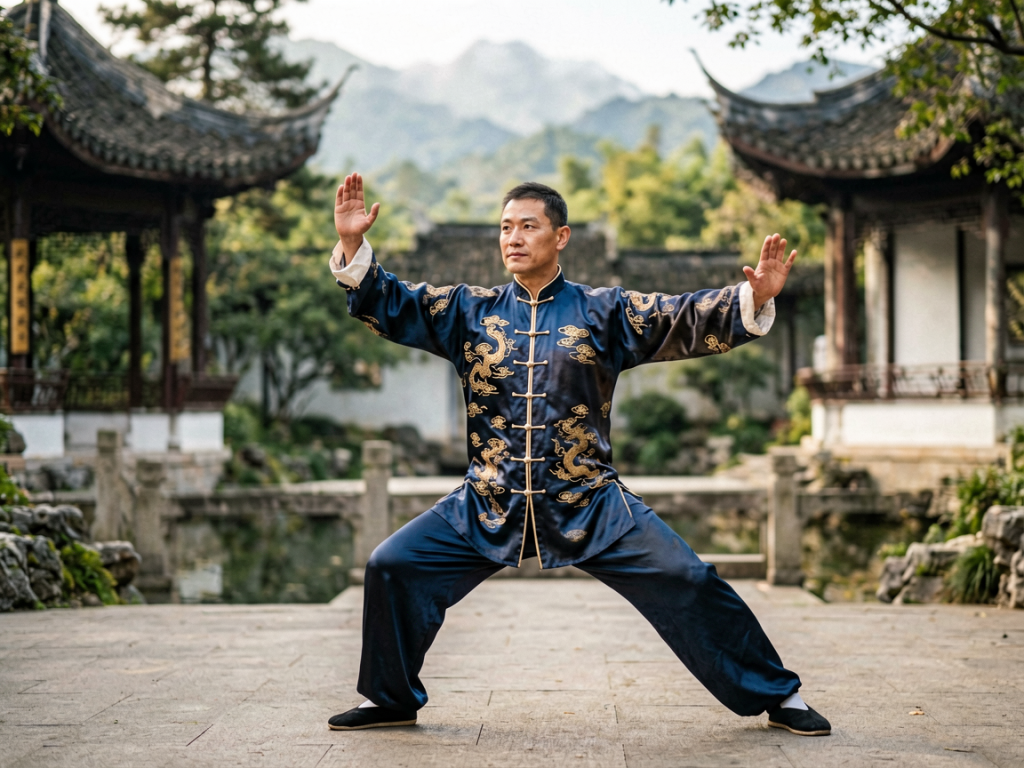
Honestly, I thought I was being ridiculous. At forty years old, my body feels like a used car that needs regular oil changes just to keep the engine from seizing up. My knees click. My lower back twinges when I sneeze. I have a desk job that involves sitting in a chair for eight hours a day, staring at a screen until my eyes burn.
So, when my friend Lao Li invited me to join his morning Wushu class, I laughed. He told me it would take an hour. Just sixty minutes. Daily. For three months. He said it would fix the “old man slump.”
I signed up because I’m stubborn and tired of feeling stiff. I didn’t expect it to change my life. But here’s the thing: ninety days later, I can’t remember what it felt like to walk without hearing a creak in my hips. Sound interesting? Let’s talk about the sweat, the soreness, and the surprise.
The First Week Was Pure Shame
Let’s get the ego out of the way first. The first week wasn’t about martial arts. It was about humility. I showed up at the park in Shanghai where Lao Li trains, wearing nice running shoes that had zero grip. The ground was wet from morning dew.
We started with the basics. Horse stance. You know the one. Legs wide, knees bent, back straight. It looks simple. It is not. Within two minutes, my thighs were shaking so hard I looked like I was having a seizure. My knees screamed in protest. I looked around and saw guys in their sixties holding the pose with perfect form. I was fifty pounds heavier than them and holding it for half as long.
I wanted to quit. Right then and there. I stood up, dusted off my pants, and walked away. Lao Li just smiled and pointed to the next session. I came back. I had to. Because staying home meant admitting that I was getting soft. And I hate being soft.
The pain was real. Not the “good” kind of gym pain. This was deep, structural ache. My joints felt like they were grinding sand. But there was a clarity in that suffering. When your legs are burning, you can’t think about work emails. You can’t worry about mortgage rates. You’re just there, breathing, trying not to collapse.
Month One: The Ache Became My Background Noise
By week three, I stopped feeling like a fraud. I still couldn’t do a single proper cartwheel, and I definitely couldn’t kick above my waist without grabbing a tree branch for balance. But the basic stances held. I found a rhythm.
We learned a short form called Changquan, or Long Fist. It’s all about speed and extension. For a guy who usually moves at the speed of a sloth, this was terrifying. We had to snap our limbs out. We had to land softly. Soft landings are harder than they look. They require you to engage muscles you didn’t even know existed.
I remember one Tuesday morning clearly. It was raining. The park was empty except for a few elderly ladies doing Tai Chi. We practiced the “Cloud Hands” movement. Back and forth. Gentle, circular motions. My instructor, Old Man Chen, kept tapping my shoulder. “Loosen up,” he’d say in broken English. “Don’t fight the air.”
I was fighting the air. I was tense. Every muscle in my upper body was locked tight. Chen took my wrist and gently twisted it until my shoulder dropped. Instant relief. It was like unlocking a door I didn’t know was closed. That’s when I realized Wushu isn’t just about fighting. It’s about unlearning tension.
My sleep improved almost immediately. I wasn’t tossing and turning anymore. I woke up tired, yes, but it was a good tired. The kind where your body knows it did work. I started eating better, too. I couldn’t cheat on my diet after a grueling hour of kicking. The hunger after training was insatiable, but it forced me to choose protein over carbs. Simple cause and effect.
Month Two: The Body Starts to Listen
This is where things got weird. Or rather, where things got physical in a way I hadn’t experienced since my twenties. My flexibility, which I thought was permanently locked by age and gravity, began to thaw.
I tried to touch my toes one morning while brushing my teeth. I actually did it. Without bending my knees. I stared at myself in the mirror and felt a surge of pride that was entirely disproportionate to the task. But it was a start.
The strength gains were subtle but undeniable. I wasn’t bulking up like a bodybuilder. I was becoming dense. My core was solid. I could hold a plank for three minutes now. Three minutes! I used to struggle with thirty seconds.
We moved into more complex forms. Spinning kicks. Jumping lunges. I bruised my shin badly during a roundhouse practice. It turned purple, then yellow, then green. I was embarrassed to show it to the group. Lao Li looked at it, nodded, and said, “That’s the price of entry.” He meant it kindly. Pain is just feedback. It’s your body telling you where you’re weak and where you need to focus.
I started noticing changes in my daily life, too. I picked up my heavy grocery bags without straining my back. I climbed the stairs to my apartment without huffing and puffing. People noticed. My wife asked if I’d switched to steroids. I told her it was just sweat and patience.
There was a mental shift, too. Wushu requires intense focus. You have to memorize sequences. Step left, turn right, kick high, block low. If you lose concentration for a second, you mess up the flow. This mental discipline bled into my work. I found myself approaching problems with more structure. Less panic. More deliberate action.
Month Three: The Flow State
Ninety days. The mark on the calendar. I expected to feel exhausted. Instead, I felt electric.
The forms we were learning were longer now. More intricate. Last week, we practiced a sequence involving a leap kick and a landing spin. I messed it up ten times. My lungs burned. My legs felt like lead. But on the eleventh try, it clicked.
Time seemed to stop. I wasn’t thinking about the mechanics. I just moved. The air felt thick, resisting me, then guiding me. It was a flow state. I’ve heard athletes talk about this, but I never truly understood it until I was doing Wushu in a public park in Shanghai, surrounded by pigeons and the smell of breakfast buns steaming nearby.
When I finished, I stood there, chest heaving, sweat dripping off my nose. I felt alive. Not just existing, but vibrating with energy. It was better than any caffeine buzz. It was better than a shot of whiskey.
My posture is completely different. I stand taller. My shoulders are back. I don’t hunch over my phone anymore because my neck muscles are strong enough to support my head. I caught myself walking differently in the street. Lighter steps. Quieter. I wasn’t stomping anymore. I was gliding.
Of course, it wasn’t all glory. I still have bad days. Some mornings, getting out of bed feels like climbing Mount Everest. My knees still pop, though less frequently. I missed a few sessions due to work trips. Each time I returned, I had to rebuild the base. It taught me resilience. Failure isn’t permanent. It’s just a pause.
Is It Worth It? The Honest Take
You might be wondering if you should try this. I’m no expert. I’m just a forty-year-old guy who decided to stop complaining and start moving. But yes, it is worth it. And it’s easier than you’d expect to start.
You don’t need a fancy gym membership. You don’t need expensive gear. You just need a pair of flat shoes and some space. I started with YouTube videos, but nothing beats a live instructor. Finding a local group, even online, made all the difference. Having someone watch your form prevents injury. And trust me, you want to avoid injury.
The community aspect is huge. These classes are often mixed-age. I’ve learned more from a seventy-year-old woman than I ever did from a twenty-year-old trainer. She has grace and control that I’m only beginning to approach. It keeps you humble. It keeps you going.
I also want to address the fear factor. Many people think Wushu is only for kids or athletes. That’s false. It’s for anyone who wants to reconnect with their body. It’s gentle if you make it gentle. But it’s challenging enough to keep your brain engaged. It’s cardio, strength training, and mindfulness rolled into one hour.
My weight dropped five pounds in three months. Not because I starved myself, but because I moved consistently. My blood pressure readings are better. My cholesterol is down. The doctor gave me a nod of approval, which meant more to me than any compliment from a fitness influencer.
There were moments of doubt. Days when I thought, “This is pointless. I’m too old for this acrobatic nonsense.” But then I’d complete the form, land the jump, and feel that surge of accomplishment. That small victory fueled the next day. And the next. And the next.
If you’re sitting there thinking about it, do it. Start small. Ten minutes a day. Then twenty. Don’t worry about looking cool. Worry about showing up. The body adapts faster than you think. But only if you ask it to.
I used to dread aging. I worried about slowing down, about losing my edge. Now, I see aging as a process of refinement. Like polishing a stone. It takes time. It takes friction. But the result is something smoother, stronger, and more beautiful.
So, what did an hour of daily Wushu do to my forty-year-old body? It woke it up. It reminded me that I’m not done yet. And honestly, I wouldn’t trade those ninety days for anything. I’m already planning for day ninety-one.