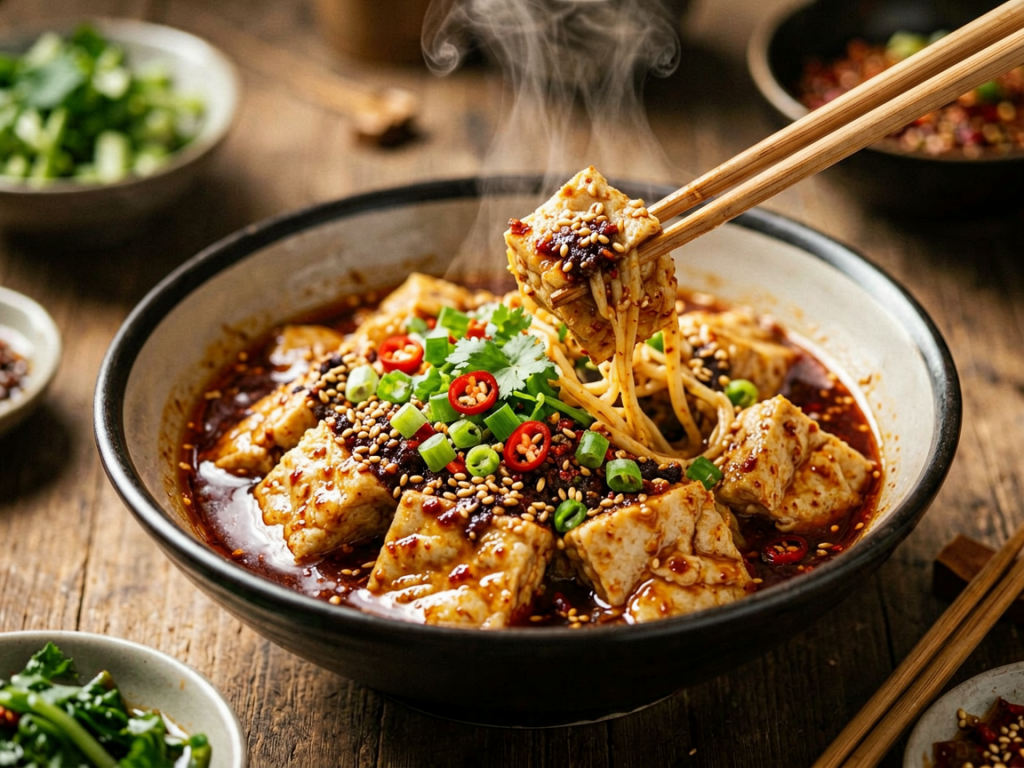
Here’s the thing about Mapo Tofu. Most people think it’s just another spicy tofu dish they can get anywhere in Chinatown. They’re wrong. It’s so much more than heat. It’s a story. It’s a century-old rebellion against blandness. And honestly, once you taste the real thing, everything else feels like a pale imitation.
I first tried authentic Mapo Tofu in Chengdu about five years ago. I was sitting in a tiny, windowless hole-in-the-wall restaurant near Kuanzhai Alley. The air smelled like star anise and heavy oil. My stomach growled. I didn’t know it then, but I was about to eat the dish that defines Sichuan cuisine for half the world.
The server brought out a clay pot. It was bubbling aggressively. The color wasn’t just red; it was a deep, oily crimson. It looked intimidating. It looked dangerous. But the smell? It pulled me in like a magnet. I took my first bite. The tofu slid off the spoon. The beef mince crumbled in my mouth. And then came the ma la sensation. That numbing, tingling electric shock from the Sichuan peppercorns.
I sat there, eyes wide, fanning my mouth with a napkin. I couldn’t stop eating. That’s the thing nobody tells you about Mapo Tofu. It doesn’t just burn. It buzzes. It wakes up every nerve ending on your tongue. And it’s delicious. Insanely delicious.
A Widow’s Secret Weapon
You might be surprised to learn that Mapo Tofu started as a comfort food. It wasn’t created by some celebrity chef with a Michelin star. It was invented by a woman named Chen Mapo in the late Qing Dynasty, around the 1860s. Chen means “Old Woman.” Mapo is a respectful term for a grandmother-like figure. So, we’re talking about Grandma Chen’s tofu.
She ran a small noodle shop in Chengdu. Her customers were mostly porters and laborers who worked at the nearby Changchun Temple. These guys needed cheap, filling meals. They also needed protein. But tofu alone is soft and boring. It lacks texture. It lacks punch.
Chef Chen had a problem. She needed to make cheap ingredients taste exciting. She noticed her regulars loved spicy food. They also loved the numbing effect of Sichuan peppercorns. So, she combined three elements: soft tofu, spicy chili oil, and minced beef. Wait, why beef? In traditional Sichuan cooking, they used yak meat back then because beef was expensive. But the principle was the same. Minced meat adds a chewy contrast to the silky tofu.
She sprinkled the dish with garlic chives and fermented black beans. The black beans added a salty, umami depth that cut through the fat of the chili oil. The result was a harmony of textures and flavors. Soft tofu. Crumbly meat. Crunchy chives. Numbing pepper. Spicy oil.
This wasn’t just food. It was engineering. Chen Mapo solved the problem of blandness with boldness. Her shop became famous overnight. People came from miles around just to try this new “tofu with a face” dish. Yes, Mapo literally translates to “pockmarked tofu,” referring to the texture or perhaps the cook’s complexion. Either way, the name stuck.
The Magic of Ma La
Let’s talk about that buzz again. You need to understand *ma la*. It’s the heartbeat of Sichuan cuisine. *Ma* means numb. *La* means spicy. Most Western restaurants skip the *ma*. They just dump chili flakes on the dish. That’s lazy. That’s wrong.
Without the Sichuan peppercorn, Mapo Tofu is just spicy chili beef over tofu. It’s missing its soul. The peppercorn contains hydroxy-alpha-sanshool. This compound activates the same nerve fibers that sense vibration and touch. When you eat it, your brain thinks your tongue is vibrating. It’s a sensory trick. It makes the spice feel three-dimensional.
I remember asking my friend Li Wei, a local chef, why he insists on grinding his own peppercorns. He looked at me like I’d spoken in tongues. “Pre-ground pepper loses its oil,” he said. “It’s dead. You need the live buzz.” He showed me how he dry-roasts the green peppercorns until they turn brown. Then he grinds them in a stone mortar. The aroma that rose up was citrusy, floral, and sharp. It changed the entire profile of the dish.
This attention to detail separates good Mapo Tofu from great Mapo Tofu. Great Mapo Tofu starts with a clean palate. The numbness clears your mouth. Then the heat hits. But because of the numbness, the heat doesn’t overwhelm you. It dances. It lingers. It invites you to take another bite. That’s the cycle. That’s the addiction.
Texture is Everything
If you’ve ever had Mapo Tofu made with firm tofu, throw it out. Or better yet, don’t order it again. Real Mapo Tofu requires silken tofu. Not extra firm. Not medium. Silken. It should be so delicate that you have to scoop it gently. It should hold its shape only because of the sauce thickening around it.
The sauce itself is another art form. It’s not just a liquid. It’s a gel. The chef uses a cornstarch slurry to thicken the broth. This creates a glossy coating that clings to every piece of tofu. It traps the flavor. When you lift a spoonful, the sauce shouldn’t drip away instantly. It should move slowly, like honey.
I learned this the hard way. I tried making Mapo Tofu at home in my apartment in Shanghai. I used firm tofu from the supermarket. I skipped the slurry. What I ended up with was a bowl of dry, spicy chunks floating in watery oil. It was sad. It was bitter. It lacked cohesion.
My neighbor, Auntie Zhang, saw me struggling. She came over with a bag of silken tofu and a jar of Doubanjiang. Doubanjiang is broad bean paste. It’s the base of almost all Sichuan cooking. It’s salty, fermented, and deeply savory. You can’t substitute it. Not really. It adds a complexity that simple chili paste just can’t match.
She watched me stir the pot. “Low heat,” she said. “Gently fold the tofu. Don’t chop it.” She showed me how to slide the tofu into the simmering sauce. How to let it absorb the flavors for five minutes before serving. The difference was night and day. The tofu was infused. The sauce was rich. The meal felt complete.
More Than Just a Side Dish
In China, Mapo Tofu isn’t an appetizer. It’s a main event. It’s often served with rice. Lots of rice. You need the starch to balance the intensity of the dish. I’ve seen foreigners try to eat it with noodles. Sometimes it works. But rice is king here. The neutral grain cleanses the palate between bites of fiery, numbing goodness.
There’s a philosophical side to this dish too. It represents resilience. Chen Mapo took humble, cheap ingredients–beans, water, spices–and turned them into something legendary. She didn’t need expensive wagyu beef or rare truffles. She used what she had. She focused on technique and balance.
This is the core of Sichuan cooking. It’s not about burning your mouth. It’s about layering flavors. Salty, sweet, sour, spicy, bitter, aromatic. Mapo Tofu hits almost all of these notes. The black beans provide salt. The sugar in the slurry provides sweetness. The vinegar (sometimes added) provides sourness. The chili provides heat. The pepper provides aroma. It’s a symphony in a bowl.
I love that it’s accessible. You don’t need to go to a fancy restaurant to enjoy it. Any street stall in Chengdu makes it better than most high-end restaurants in New York or London. It’s democratic food. It’s for everyone. It breaks down barriers. You sit next to a businessman and a construction worker. You both eat the same bubbling pot of tofu. You both sweat. You both smile.
Why It Still Matters Today
Mapo Tofu has traveled far beyond Sichuan. It’s found its way into homes across China and the world. But it’s evolved. Some versions add pork instead of beef. Some add ground shrimp. Some make it vegetarian by skipping the meat entirely. I’m okay with variations. Food changes. Culture adapts.
But the heart of the dish remains. That combination of silken texture and numbing spice is unique. You won’t find anything quite like it in Cantonese cooking. You won’t find it in Hunan cuisine either. It stands alone. It’s distinctly Sichuan.
I’ve eaten Mapo Tofu in Beijing, in Xinjiang, in Yunnan. It tastes slightly different everywhere. In the north, it’s often less oily. In the south, it might be sweeter. But the *ma la* spirit persists. It’s a reminder of where it came from. A tiny noodle shop in Chengdu. A clever widow. A desire to make ordinary food extraordinary.
Next time you see Mapo Tofu on a menu, don’t just order it because it looks red. Order it because it has a story. Ask for the Sichuan peppercorns. Ask for the doubanjiang. Be honest with the waiter if you can’t handle the numbing sensation. Start small. Let your tongue adjust.
It’s an adventure on a plate. It’s messy. It’s loud. It’s flavorful. And it’s utterly unforgettable. I promise you, once you experience the real buzz, you’ll never settle for bland tofu again. Trust me. Go find a place that knows what they’re doing. Order the hottest thing on the menu. Watch your friends suffer. Laugh. Eat. Repeat.